
Tompkins County PROS program reports rising enrollment, requests evening hours to support working participants
Get AI-powered insights, summaries, and transcripts
Subscribe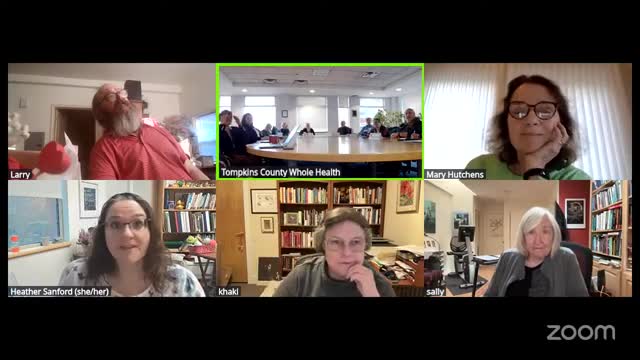
Summary
Heather Sanford, PROS program director, told the Tompkins County Community Services Board that active client contacts have recovered since 2020, the program emphasizes employment supports, and staff has asked the state to permit extended evening hours so formerly excluded workers can keep services while holding jobs.
Heather Sanford, PROS Program Director at Tompkins County Whole Health, told the Tompkins County Community Services Board that the county's psychiatric rehabilitation program (PROS) has increased active client contacts since a 2020 dip and is seeking a state license change to expand services and hours.
Sanford said the program tracks both "screeners" (clients who try PROS during a roughly 60-day orientation period) and enrolled participants. "Screening is when people come into PROS for the first 60 days, and they just try us out," Sanford said. She reported roughly 200 people screened last year, and that enrollment has largely recovered after falling in 2020.
The request submitted to the state would change the program's licensed capacity and allow the center to stay open one night a week until 7 p.m., Sanford said. The later hours are intended to support participants who work or attend school by offering skill-building groups at 4, 5 and 6 p.m. "Those classes would be tailored toward services that folks might need if they're also working," she said.
Sanford described PROS's continued emphasis on employment supports. She said the program has an employment specialist and that staff work to avoid discouraging participants from taking jobs. "We didn't want to discourage people from working, but we heard consistently from folks that working, the hardest part of it was losing out on the ability to participate in groups and activities at PROS," Sanford said. She said state regulations require PROS to add staff when enrollment rises above certain thresholds; if enrollment exceeds 100 people, the program would need to hire an additional employment specialist under current rules.
On funding, Sanford said PROS is primarily financed through Medicaid and managed-care payments, with some state aid. "Medicaid and managed care pay for PROS completely," she said, adding that Medicare generally does not cover the program and private insurance coverage varies. She said no one is turned away for inability to pay and that the program uses a sliding fee scale when needed.
Sanford highlighted participant outcomes and examples of recent "wins," including clients securing employment, completing certifications, and obtaining permanent housing. She said staff also plan community-facing activities such as an art show to display participants' work and continuing efforts to coordinate with the county mental health clinic on engagement and transitional supports.
Board members thanked Sanford and asked about materials and committee briefings. Randy Brown suggested sharing the presentation with the county's Health and Human Services Committee; Sanford and members discussed next steps for the licensing request, which requires additional work with state regulators.
Sanford left the meeting after the presentation. Board members later praised PROS as a model program for the region and noted the program's long-term staffing stability since 2016.