Family Justice Center warns federal grant cuts will force staffing changes; asks for broader county support
Loading...
Summary
Center leadership told council that client demand has grown substantially while federal grant opportunities have declined, leaving the center reliant on grants (63%) and local philanthropy; the center said one grant will end in fall 2025 and that a position will be eliminated unless new funding is secured.
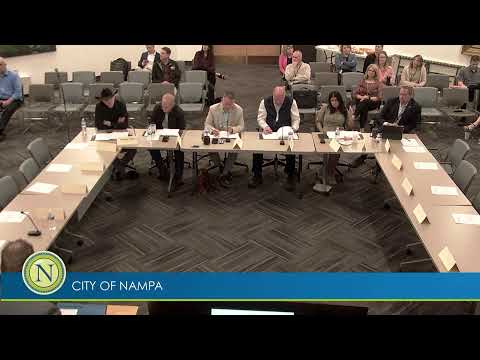
A Family Justice Center representative briefed the council on April 16 about client growth, service outcomes and funding risks, saying the center will face staff reductions if federal grant solicitations do not reopen.
The update matters because the Family Justice Center provides co‑located victim services (SANE exams, forensic interviews, advocacy and child‑abuse response) that reduce costs for law enforcement and keep trauma‑informed services local rather than sending cases to Boise.
The center’s speaker (organization director) described an impact report for FY2024 and said the center averaged about 875 client visits per month, a 46.4% increase in client contacts since 2020; 40% of referrals come from law enforcement and 61% of those referrals came from the Nampa Police Department. The center said it works across Canyon County but that approximately 70% of clients come from Nampa and about 19% come from other parts of Canyon County.
On funding, the center said roughly 63% of its budget comes from grants, about 22% from the City of Nampa and about 15% from the foundation and donations. The director said one federal elder‑abuse grant will end in fall 2025 and that federal solicitations for additional grants have been delayed or canceled this cycle; reduced VOCA (Victims of Crime Act) funding was also cited. As a result, the center said it expects to end one grant‑funded position unless other funding is identified. The director emphasized the center is not asking the city for additional operating funds at this time but requested continued support in seeking county and foundation funding.
Grant manager Jeanie Gerwig and program staff described operational details and an administrative budget breakdown: city support for FY26 covers roughly $438,700 in core administration (three city‑supported positions) and the center projects grant funding of about $1,700,000 for FY26, subject to federal solicitations reopening. Staff said foundation and community donations also supply in‑kind and direct support (the foundation additionally supported roughly $350,000 in positions and client services outside the $168,500 listed in the packet).
The director highlighted the center’s role in supporting law enforcement: the center funds Sexual Assault Nurse Examiner (SANE) exams and forensic interviews through grants so that police and victims do not need to travel to Boise. That 4‑hour SANE exam and accompanying advocacy reduces city staff on‑call burdens and was presented as a city cost‑avoidance because the center pursues grant dollars to cover the service.
Council members pressed on geographic funding equity: the council asked whether the center seeks financial support from other Canyon County cities and the county. Staff said they have repeatedly requested county support but have not secured it; council members offered to support the center’s outreach to Canyon County commissioners and city councils. The director encouraged council members to provide testimony at county funding hearings.
The Family Justice Center also described program capacity and volunteer support: 145 active volunteers contributed the equivalent of about $450,000 in service value. The center reported national accreditation for the child‑advocacy program and a 27% increase in community awareness outcomes last year.
Staff asked council members to help with outreach to county decision makers and to continue supporting the center’s work while staff pursues diversified grants and foundation support.