
Appling County replaces purchasing chapter; board adopts new limits and procedures
Get AI-powered insights, summaries, and transcripts
Sign Up Free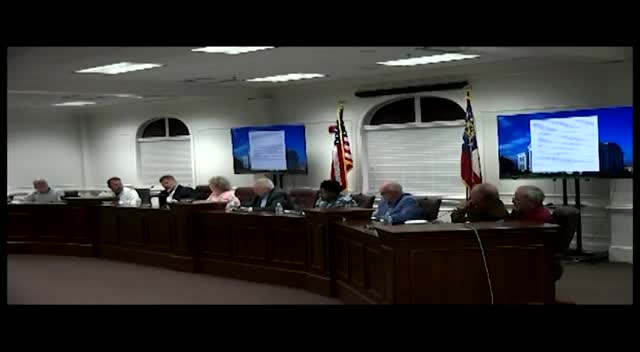
Summary
After extended discussion, the board voted to delete and replace section 2-227 of the county purchasing policy with a revised chapter setting updated thresholds and emergency-purchase provisions; commissioners said the policy can be reviewed annually.
The Appling County Board of Commissioners voted to delete and replace chapter 2-227 of the county purchasing policy with a new purchasing section presented by the county manager and the county attorney.
Board discussion reviewed the draft policy’s thresholds for budgeted and non-budgeted purchases, the role of department heads versus the county manager for approving purchases, and procedures for emergency purchases (the draft retained a two-commissioner emergency-approval mechanism similar to the rule for calling special meetings). Commissioners debated proposed limits and whether department heads should have higher in-budget spending authority; several commissioners said the draft can be tested and adjusted in the coming year.
The motion to replace the existing chapter with the new purchasing policy language was made by Commissioner Silvers and seconded by Commissioner Barnes; the board approved the amendment by voice vote. County staff said the ordinance-level language remains in the county code and that the new chapter will be the county’s administrative purchasing policy; staff noted the policy will be revisited annually and implementation details will be included in the county handbook and procurement procedures.
Why it matters: commissioners said clearer purchasing thresholds will allow department heads to act quicker on routine needs while preserving board oversight for non-budgeted or emergency expenditures. The transcript records a detailed policy discussion and an explicit vote to adopt the replacement chapter; the finalized text and specific numeric limits are in the board packet and will be published as the new policy.