
Committee reviews bill requiring alcohol retailers to keep delivery invoices; industry seeks narrower wording
Get AI-powered insights, summaries, and transcripts
Subscribe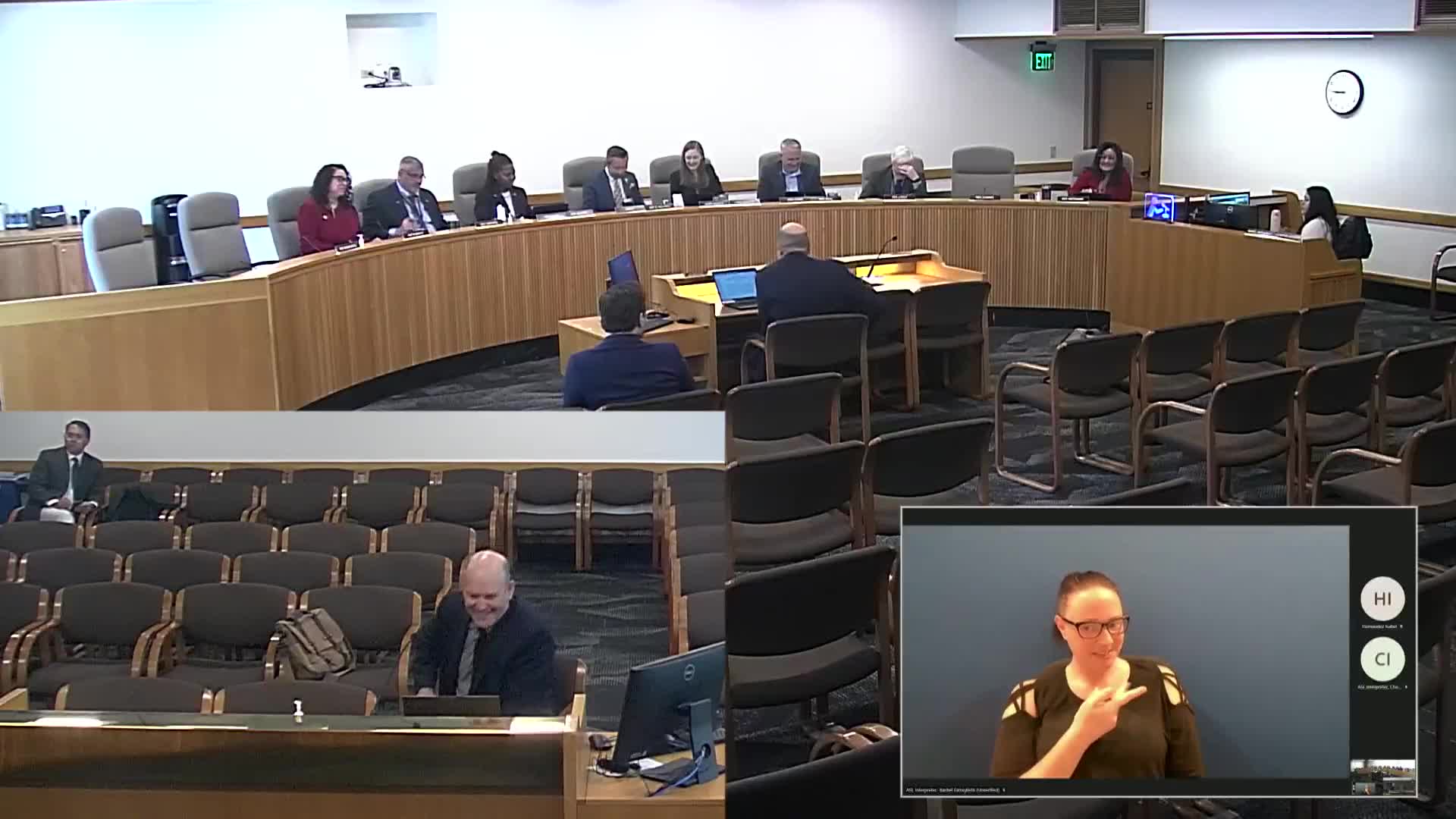
Summary
At a public hearing on Senate Bill 871, the OLCC and industry representatives discussed a proposed requirement that certain alcoholic-retail licensees retain invoices for deliveries; industry groups urged clarifying language so retailers are not held responsible for information generated by out-of-state suppliers.
The House Committee on Economic Development, Small Business, and Trade held a public hearing Monday on Senate Bill 871, which would require specified alcoholic-sales licensees to maintain invoices for alcoholic beverage deliveries to their premises. The committee opened the hearing at the April 21 meeting, heard testimony from the Oregon Liquor and Cannabis Commission (OLCC) and industry representatives, and closed the hearing without recording any committee vote.
Craig Prinz, executive director of the OLCC, described the proposal as a compliance and recordkeeping measure intended to provide a paper trail for out-of-state manufacturers or distributors that sell direct to in-state retailers. “When a direct to retailer, sells, let's say sells wine into, the state, we put an onus on the licensee that's receiving that to keep an invoice of that sale so that if we had to go back and make sure that that out of state entity is paying their taxes or if there was a safety issue, that we could contact them,” Prinz said.
Bill Perry of the Oregon Restaurant & Lodging Association said the industry has no problem keeping invoices for deliveries but urged that the bill not make a retailer legally responsible for the contents of invoices that are generated by manufacturers or distributors. Perry warned that the bill’s current language could place a recipient licensee in violation if an invoice omits information the law requires the supplier to include. “What is on the invoice is supposed to be a responsibility of the manufacturer [or] distributor, not the person receiving the invoice,” Perry said. He proposed striking the portion of the draft that prescribes specific invoice contents and limiting the requirement to retaining invoices and producing them to auditors.
Committee members asked how often OLCC enforces discount or invoice-content rules and how long invoices would need to be retained. Prinz said the agency rarely needs to pursue out-of-state invoice details but wants a non- burdensome tool to comply with federal law and tax enforcement; he said OLCC inspectors would follow up if an issue surfaced. Committee discussion indicated a statute-retention period of three years would be used; industry witnesses noted many businesses retain records longer for IRS purposes. The transcript shows no amendment or vote taken during the hearing.
Ending: The public hearing on SB 871 concluded with no recorded vote; OLCC indicated openness to technical or grammatical changes to clarify the obligation on in-state licensees.