
Committee hears testimony for higher top rate on capital gains and increased estate tax exclusion, supporters cite education funding
Get AI-powered insights, summaries, and transcripts
Subscribe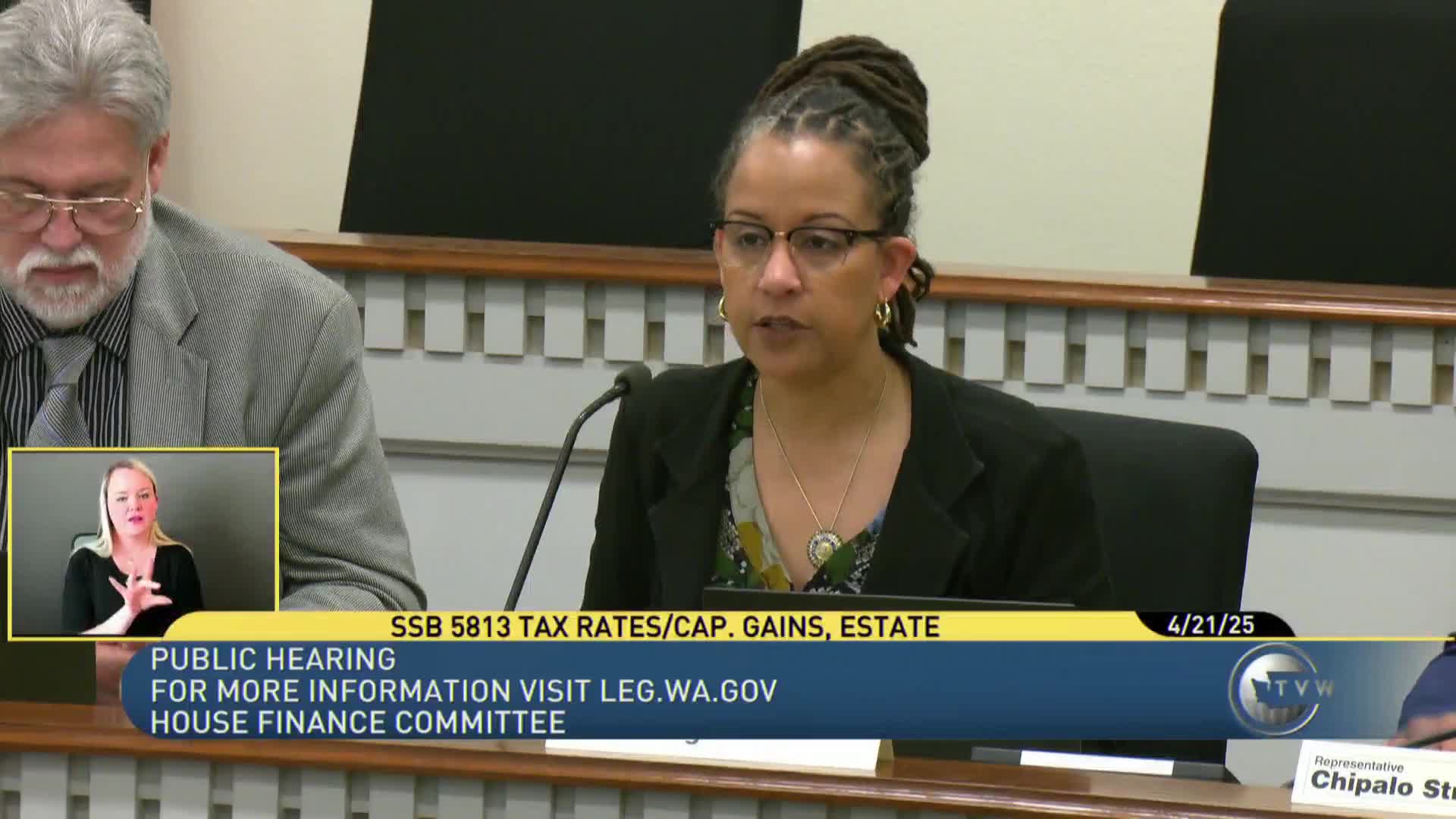
Summary
Senate Bill 58 13 would create a new 9.9% top tier on capital gains above $1 million and increase the estate tax exclusion to $3 million with inflation indexing. Supporters said the changes protect education and social programs; opponents raised concerns about small business transition rules and administrative complexity.
A legislative committee heard public testimony April 21 on Senate Bill 58 13, a proposal to change the state’s capital gains excise tax and to alter estate‑tax exclusion amounts and deductions. The bill would keep the capital gains base but add a higher 9.9% tier for gains over $1,000,000, raise the estate tax exclusion to $3,000,000 indexed to inflation, increase the qualified family‑owned business deduction, and apply new estate tax bracket rates beginning in 2025 with an emergency clause in the text.
Tracy Taylor, committee staff, summarized the current law and the bill’s changes: the state’s capital gains excise tax is currently 7% with a standard deduction; the bill would apply 7% up to $1 million and 9.9% on gains above that threshold beginning in tax year 2025 with collection in calendar year 2026. Taylor also described proceeds flow: the first $500,000,000 each fiscal year from the capital gains tax go to the Education Legacy Trust Account, with remaining proceeds to the common school construction account. Taylor said a fiscal note for the engrossed substitute has been requested but not yet received.
Supporters framed the proposal as a targeted way to protect education and early‑childhood programs. Kristen Eng of Faith Action Network urged lawmakers to view the bill as a way to “ensure the basic needs in our communities are met” and said the new top tier “affect[s] only a few thousand taxpayers.” Tracy Underwood of the Economic Opportunity Institute said modest rate increases on extreme gains would not alter wealthy taxpayers’ lifestyles but would make a “big difference for Washington students.” Multiple witnesses from MomsRising, Food Lifeline and other advocacy groups tied the revenue prospect to preventing cuts to child care, K‑12 education and student supports.
Opposition and technical questions focused on small‑business carve‑outs and the interaction between the estate tax qualified family‑owned business interest (CUFABI) and capital‑gains provisions. Patrick Connor of NFIB asked lawmakers to replace or align the CUFABI under the estate tax with a comparable capital gains deduction to avoid removing protections that facilitate intergenerational transfers. Connor warned that making CUFABI effectively identical to the standard deduction would “eliminate the value” of that small‑business protection and introduce compliance burdens and a potential three‑year survival penalty.
Taylor cited estimated revenue increases in staff analysis for fiscal years 2026 and 2027 and projected additional resources for the Education Legacy Trust Account under the engrossed substitute but noted the fiscal estimate is still pending for the final substitute language.
No committee action was taken at the hearing. The committee closed public testimony and invited written submissions within 24 hours.