
Committee hears proposal to streamline office‑to‑residential conversions to ease housing shortage
Get AI-powered insights, summaries, and transcripts
Subscribe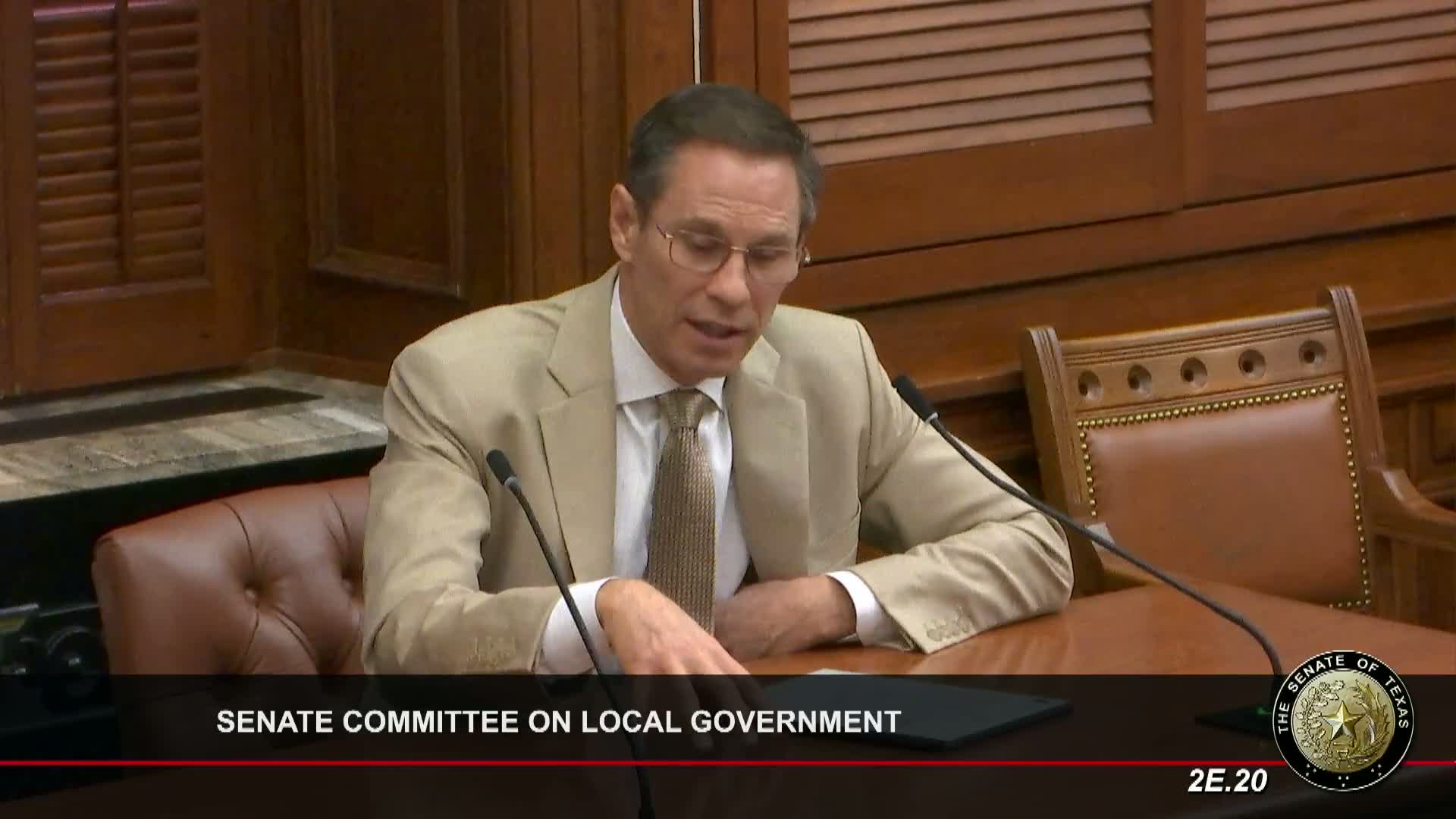
Summary
Senate Bill 2477 would streamline the process for converting underused office buildings to residential use by removing some rezoning barriers and clarifying exclusions (airports, military bases, heavy industrial zones), while preserving local controls for historic districts and short‑term rentals.
Senator Bettencourt presented a committee substitute to Senate Bill 2477 to remove regulatory barriers that developers say make office‑to‑residential conversions difficult and time consuming. The substitute narrows the original language, clarifies city population thresholds (in the substitute, cities above specified populations qualify), and preserves local authority over short‑term rentals and historic districts while excluding areas near airports, military bases and heavy industrial zones.
Proponents — including Alex Horowitz of The Pew Charitable Trusts, Frances Blake of the Texas Association of Builders, and Britta Wallace (builder and advocacy representative) — argued conversions reuse existing infrastructure in downtowns, increase property‑tax yield per acre, help meet housing demand near job centers, reduce commute times and traffic, and can be compatible with affordable‑housing financing. Pew cited U.S. office vacancy rates above 20% and argued conversions could put otherwise underutilized buildings back into service.
City officials raised concerns about fee waivers in the bill language: the City of Corpus Christi registered neutral testimony noting the city does not charge certain impact fees and that permitting fee waivers could leave inspection and permitting operations without cost recovery; committee members asked staff to reconcile the bill language with prior statutory changes on impact fees. After testimony, the committee closed public comment and left the substitute pending subject to call of the chair.