Conference committee backs using 'respondent' in ethics rules; asks staff to draft amendment
Summary
A Senate-House conference committee agreed in principle to replace the term "accused individual" with "respondent" in the ethics chapter and asked Legislative Council to prepare draft language for an afternoon vote. The panel also discussed informal-resolution steps and consistency across the chapter.
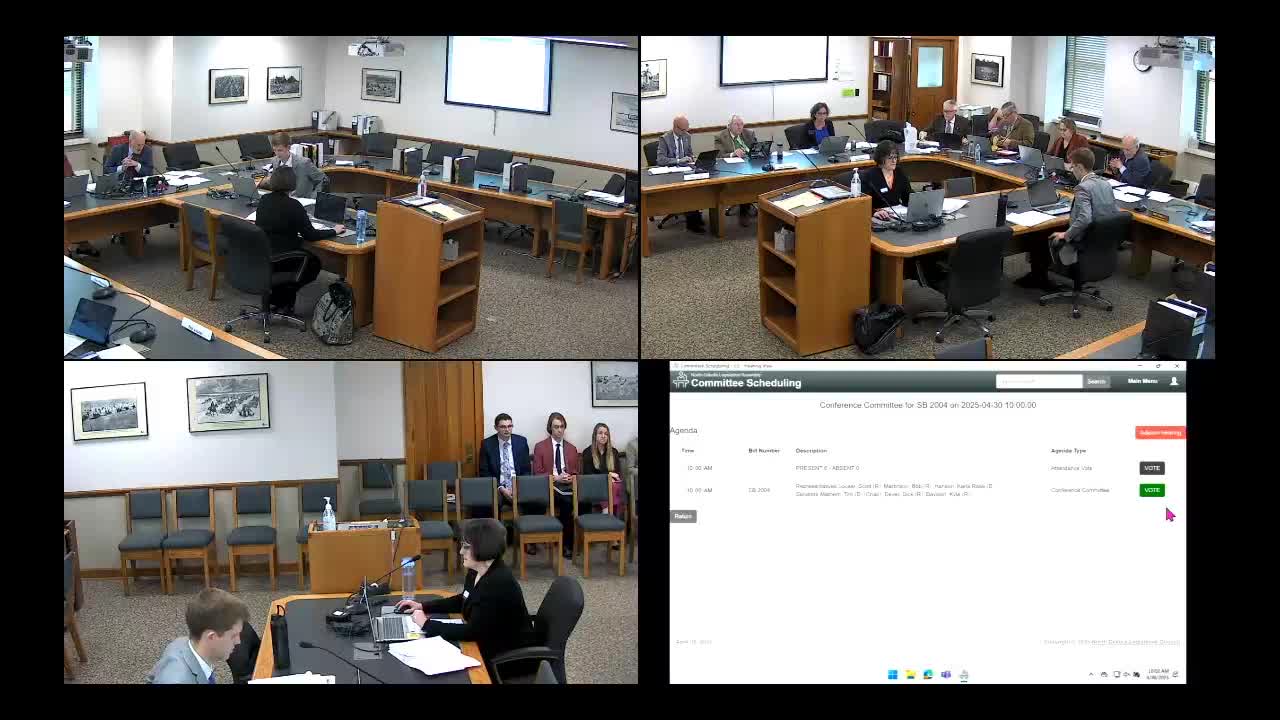
The conference committee on Senate Bill 2004 reached informal consensus April 29 to replace the phrase "accused individual" with "respondent" in the ethics chapter and asked Legislative Council to prepare drafting for a formal amendment this afternoon.
The change grew out of an amendment presented by Representative Lauser and discussion with Ethics Commission staff about consistent terminology. The swap is intended to align the statutory text with how the Ethics Commission currently refers to parties in its complaint rules.
Representative Lauser explained the amendment and urged the panel to adopt the substitution and have staff prepare final language. Logan Carpenter, general counsel for the Ethics Commission, told the committee that "the commission uses the term respondent in our complaint rules," but that the phrase "accused individual" is defined in statute (as cited in the transcript) and recommended the change be made throughout the chapter so usage is consistent. Carpenter said the commission's complaint rules already use "respondent."
Representative Hansen said the committee should also consider updating the statutory definition so the term used in the chapter matches the defined term; she suggested adding a sentence to the definition section equating the two terms. Chairman Mather said he hoped the committee could reach consensus on the wording and have Legislative Council present final language at the 3:30 p.m. meeting.
Committee members repeatedly returned to the practical effect: the amendment is drafting cleanup to make the chapter's language match the commission's rules and reduce confusion for staff and regulated parties. The committee did not take a formal recorded vote in the transcript; members agreed to have Legislative Council prepare the amendment for a formal vote later in the day.