
Fayette County Commission approves multi-year plan to fund three new fire trucks, discusses levy funds and truck payoffs
Get AI-powered insights, summaries, and transcripts
Subscribe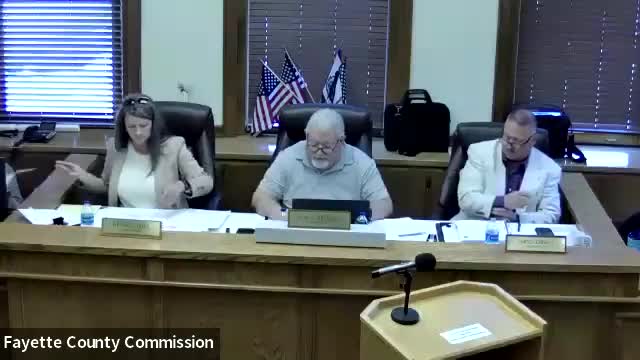
Summary
The commission approved a plan to provide $600,000 per year for four years to buy three base-model fire engines (about $800,000 each), discussed truck payoffs for departments, the need for memoranda of understanding about resale proceeds, and asked fire chiefs for detailed lists of equipment and maintenance costs.
The Fayette County Commission approved a multi-year funding approach to replace aging fire apparatus and to pay down existing truck loans, adopting a plan to provide $600,000 per year for four years to fund three base-model fire trucks, and to continue paying scheduled truck payoffs for departments.
Commissioners and fire officials reviewed department-by-department budgets and outstanding truck-payoff amounts. County staff said the typical base-model truck cost used in planning is roughly $800,000; the three trucks selected by the firefighters’ committee for this levy cycle were Oak Hill, Fayetteville and Mount Hope (committee naming). The motion approved at the meeting directed the county to contribute $600,000 per year for four years to the three selected departments (effectively $200,000 per department per year), subject to memoranda of understanding that would address how sale proceeds of replaced apparatus would be handled.
Commission discussion clarified that when levy funds are used to buy apparatus, proceeds from the sale of replaced vehicles would be returned to the fire levy (not the county general fund) unless the vehicle is donated to a municipal entity, in which case no cash proceeds would return to the levy. Commissioners also discussed allowable carryover of levy balances for planned purchases and encouraged departments to provide written estimates and bids so purchases and pricing can be locked in; commissioners noted price increases can occur if orders are delayed.
The commission and fire chiefs also discussed preventive maintenance (PM) costs for countywide special-operations teams (hazmat, high-angle, swift-water), radio and building projects, and asked chiefs and the fire coordinator to produce a line-item list of priority needs and estimates for the next meeting so the commission can incorporate them into final budgeting. The commission approved the fire budgets and truck plan by voice vote and instructed staff to draft MOUs laying out resale/ownership terms and the payment schedule for the truck purchases.
No department-level microallocations beyond the approved budgets were made at the meeting; commissioners asked departments to submit equipment and bid documents to county staff for further review.