
Brookshire council adopts revised tax-abatement guidelines and authorizes letter of intent with Grundfos
Get AI-powered insights, summaries, and transcripts
Subscribe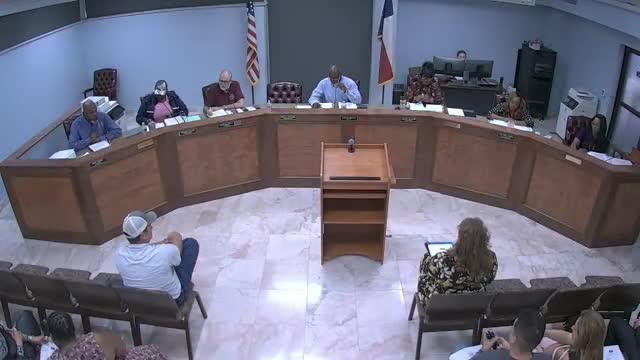
Summary
Council held a required public hearing on tax-abatement criteria, adopted revised guidelines and authorized the mayor to sign a letter of intent with Grundfos to begin negotiating a reinvestment-zone tax abatement for new improvements.
The Brookshire City Council voted May 1 to adopt updated tax-abatement guidelines and later authorized the mayor to sign a nonbinding letter of intent with pump manufacturer Grundfos as the city begins a reinvestment-zone negotiation.
City staff opened a required public hearing on proposed guidelines to govern tax-abatement agreements under Chapter 312 of the Texas Tax Code. No members of the public spoke during the hearing on the guidelines. City attorney and staff said the guidelines are a procedural step required before creating a reinvestment zone and before negotiating specific abatement terms.
Councilmember Taylor moved to adopt Resolution 14-98 adopting the updated tax-abatement guidelines and criteria; the motion passed on a voice vote. The guidelines include a biennial review requirement. Staff said the guideline update was a preliminary procedural step prior to creating a reinvestment zone that would mirror the Grundfos site.
Later in the meeting, City Attorney Olson and staff discussed a draft nonbinding letter of intent with Grundfos. The letter would record both parties’ intent to negotiate a tax abatement tied to new improvements and would refer to a reinvestment zone under Chapter 312 rather than a tax increment reinvestment zone. Councilmember Green moved to authorize the mayor to sign the amended letter of intent; the motion passed.
Council clarified that abatements would apply only to new improvements negotiated in a future abatement agreement and would not affect existing taxable value on the company’s property. Staff said subsequent steps include creating the actual reinvestment zone, publication and additional council actions to finalize any negotiated abatement terms.
Why it matters: Tax abatements are a tool local governments use to encourage eligible capital investments; the decisions set a process the city will use to consider any negotiated abatement for Grundfos’ expansion.
What’s next: Staff will return with zone-creation documents, public notices and the proposed abatement agreement for council consideration if negotiations advance.