House adopts water budget with $3.2 billion project plan and oversight panel
May 02, 2025 | House of Representatives, Legislative, North Dakota
This article was created by AI summarizing key points discussed. AI makes mistakes, so for full details and context, please refer to the video of the full meeting. Please report any errors so we can fix them. Report an error »
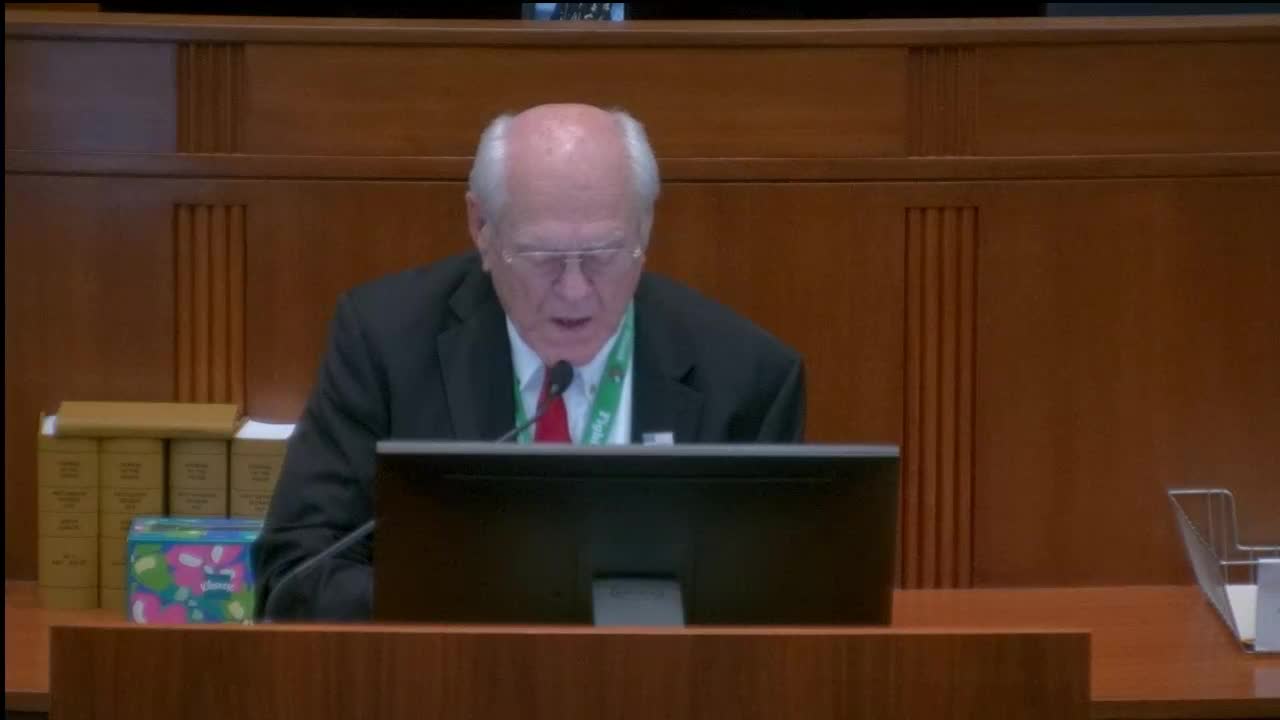
Representative Swantek, speaking for the conference committee, said the budget uses available cash balances tied to the constitutionally earmarked oil extraction tax (20.5%) to fund a 14-year plan covering approximately $3.2 billion in requests and obligations across priority projects. He told the House the proposal contains no general fund or State Investment Fund (SIF) money and emphasized the plan’s low immediate risk because it relies on cash balances rather than ongoing appropriations.
The conference committee report includes a new oversight mechanism: a standing legislative overview committee to review water projects costing $10 million or more, coordinate with the Department of Water Resources, and meet year-round. The bill also directs hiring an attorney focused on water law to assist with interagency disputes and permit expediting, and it continues support for the Northwest Area Water Supply and other projects.
Representative Swantek said the Red River Valley water supply project remains a priority and noted ongoing federal discussions; the floor record cites an effort to obtain approximately $400 million in federal funding that, if secured, would be divided with 75% reducing the state’s obligation and 25% allocated to local entities.
Floor action and outcome: The House adopted the conference committee report and later passed House Bill 10-20. The final recorded vote on the bill’s passage was 79 yeas and 9 nays; the House also approved the bill’s emergency clause.
Why it matters: The legislation sets long-range funding priorities for state water infrastructure and creates a standing oversight body for large projects, while relying on constitutionally dedicated oil extraction tax receipts rather than general fund appropriations. Proponents said the approach preserves fiscal discipline while allowing large projects to proceed; supporters also emphasized the need for state coordination to defend Missouri River water interests in regional litigation.
What remains unsettled: Several provisions reference federal funding competitions and inter-state legal disputes (Eighth Circuit appeals were mentioned as part of prior litigation history); project-level financing details and the outcomes of any federal grant applications remain to be resolved.
View the Full Meeting & All Its Details
This article offers just a summary. Unlock complete video, transcripts, and insights as a Founder Member.
30-day money-back guarantee
Sponsors
Proudly supported by sponsors who keep North Dakota articles free in 2026

