
Conference committee debates compromise to hide small expenditures from public but allow Secretary of State review
Get AI-powered insights, summaries, and transcripts
Subscribe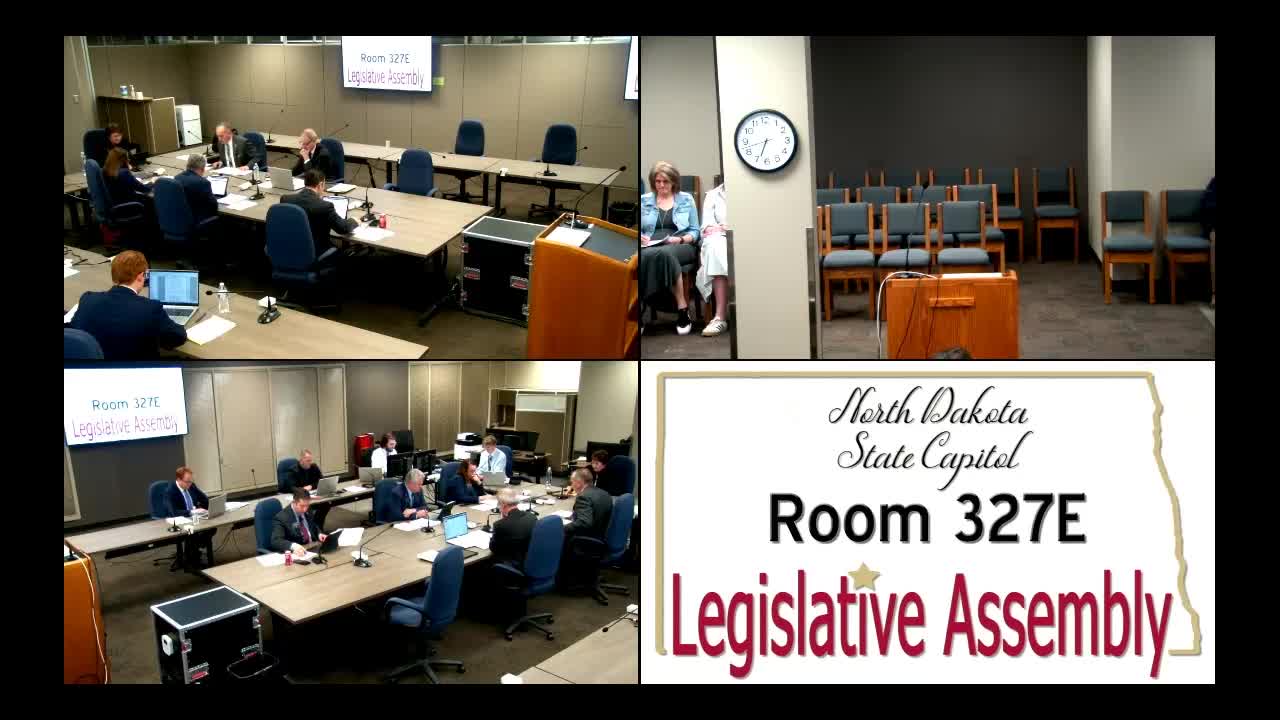
Summary
Legislators on the conference committee for bill 1377 debated a compromise that would keep itemized expenditure records in the Secretary of State's system but make individual expenditures under $250 exempt from public view while showing only category totals to the public; a motion to adopt the compromise was introduced and withdrawn.
A House-Senate conference committee meeting on bill 1377 debated whether campaign expenditures should be itemized publicly or reported only by category, with a House-backed compromise proposed to keep itemized records visible to the Secretary of State while showing only category totals to the public.
The compromise, described by Representative Vetter, would require candidates and committees to enter individual expenditures into the new reporting software but make the name, date and amount of expenditures under $250 exempt from public view; the public would see only the aggregated category, for example, "$2,000 in advertising." Representative Vetter said, "So they would see $2,000 in advertising."
The proposal reflected the House's stated concern about "weaponization" of fine-grained vendor-level reporting in small communities, while offering a mechanism for the Secretary of State to monitor transactions in real time and investigate irregularities. Committee staff member Mr. Richard said, "the language that's in the bill right now is exempt record." He explained the bill text would make expenditures below the threshold exempt records while still being stored in the system for review by the Secretary of State.
Supporters framed the approach as a compromise to preserve vendor privacy and reduce the risk of politically motivated complaints in small towns. Representative Schauer, who moved the motion to adopt the compromise, said the proposal represented "good faith intent to try to find compromise." Opponents argued the change would reduce public transparency. Senator Barta said the public should be able to "know when others aren't on their best behavior as well," and questioned how aggregated categories would serve voters.
Committee members also discussed technical distinctions among filers. The House delegation described an approach that would keep PACs itemized publicly while treating legislative and statewide candidates more similarly, consolidating reporting paths from three (legislators, statewide candidates, PACs) to two (candidates/statewides and PACs). The committee discussed whether the compromise should apply across all filer types or only to candidates and multi-candidate committees; Mr. Richard confirmed the language in the draft used the "exempt record" mechanism to shield certain fields from public view while retaining them for official inspection.
Delegates cited other states during debate. Senators and representatives mentioned South Dakota and Wyoming as examples of more granular itemization levels (South Dakota at $100, Wyoming at $25), with supporters of itemization urging the committee that other rural states manage more detailed reporting without the harms the House cited.
After discussion, Representative Schauer made the motion and Representative Vetter seconded it; the mover then withdrew the motion to allow further discussion and consultation with bill author Dan Ruby, who was present. There was no formal vote recorded on the compromise during this session. The conference committee adjourned after members said they needed more time to reconcile the competing privacy, transparency and technical concerns.
Next steps discussed include whether the committee will return with a refined proposal on categories and thresholds, confirm which filer types would be covered, and finalize how the new reporting software will display beginning and ending balances. Committee members noted that any future change could be implemented after initial deployment of the new system if the Secretary of State and legislators agree to adjustments.