
Senate restores statewide preemption on auxiliary containers, narrows incinerator exceptions after heated debate
Get AI-powered insights, summaries, and transcripts
Subscribe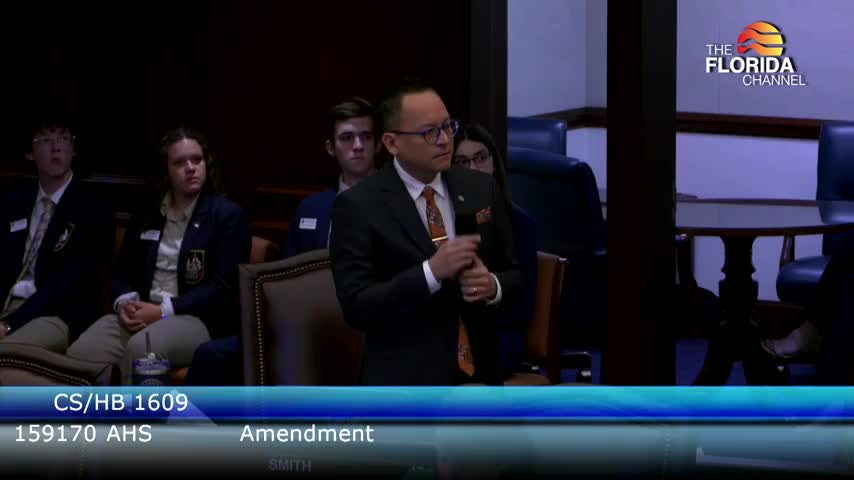
Summary
After extended floor debate, the Senate adopted amendments that reinstate a state preemption on auxiliary-container ordinances, preserve certain local rules on beaches and state parks, and adjust incinerator and landfill provisions. The bill passed 26-10.
The Senate on Friday approved a package dealing with waste incineration, auxiliary containers and landfill rules after several hours of debate and multiple floor amendments. The Senate adopted the House amendment as amended; the final vote on the package was 26 yeas and 10 nays.
The measure reinserted language clarifying the definition of "auxiliary containers," preserved several local exceptions and tightened rules on incinerators and landfill feasibility studies. Senator Martin, sponsor of the Senate amendment, described the approach as a restoration and clarification of preexisting statewide language dating to 2008 and as an attempt to address local concerns raised in committee and on the floor.
Why it matters: The bill touches on the long-running dispute between statewide uniformity and local authority to regulate single-use containers, polystyrene and glass on public property; it also imposes limits on new incinerator construction and adds a feasibility study for a major landfill issue in Broward County.
Key floor points
- Preemption and auxiliary containers: The Senate amendment reinstated a version of the statewide preemption for auxiliary containers that the sponsor said "has existed since 02/2008" and clarified definitions intended to avoid confusion about local regulation. Martin said the revision "keeps the auxiliary container language, clean and precise so that the preemption that existed since 02/2008 can be enforced," while assuring some local exceptions would remain.
- Polystyrene and local regulation: The amendment explicitly preserves the ability of the Department of Agriculture and Consumer Services (DACS) to regulate polystyrene under Florida Statutes 500.9 and allows existing local polystyrene ordinances to remain grandfathered in certain contexts. On the floor Senator Martin noted the provision was targeted to concerns raised in Miami-Dade County and state parks.
- State parks, beaches and local glass rules: The amendment clarified that state parks may regulate auxiliary containers within parks and maintained the ability of local governments to regulate glass containers on beaches for public-safety reasons.
Debate highlights
Senator Smith and others argued the amendment would recreate the regulatory "patchwork" they had opposed and said the House had removed preemption language because the House had not acted on the policy through committee. Senator Smith urged rejection of the amendment, saying it would "create the exact same patchwork of confusing regulations" the preemption was meant to avoid. Supporters, including Senator Avila and others, praised the sponsor's efforts to address committee concerns and negotiated language with the House.
Votes and action
The Senate refused to recede from its amendment and insisted the House concur; later the Senate recorded a final passage with 26 yeas and 10 nays. The Senate amendment and subsequent replacement language will go to the House for concurrence or conference action.
Clarifying details
The floor amendment: preserved DACS authority under Florida Statute 500.9 to regulate polystyrene products, grandfathered local ordinances in select contexts, retained state-park authority over auxiliary containers, and restored limited preemption provisions dating to 2008 while creating targeted exceptions for beaches and certain local polystyrene rules.
Ending note
Lawmakers who spoke described the result as a negotiated compromise intended to balance statewide clarity with local safety concerns, though several senators warned the package could still lead to uneven rules across municipalities if both chambers do not reach identical language in a conference.