
Senate concurs with House on broad education package: charter changes, K–8 phone limits, teacher-prep coursework
Get AI-powered insights, summaries, and transcripts
Subscribe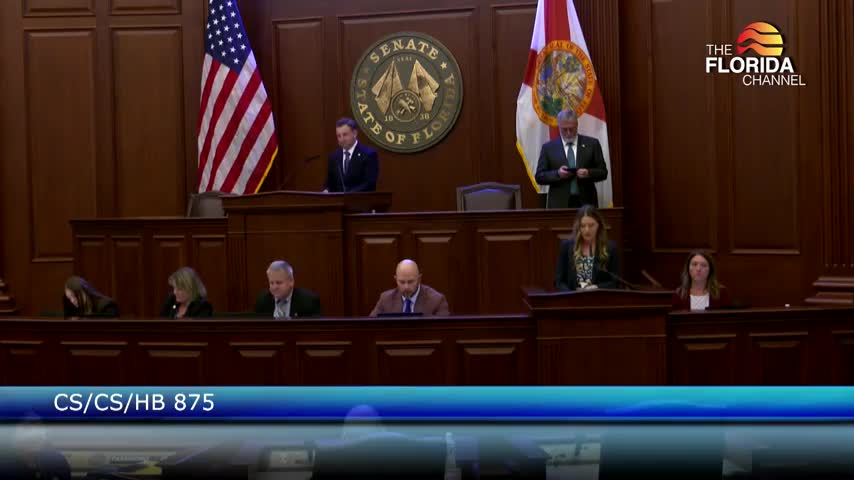
Summary
The Senate concurred with House amendments to a multi-part education package covering charter conversions, cell-phone restrictions for K–8, a high-school pilot on phones, and teacher-preparation coursework; the package passed after debate 26-5.
The Senate agreed to House amendments on a broad education package that bundles charter-school provisions, limits on student cell-phone use and new teacher-preparation coursework. The Senate recorded 26 yeas and 5 nays on the concur motion.
Key elements approved by the Senate on May 2 included:
- Charter conversion and local revenues: New provisions allow municipalities to establish "job-engine" charter schools and require certain revenue-sharing calculations so charter schools receive a proportional share of local discretionary surtax revenue based on enrollment.
- Cell-phone policy: The package prohibits student cell-phone use during the school day in kindergarten through eighth grade and sets up a pilot study for high-school cell-phone bans (grades 9–12) to evaluate instructional impacts. The bill directs the Department of Education to partner with six school districts to study effects.
- Teacher preparation and center: The concurrence includes changes to teacher-preparation requirements that require candidates and preparation programs to complete two specific courses—cognitive science of learning and classroom management/high-impact instructional strategies. The measure also establishes a Florida Center for Teaching Excellence at Miami Dade College, subject to funding.
Senator Burgess, explaining the House amendment, said the bill "requires candidates and teacher prep programs to complete two specific courses, cognitive science and classroom management and high impact instructional strategies." He described the House changes as stylistic in part but said the package "arrives at essentially the same goals" through a staggered approach to certification testing.
Debate and concerns
Opponents focused on charter-conversion language that, as amended, allows parents to convert some schools to charters without a veto by teachers' organizations or district administrators. Leader Berman said she would oppose the bill because she was "troubled" by removing teacher and administrator input on conversions.
Supporters defended the package as a negotiated compromise combining House and Senate priorities and argued the mix of pilot studies and statutory guardrails will produce evidence to guide future policy.
Outcome and next steps
The Senate adopted the House amendment and passed the package 26-5. Several members asked for and received assurances from staff that specific contentious provisions (for example, details around conversion procedures and pilot parameters) would be finalized in conference or through implementing guidance. The package now proceeds to the next step in the bicameral process.