
House Resources Committee forwards Dunleavy appointees to fisheries, game and entry boards after confirmation hearings
Get AI-powered insights, summaries, and transcripts
Subscribe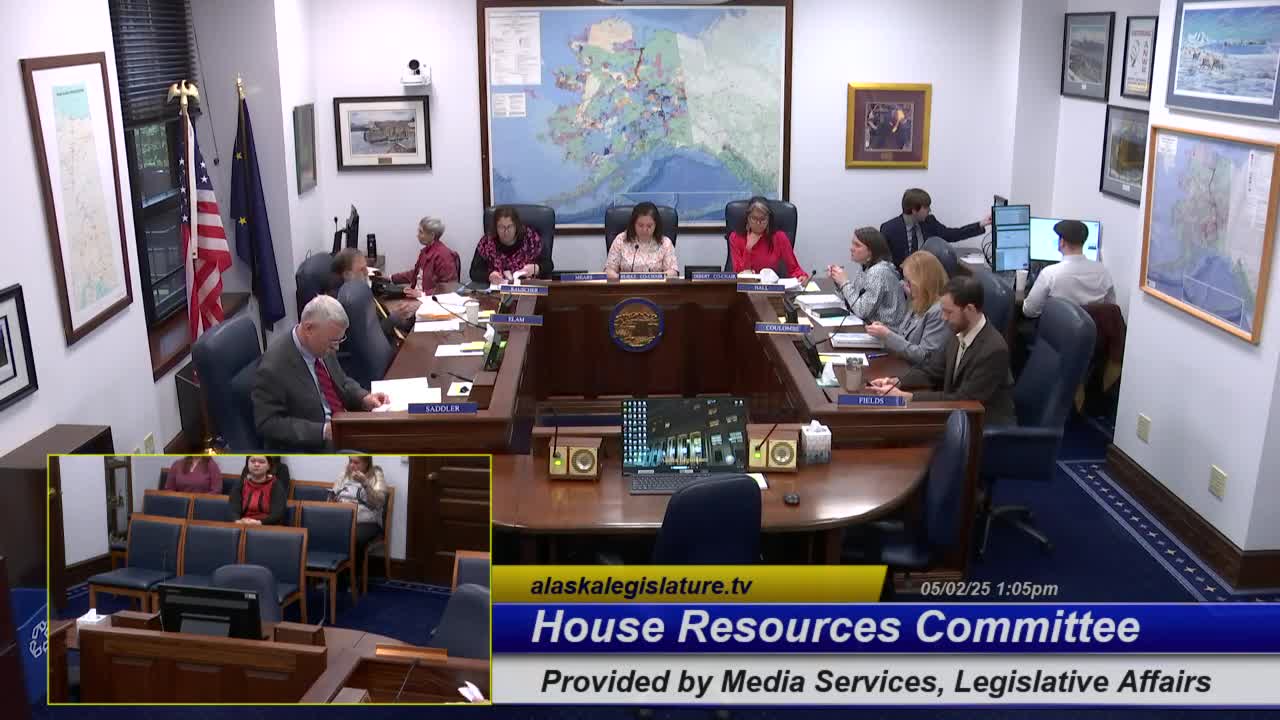
Summary
The Alaska House Resources Committee on May 2 held confirmation hearings for governor Mike Dunleavy’s nominees to the Board of Game, Board of Fisheries and the Commercial Fisheries Entry Commission, heard public testimony for and against several candidates, and forwarded the names to a joint session without objection.
Juneau — The Alaska House Resources Committee on May 2, 2025, heard presentations and public testimony on governor Mike Dunleavy’s appointees to the Board of Game, the Board of Fisheries and the Commercial Fisheries Entry Commission and, after questions and public comment, forwarded the nominations to a joint session of the legislature without objection.
The committee heard from two nominees to the Board of Game. Al Barrett of Fairbanks, a reappointment first seated in 2022, thanked the committee and described his long record of engagement with users and advisory committees. “I would like to thank the governor Dunleavy for the reappointment to the board of game,” Barrett said, adding he would continue to “support the best public process of regulating, allocating, and providing input to the management of our wild resources.” Carrie Ann Mueller of Palmer, nominated to a first three‑year term, told the committee she supports public involvement and said her background is in the outdoor industry and hunter education. Mueller said she would “follow the science and data from our fish and game biologists and staff” and listen to advisory committees and user groups.
The committee also considered two nominations to the Board of Fisheries. Olivia Henahi Erwin of Niinana introduced herself as a longtime regional advisory‑committee member and said she worked with agencies and advisory committees to “legalize hook and line as subsistence gear throughout the Yukon River” in earlier proceedings. Erwin said she would “make decisions based on science and stakeholder experience that follows statutes for the promotion of healthy, thriving fish stocks.” Thomas Carpenter of Cordova, a reappointment who served as vice chair during his current term, described work on a Herring Revitalization Committee and the Alaska Salmon Research Task Force and emphasized compromise among user groups.
The committee heard from Rick Green of Anchorage, nominated to the three‑member Commercial Fisheries Entry Commission (CFEC). Green described CFEC’s role as “the regulatory and quasi judicial body that oversees the commercial fishing industry for the state of Alaska,” explaining the commission issues permits and licenses, adjudicates transfer and emergency transfer requests, and reviews whether fisheries should be limited under the Limited Entry Act of 1973.
Public testimony showed divided views on some nominees. Several individuals and groups urged confirmation of Olivia Erwin, citing her regional advisory‑committee work and engagement with tribal and subsistence users. The Chitina Dipnetters Association and other organizations urged recognition of personal‑use dip netters as a stakeholder group on the Board of Fisheries. Other commenters, including the Alaska Outdoor Council and the Resident Hunters of Alaska, opposed reappointment of Thomas Carpenter, citing actions they said favored trawl expansion in Prince William Sound and concerns about hatchery management; supporters of Carpenter described him as “thoughtful, approachable, and open to hearing all different views.”
After the hearings and public testimony the committee agreed to forward the nominees’ names to a joint session. Cochair Representative Divert moved the committee report; hearing no objection, the committee sent the nominations forward for final consideration.
The committee did not take final confirmation votes at the hearing; the forwarded report does not bind any member’s future vote in a joint session.