
Clay County residents urge fixes for Cole Road and 170th Street after resurfacing left loose gravel
Get AI-powered insights, summaries, and transcripts
Subscribe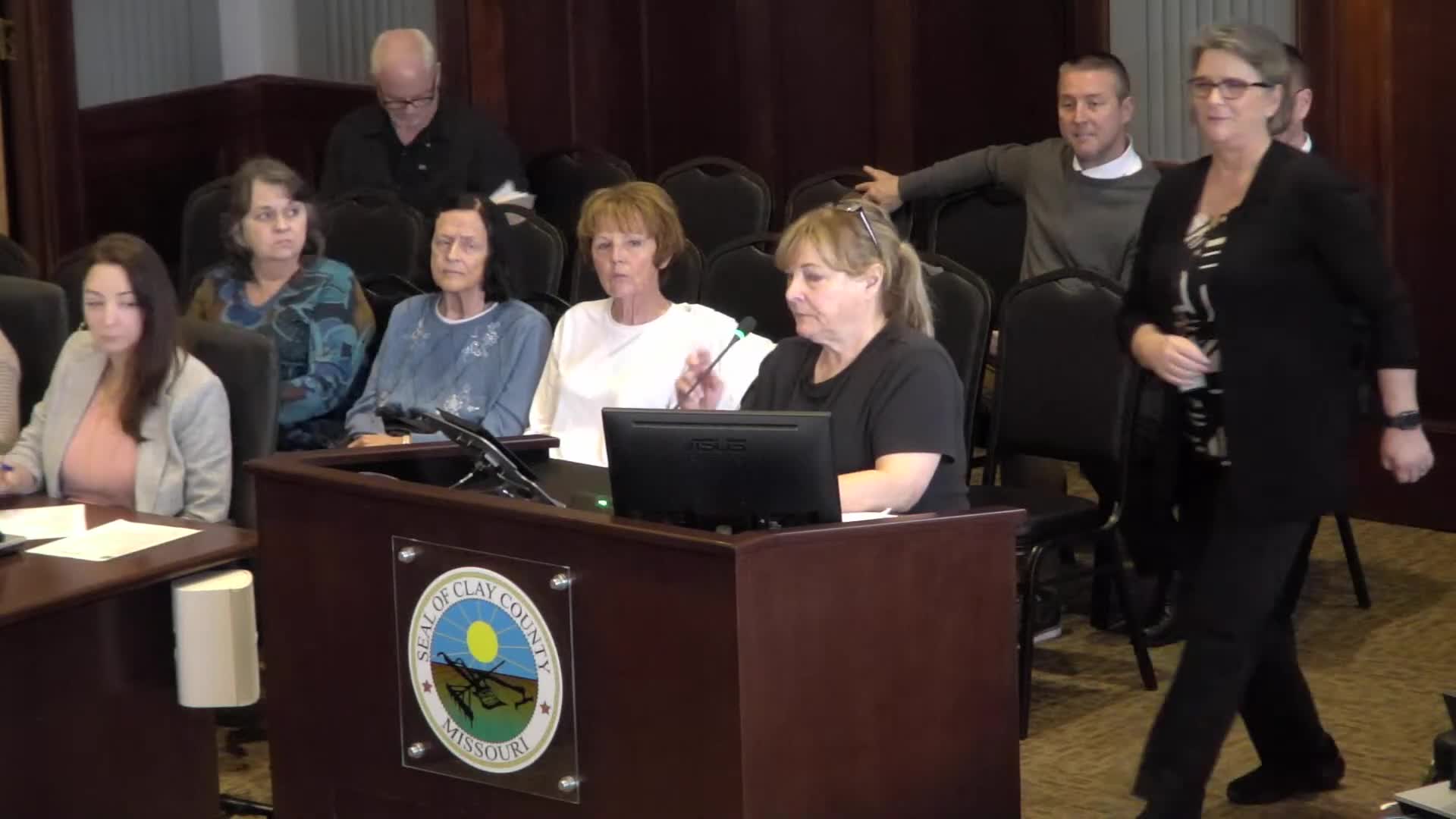
Summary
Residents of a Somerset-division neighborhood in Clay County told commissioners their road was left as loose gravel after last year's work, presenting safety and property-damage concerns; county staff said the highway director will meet residents and the county will review resurfacing plans.
Residents from a Somerset-division neighborhood in Clay County told the Clay County Commission on Thursday that work to resurface Cole Road and nearby 170th Street left the streets covered in loose gravel and potholes, creating hazardous driving conditions and sending gravel into yards and garages.
The complaints came during the commission's public-comment period when Dawn Belew of Kearney said she and about 20 homeowners on Cole Road have lived with the conditions since the county tore up the street last year. "This is not chip and seal...this is nothing but gravel," Belew said, presenting a signed petition and photos she said show the road before and after the work.
The residents described dust clouds when vehicles pass, rocks accumulating in garages, damage to lawnmowers and vehicles, poor drainage that funnels stormwater into yards, and faded or missing road markings that reduce nighttime visibility. Mary Curtis, who said she has lived in the subdivision since 1975, told commissioners the recent resurfacing was the worst she has seen in her lifetime and suggested timing and application issues during August heat may have contributed to the failure.
Kimberly Murphy, another longtime resident, said the neighborhood received a different pavement product in an earlier resurfacing roughly 13 to 15 years ago and that adjacent neighborhoods receive different treatments such as chip-and-seal or blacktop that have been resurfaced multiple times since. Gwendolyn Blatt said the current condition is essentially a gravel road and that every household in their immediate neighborhood signed the petition asking for repairs.
Commissioners asked procedural questions and committed to follow-up. Commissioner Johnson thanked the residents and asked whether they had checked the county's resurfacing plan; residents said they had and provided copies of their petition and photos. Commissioner Whittington told the group the county will relook at roads that received chip-and-seal a few years ago and that Cole Road "probably is due to be upgraded to asphalt," but deferred technical answers to the county's road and bridge director.
Tom Degenhardt, identified by the commission as the head of the Road and Bridge Department, was introduced to the residents and the commission. Commissioners asked Degenhardt to meet with the residents in the hallway after the meeting, and Commissioner Lawson requested an email update once staff has a disposition. Acting Administrator Jones and the commission asked that any submitted materials be distributed to all commissioners and to Degenhardt for review.
No formal action or vote was taken by the commission during the meeting. Commissioners directed staff to provide the residents with the resurfacing schedule and to meet with them to review the complaints and submitted evidence. The residents were advised to provide additional materials to the administration for distribution to commissioners and the highway administrator.
Why it matters: Local road-surface treatments and resurfacing schedules determine safety, maintenance burdens and long-term county costs. Residents said the latest work reduced rideability, created safety hazards and increased maintenance costs for property owners; county staff identified the Road and Bridge director as the point of contact for technical review and next steps.
The commission did not set a formal timeline for repair during the meeting; staff committed to follow up directly with the residents and to copy commissioners on outcomes.