
Meeting in Laredo called with no quorum; members discuss virtual voting and adjourn
Get AI-powered insights, summaries, and transcripts
Subscribe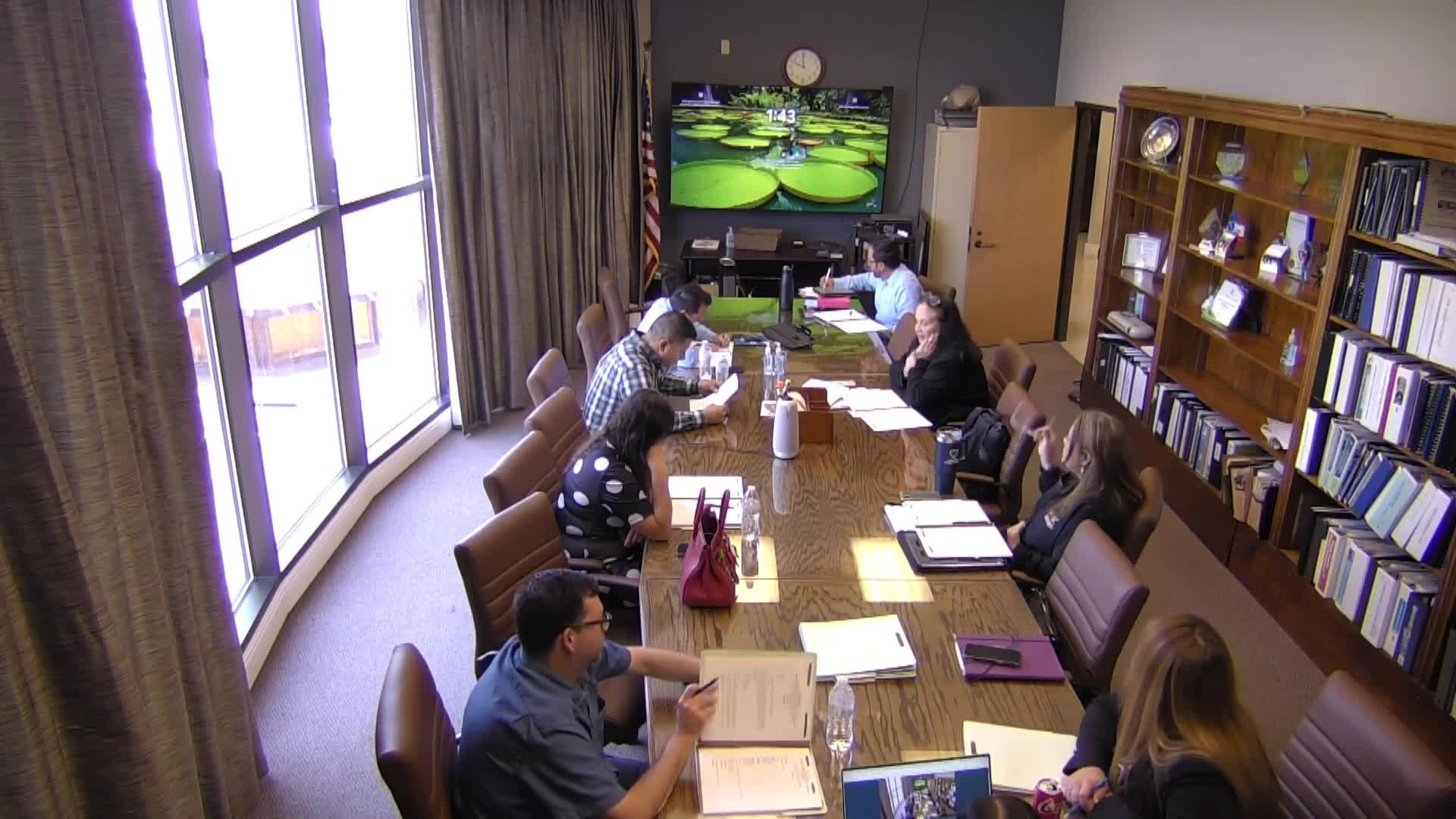
Summary
A Laredo meeting was called to order but did not reach quorum. Participants discussed physical-presence requirements for virtual attendees and then moved to adjourn; the motion was seconded and approved by voice vote. Exact vote tally and governing body were not specified in the transcript.
A meeting in Laredo was called to order but officials determined there was no quorum and the members present adjourned after a brief discussion of virtual-voting rules.
The matter arose during an early roll call in which several named participants were recorded as present or absent. Ariana Valdez, Elizabeth Carrera, Federico Lisondo and Luis Vasquez were listed as present; multiple other members were recorded as not present. The transcript does not identify the governing body or provide a meeting date beyond the audio timestamps in the record.
Participants discussed whether virtual attendees could be counted toward a quorum. One participant said that “six people need to be physically present in order for virtual attendees to count,” and that virtual attendees alone could not constitute a quorum; the transcript does not identify that speaker by name. After that exchange, a participant moved to adjourn the meeting; another participant seconded the motion. The motion was approved by voice vote and the meeting was adjourned. The transcript does not record an exact roll-call tally or the full names of the motion mover and seconder.
The discussion and adjournment took place without any formal votes on substantive business because the body lacked a quorum. The record does not show any directives given to staff, any scheduled follow-up actions, or references to specific statutes or local ordinances governing quorum or remote participation.