
Court allows state's late notice of enhanced punishment in Cordarius Godwin case and grants continuance; trial moved to November
Get AI-powered insights, summaries, and transcripts
Subscribe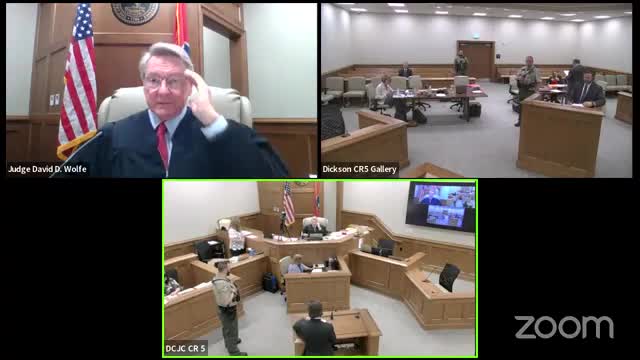
Summary
The court denied a defense request to bar the state's late filing of a notice seeking enhanced punishment, granted the defendant's motion for a continuance, and set a new trial date in November in the case of Cordarius Godwin. The court declined to alter bond based on the continuance.
Judge David D. Wolfe considered competing motions in the case of Cordarius Godwin and ruled that the state's late notice seeking enhanced punishment would not be stricken but that the defense was entitled to a continuance. The judge set a trial date in November in Courtroom 5 and declined to grant the defendant's request to reinstate or modify bond based solely on the continuance.
Defense counsel argued the late notice was prejudicial and asked the court to strike the enhancement or continue the matter; the prosecutor cited case law and argued that the usual remedy for a late filing is a continuance rather than preclusion. The prosecutor referenced State v. Thompson, 36 S.W.3d 102, as an analogous appellate decision addressing timelines and remedies for untimely notices.
On the record, the court said it considered the timing of the notice and the defendant's familiarity with his own prior convictions and concluded that striking enhanced-punishment status was not warranted. “I will grant the state's, motion to or the the notice rather, and then I will also grant the defendant's motion for a continuance,” the judge said. The court also explained that a continuance did not justify changing the previously litigated bond conditions.
The parties discussed scheduling and the court chose a November trial date; the judge also noted court scheduling constraints and asked counsel to coordinate pretrial motions closer to the new trial date. The court directed the prevailing party to prepare a written order reflecting today's rulings.