
Pentagon witnesses describe relook at 'Cybercom 2' and favor service‑like model to build cyber mastery
Get AI-powered insights, summaries, and transcripts
Subscribe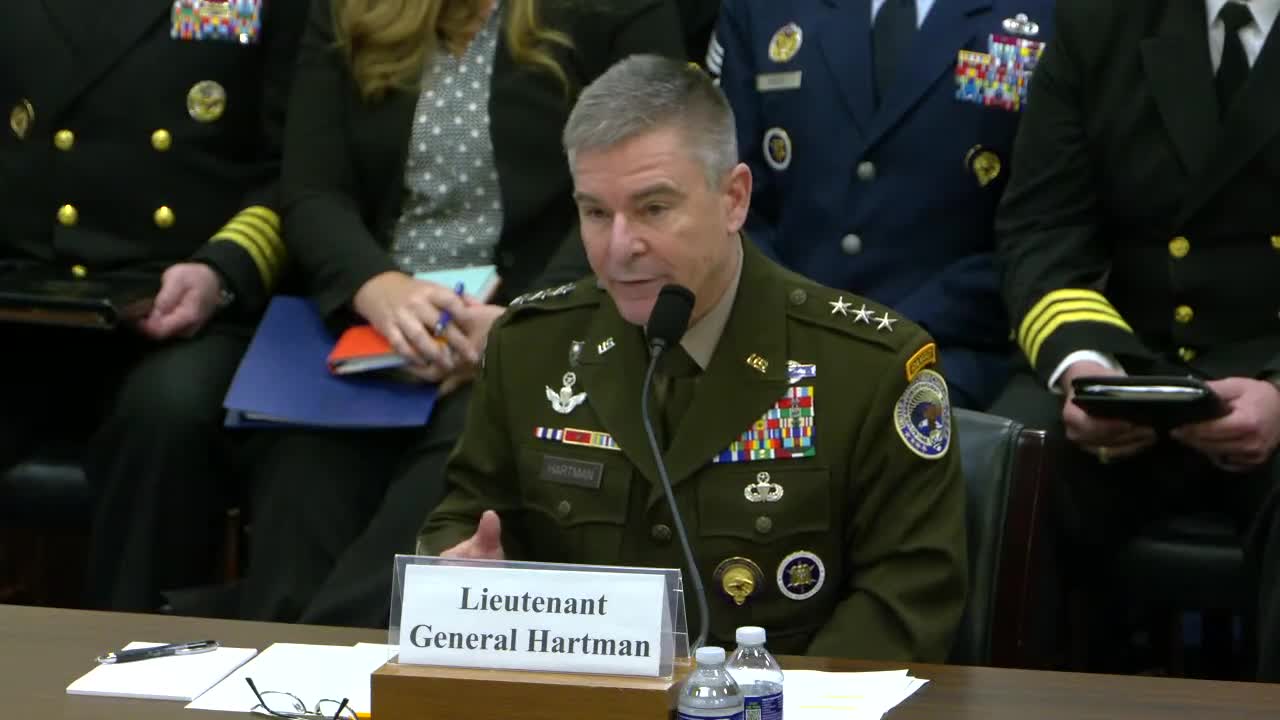
Summary
Witnesses told the House Cyber Subcommittee that the Pentagon is reexamining the Cybercom 2 workforce and force‑presentation model and that Cyber Command and DOD evaluated three models, with a SOCOM‑style approach preferred to build a more 'mastery'‑focused cyber force.
Senior Defense Department witnesses told the House Armed Services Cyber Subcommittee on May 16 that the department is revisiting the so‑called Cybercom 2 workforce and force‑presentation effort and favors a model that preserves service contributions while centralizing operational training.
The most important point up front: Department officials said they evaluated three models — status quo, a Special Operations Command (SOCOM)‑style model, and the creation of a separate cyber force — and that an operational planning team recommended a SOCOM‑like model as the preferred option to develop mastery across the cyber force.
Why it matters: Witnesses said the SOCOM‑style approach would let Cyber Command manage common training and build specialized skills more rapidly, while still relying on the military services to present trained personnel. "Our preference was the SOCOM like model," Lieutenant General Joe Hartman said, adding that Cyber Command already organizes components and sub‑unified commands and could use those authorities to scale training and mastery.
Readiness and metrics: Members pressed witnesses on readiness, and one lawmaker noted the service cyber components only recently attained "foundational readiness standards," a status the chair said took more than a dozen years to achieve. Witnesses said that Congress should receive meaningful and accurate readiness metrics and that Cyber Command will continue to work with the services to improve talent management, training quality, and retention.
Budget and authorities: Hartman told the panel that, in fiscal year 2024, Cyber Command responsibly managed more than $2,500,000,000 and that tighter alignment of authorities and accountability had sped decision timelines. Bucout said the department is enhancing acquisition pathways to buy software and nontraditional suppliers more effectively.
Legal and procedural note: The witnesses said Congress requested an analysis under the National Defense Authorization Act requirement referenced during questioning (referred to in the hearing as "NDA section 15 33") and that Cyber Command formed an operational planning team to evaluate options.
Next steps and oversight: Witnesses said they will take the committee's concerns into account while conducting a deeper review of Cybercom 2; members asked for additional briefings and classified discussion about authorities and operations. Lawmakers emphasized the need for a model that can quickly produce operationally ready personnel while avoiding organizational friction between the services and the command.
Members also asked that readiness metrics reported to Congress be "meaningful, accurate, and honest" so the committee can target resources and oversight appropriately.