
DOD witnesses tell House panel workforce management, hiring freeze and mental‑health support are top cyber priorities
Get AI-powered insights, summaries, and transcripts
Subscribe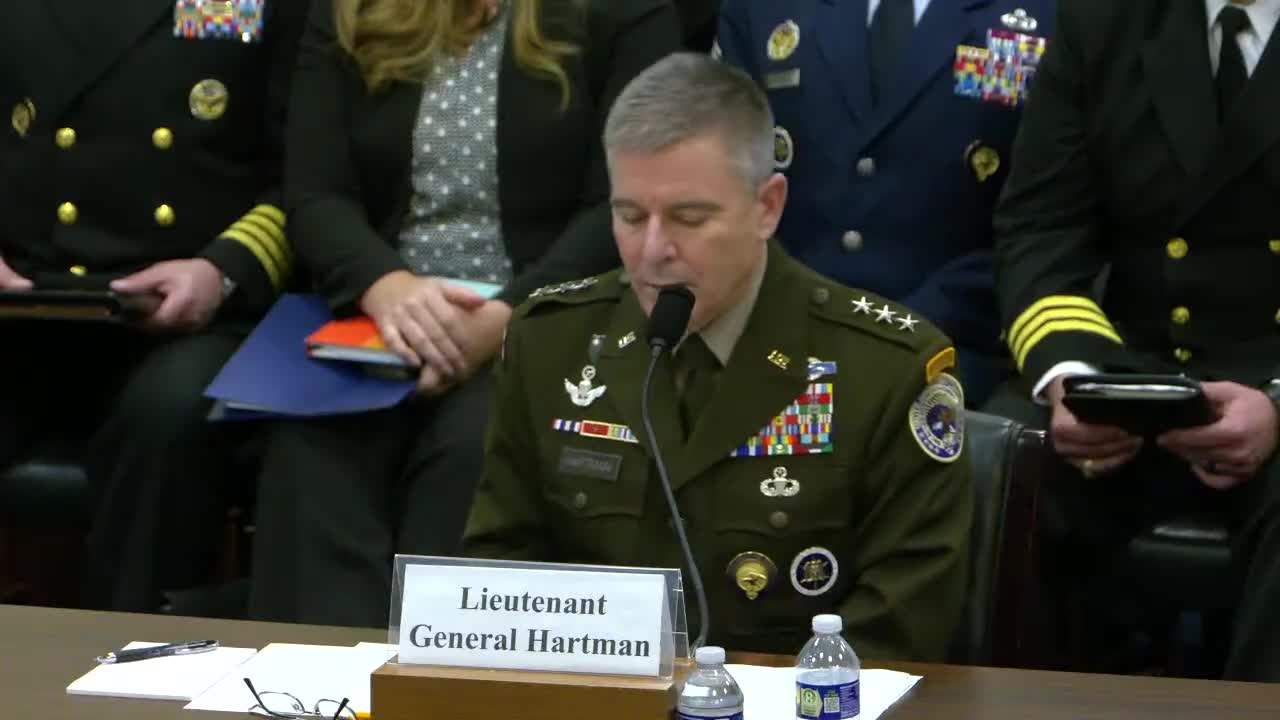
Summary
Witnesses told the House Cyber Subcommittee that talent management — including recruitment, retention, hiring‑freeze impacts, and mental‑health support — remains Cyber Command's top priority, and described ongoing steps to manage billet needs and workforce resilience.
Department of Defense witnesses told the House Armed Services Cyber Subcommittee on May 16 that talent management and personnel resiliency are central to maintaining cyber operations and that they are taking specific steps to reduce harms from recent workforce‑shaping actions.
The most newsworthy point: Lieutenant General Joe Hartman said Cyber Command's top priority is "talent management, and ensuring that we can build mastery in the force," and described retention success in key cyber roles and active efforts to improve hiring and training pipelines.
What members asked: Lawmakers pressed witnesses about the effects of a recent hiring freeze, workforce‑shaping measures, and separations. Representative Elfreth asked how many employees left as a percent of the workforce; Hartman said the target for separations was 5 to 8 percent and that no probationary employees were terminated as a result of the workforce actions. Members repeatedly expressed concern about the national security risk from poorly handled separations and about the difficulty of competing with higher private‑sector pay.
What witnesses reported: Hartman said Cyber Command has generally achieved strong retention for "key work roles" (operators, exploitation analysts, and code writers) and that the command has contingency plans in place to cover expected departures. He said Cyber Command has made progress in offering incentive pay for military and civilian personnel and that recruiting benefits from the mission itself, not solely from compensation. Bucout said the department is examining a "cyber‑accepted workforce" under the DOD CIO to bring in needed talent despite the hiring freeze.
Mental health and occupational resiliency: Committee members cited a congressionally directed evaluation that found organic resources were insufficient for cyber operators' occupational resiliency. Hartman said Cyber Command has taken steps, including hiring its first psychologist, partnering with other agencies for occupational health, and planning additional support; he agreed to provide a written plan on timetables and measures.
Recruiting and training innovations: Witnesses described an artificial intelligence roadmap and pilot programs to accelerate operations and highlighted partnerships with the services and the National Security Agency to access technical capabilities. Hartman also noted that prior efforts had shortened civilian hiring timelines by about 45 percent before recent workforce shaping.
Why it matters: Members repeatedly tied workforce quality and care to national security, arguing that losing talent or failing to address mental‑health needs damages long‑term recruiting and retention.
Next steps: Witnesses agreed to provide additional information to the committee, including a written plan on occupational resiliency and petitioned changes or exemptions to hiring restrictions where necessary to preserve mission‑critical billets.