
Kenmore council says budget shortfall urgent; staff to pursue consultant on ballot options
Get AI-powered insights, summaries, and transcripts
Subscribe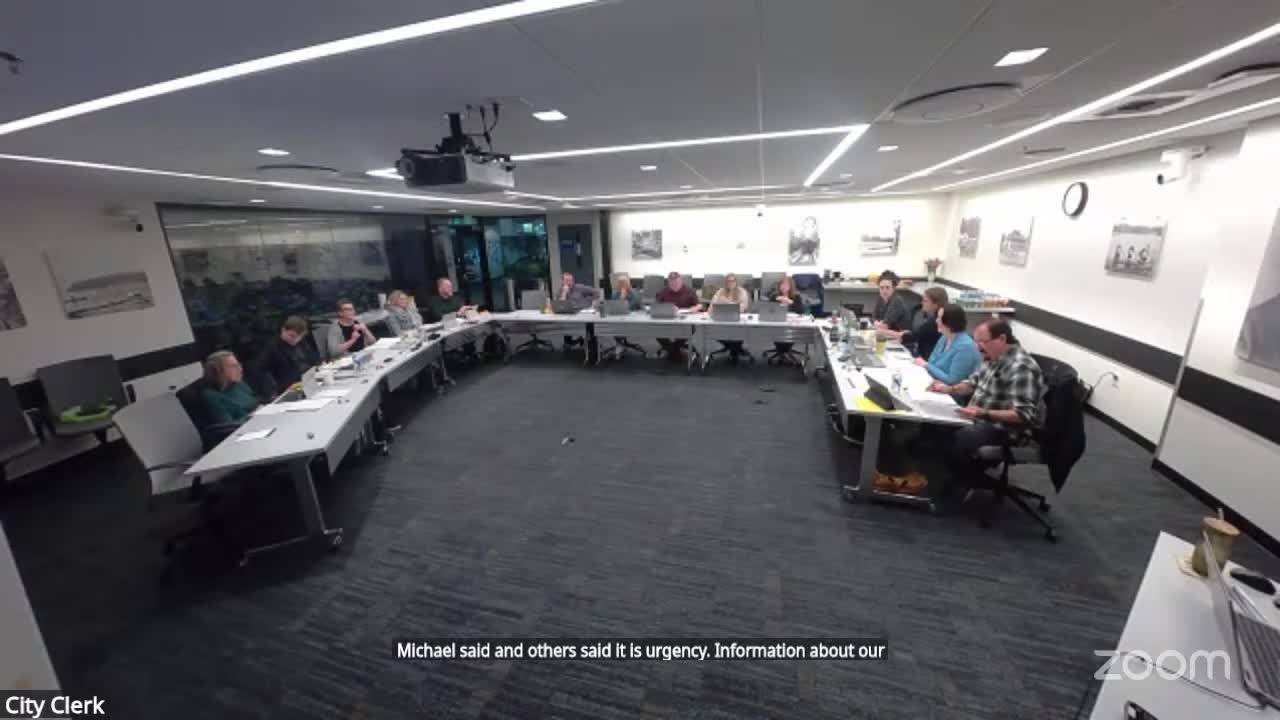
Summary
At a full-day retreat, Kenmore council members heard city finance staff warn of a growing general-fund shortfall through 2032 and signaled support for hiring a consultant this year to study revenue and outreach options, including levy and district measures, while continuing to consider expenditure reductions.
Kenmore City Council met in retreat to review updated fiscal projections and discuss possible ways to close a multi‑year budget gap, with staff urging the council to begin formal planning now for potential ballot measures and other revenue or expenditure steps.
Finance staff warned the council that updated assumptions pushed the city’s structural shortfall into the late 2020s. Melinda, the city’s finance lead, told the council, “it’s quite dire when you look out to 2032,” and showed scenarios in which reserves fall sharply by 2029 without new revenue or major cuts.
Why it matters: the city’s general fund is projected to lose ground because expenses are forecast to grow faster than revenues, driven by rising insurance, public safety and non‑labor costs. Staff identified several options to narrow the gap — from a metropolitan park district or a local levy lid lift to a local sales‑tax increase or transportation/public‑safety sales taxes — and recommended hiring outside consultants this summer to test messages, voter appetite and timing.
Staff framed the choice as a puzzle of many pieces rather than a single fix. Melinda outlined that a combination of revenue tools (for example, a local levy lid lift or a metropolitan park district) and expenditure strategies would be required to reach the council’s reserve goal. She showed modelling for several examples: a 24‑cent levy equivalent that would produce roughly $1.68 million a year; a 30‑cent and 35‑cent scenario that would extend the city’s runway further; and a caution that any parcel‑based district (a metropolitan park district) typically takes longer to deliver revenue to the city than a levy lid lift.
Council members pressed staff on timing and tradeoffs. Councilmember Nathan summed up the political and policy tradeoff many described: “We can’t cut our way out of this. We also can’t tax our way out of this,” and urged a mixed approach of spending reductions, partnerships and carefully targeted revenue plans. Several councilmembers, noting the urgency of the updated projections, said they wanted work on both (a) an approach that focuses on public safety and human‑services funding and (b) an approach that would create a parks/operations funding stream (the park district concept), because the latter could also help fund large projects discussed elsewhere in the retreat.
Staff asked for a clear direction to begin the next steps and recommended a consultant to lead statistically valid polling, community engagement and campaign planning. Council discussion did not record a formal motion or vote at the retreat, but multiple members said they were prepared to move forward with consultant work this summer and to return to council with a timeline, scope and cost estimate. Interim City Manager Stephanie described the presentation as the staff’s duty to “bring the facts to you” and said staff would bring an implementation timeline and a consultant scope if the council gave direction to proceed.
What staff said about options and timing - A levy lid lift (six‑year levy) would deliver revenue faster than a metropolitan park district (MPD), but an MPD can create a stable parks operations fund and potentially fund a major waterfront project if voters approve a higher levy or cap later. - Transportation and public‑safety sales taxes are council‑ or county‑level options; staff modelled county proposals as well and noted the county’s action could limit local options in some cases. - Staff recommended hiring a consultant this summer to prepare polling, messaging and a community engagement program with the goal of returning a formal ballot timetable and draft ballot language in mid‑2026 if council so directs.
What the council directed (next steps and staff notes) - Council signaled support for staff to begin consultant procurement and further analysis of the ballot options and outreach planning; staff will return with a scope, timeline and budget for that consultant work. (No formal vote was taken at the retreat.) - Staff will continue to refine projections through 2032, test revenue and expenditure scenarios, and produce additional detail on the cost and timing differences between levy lid lifts and metropolitan park district structures.
Ending note: Council members repeatedly framed the conversation as balancing short‑term solvency with long‑term vision. Several said they want a combination of careful budget reductions and targeted revenue measures that carry community backing, rather than relying on a single instrument. Staff and council agreed the coming 12–18 months are the critical window for outreach, polling and deciding whether one or more ballot measures will be proposed in 2026.