
Planning commission reviews draft changes to how South Burlington measures and caps building heights
Get AI-powered insights, summaries, and transcripts
Subscribe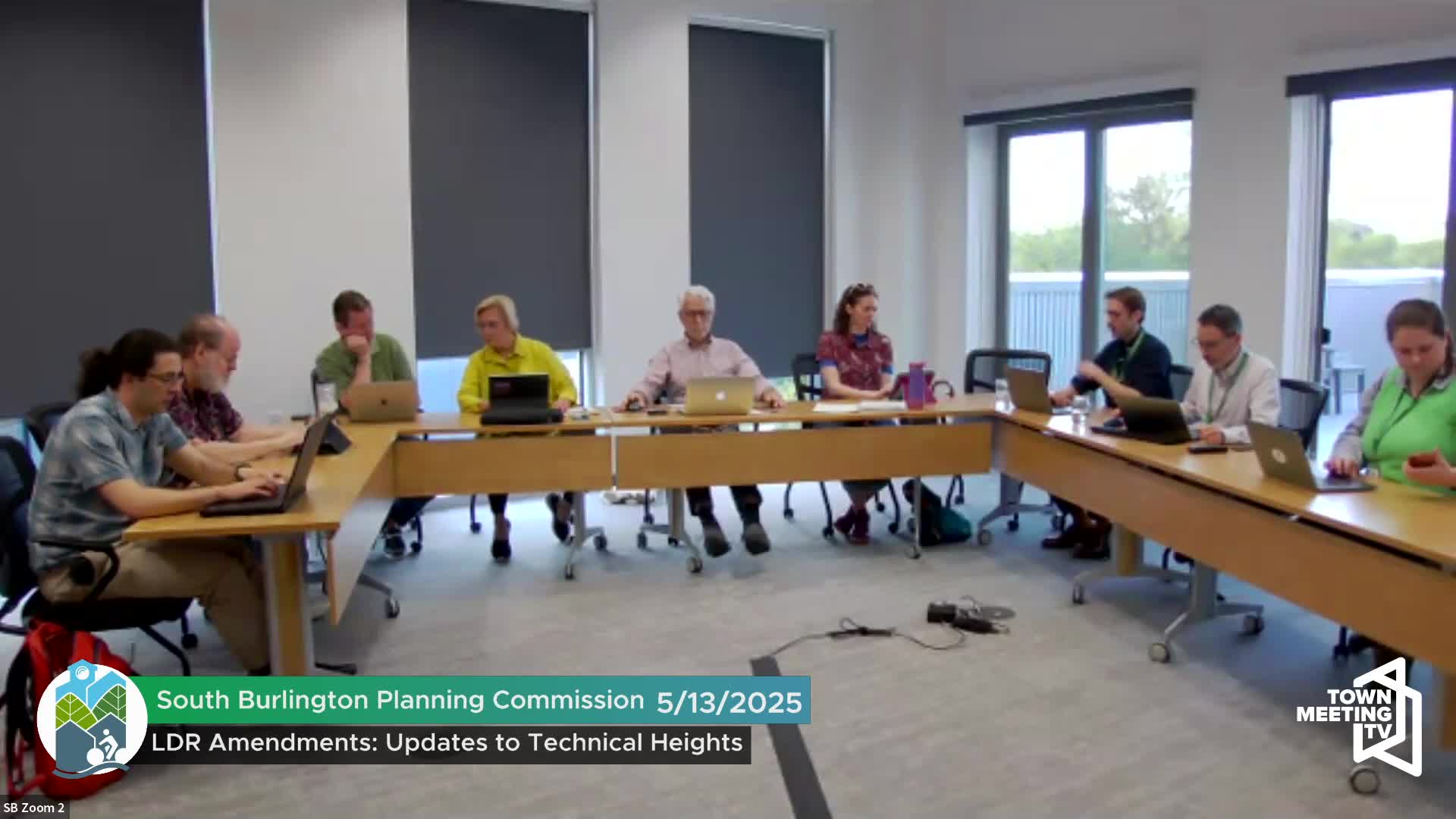
Summary
May 13 — The South Burlington City Planning Commission reviewed proposed amendments to how the city defines and measures building height and to the maximum heights for different building types.
May 13 — The South Burlington City Planning Commission reviewed proposed amendments to how the city defines and measures building height and to the maximum heights for different building types. Planning staff presented a draft that aligns the city’s measurements with the International Building Code, shifts the primary baseline to finished grade, and replaces some story‑based limits with explicit foot measurements.
The changes matter because they affect how tall new housing and mixed‑use projects can be and how developers calculate heights during design. Planning staff said the intent is to simplify measurements for builders and to make the city’s rules consistent with industry practice: “we’ve moved the standard for measuring grades to a finished grade, which is pretty standard for most of the construction industry,” the staff presenter said. The draft also shifts toward measuring height in gross feet with stories treated as a secondary measure.
Key details in the draft include replacing several overlapping grade definitions with a finished‑grade baseline, and updating the height table so medium multiunit buildings would have a higher cap (the draft shows an increase from about 28 feet to 45 feet for the medium category) while large multiunit buildings would be measured in feet (the draft uses 60 feet to replace a former five‑story limit). Staff said the larger numeric caps reflect developer feedback about how units are laid out (for example allowing three‑floor commercial‑style floor‑to‑floor heights) and that some numbers may be adjusted after further review.
Commissioners pressed staff to reduce redundant definitions and to make plain when finished grade applies to a building versus the surrounding terrain. Commissioner Michael asked whether “finished grade” should explicitly reference the base of a building; planning staff agreed that finished grade as used in the draft refers to the building base and said they would clarify the wording. Commissioners also flagged a likely typographical error in a redline that listed “28” in a place that had been story‑based in the adopted code and asked the staff to tidy the table and its notes to prevent confusion.
The draft preserves an inclusionary‑zoning-related bonus: if a project qualifies under the state’s affordable housing development program (the state statutory optional program the city has folded into its requirements), the project can receive an additional story as a bonus. Planning staff described that as a legal compatibility matter rather than a change in policy.
Staff said they will return with cleaned‑up language, corrected table notes and cross‑references, and with any revised numbers that result from follow‑up conversations with developers and engineers. No formal vote on the height and measurement amendments was taken at the May 13 meeting; the commission left the item for further editing and a future public hearing.