
Planning commission debates how to classify fueling: separate service station rules, keep EV charging distinct
Get AI-powered insights, summaries, and transcripts
Subscribe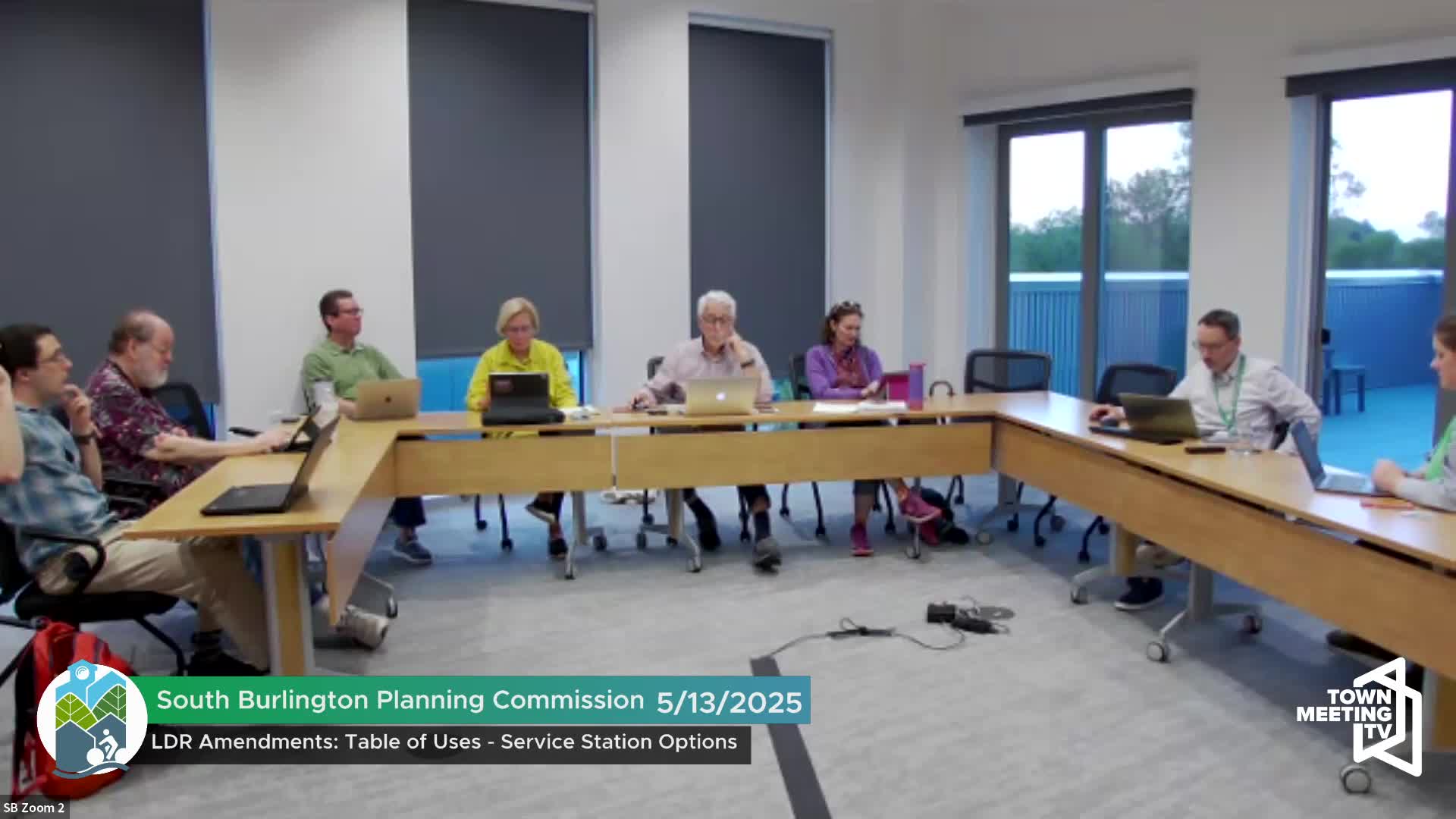
Summary
Commissioners and staff discussed revisions to the Land Development Regulations that would separate vehicle fueling (pumps, underground tanks, canopies) as a distinct regulated feature while treating retail or convenience uses separately. Commissioners favored an option that regulates fueling as the feature to be limited (including a 1,000‑foot
May 13 — Planning staff presented proposed changes to the Land Development Regulations that would treat vehicle fueling (the pumps, tanks and canopy) as the regulated feature and classify convenience stores and other consumer‑facing commercial activity separately. The draft aims to keep electric vehicle charging from being conflated with fueling while preserving the city’s existing separation rule for fuel dispensers.
The central policy choice before the commission was whether to treat a service station as an all‑in‑one use (building plus pumps) or to separate the fueling feature from the building’s other uses. Staff said they favor treating fueling as a distinct regulated feature because modern sites mix convenience retail, quick‑service restaurants and fueling in a single building, and the city’s objective is to regulate the location and equipment tied to dispensing fuel.
Commissioners and staff discussed fuels beyond gasoline and diesel — hydrogen fueling stations and compressed‑gas fueling were discussed as examples that are not fossil fuels but that functionally resemble gas stations. Commissioners said the draft should avoid defining service stations simply as facilities dispensing “fossil fuels,” and instead describe vehicle fueling more precisely (for example, liquid or compressed gas fuels) so hydrogen stations are not misclassified.
Staff reiterated an existing lot separation rule for fueling: pumps and other fuel‑dispensing features would remain subject to the city’s separation requirement (roughly 1,000 feet) to limit the proliferation of new fuel sites. Commissioners also asked about placement and site design: how pump islands may interact with urban‑design rules that discourage parking in front of storefronts along Shelburne Road, and whether new fueling facilities would have to place pumps behind or beside the building to preserve pedestrian paths. Staff said these are practical design questions the Development Review Board and staff interpret case by case, and that a straight teardown‑and‑rebuild would typically trigger the new rules.
Several commissioners signaled support for staff’s favored approach (option 2) to treat fueling as the regulated feature rather than fold it into a single use category. Staff said they will refine the definition language to avoid excluding future fueling technologies and to ensure clarity between fueling features and EV charging.