Senators Warn EPA Budget Cuts Could Shrink State Revolving Funds and Water Programs
Summary
Members of the Senate committee questioned Administrator Zeldin about proposed FY2026 cuts that would sharply reduce funding for state revolving funds and brownfields, and asked whether EPA will work with Congress and the water sector to preserve funding for drinking water and wastewater infrastructure.
Senators pressed EPA Administrator Lee Zeldin on the Trump administration’s proposed FY2026 budget and its potential effects on clean water and drinking water financing, especially the Clean Water and Drinking Water State Revolving Funds (SRFs).
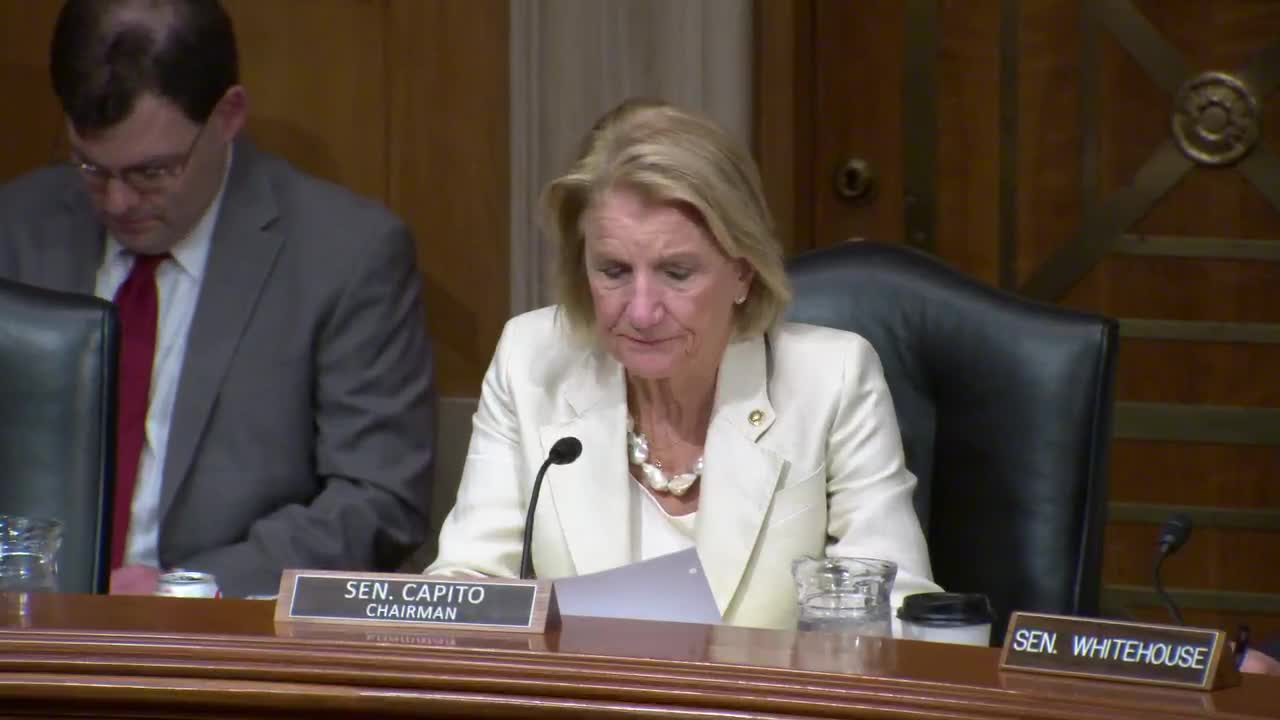
Senator Shelley Moore Capito, chairing the hearing, and other senators said the proposed budget would substantially reduce funding for programs many communities rely on for pipes, treatment plants and drinking water upgrades. Capito cited a hypothetical West Virginia example where SRF assistance could fall from $36 million to $4 million under the proposal. She said state revolving funds “have helped many West Virginians … get connected with the water access and resources that they need.”
Why it matters: State revolving funds are major federal financing tools for local water infrastructure. Senators warned that deep cuts could disrupt projects funded through the 2021 bipartisan package that, they said, delivered more than $50 billion for water systems.
Administrator Zeldin told senators he would work with Congress and the water sector: “Yes. Chairman, absolutely. Look forward to working with you, and other members of this committee on that.” He also urged Congress to consider how prior congressionally directed grants drew on SRF resources and said the agency wants to discuss strengthening the revolving nature of the funds.
Members from both parties asked for commitments that priority programs would be preserved during appropriations and reauthorization work. Senators pointed out that the proposed cuts would affect bipartisan programs that provide safe drinking water and clean-up work, including brownfields and other water-related grants. Zeldin noted some proposed increases in targeted areas—he cited an extra $9 million for drinking water disaster response and a $27 million increase for tribal drinking water and wastewater infrastructure—but senators pressed him on the larger proposed reductions.
The committee requested further engagement between EPA, appropriators and state water agencies to reconcile the administration’s efficiency goals with existing and ongoing infrastructure commitments.