
Forsyth County schools propose $750.5 million FY26 budget with no millage increase
Get AI-powered insights, summaries, and transcripts
Subscribe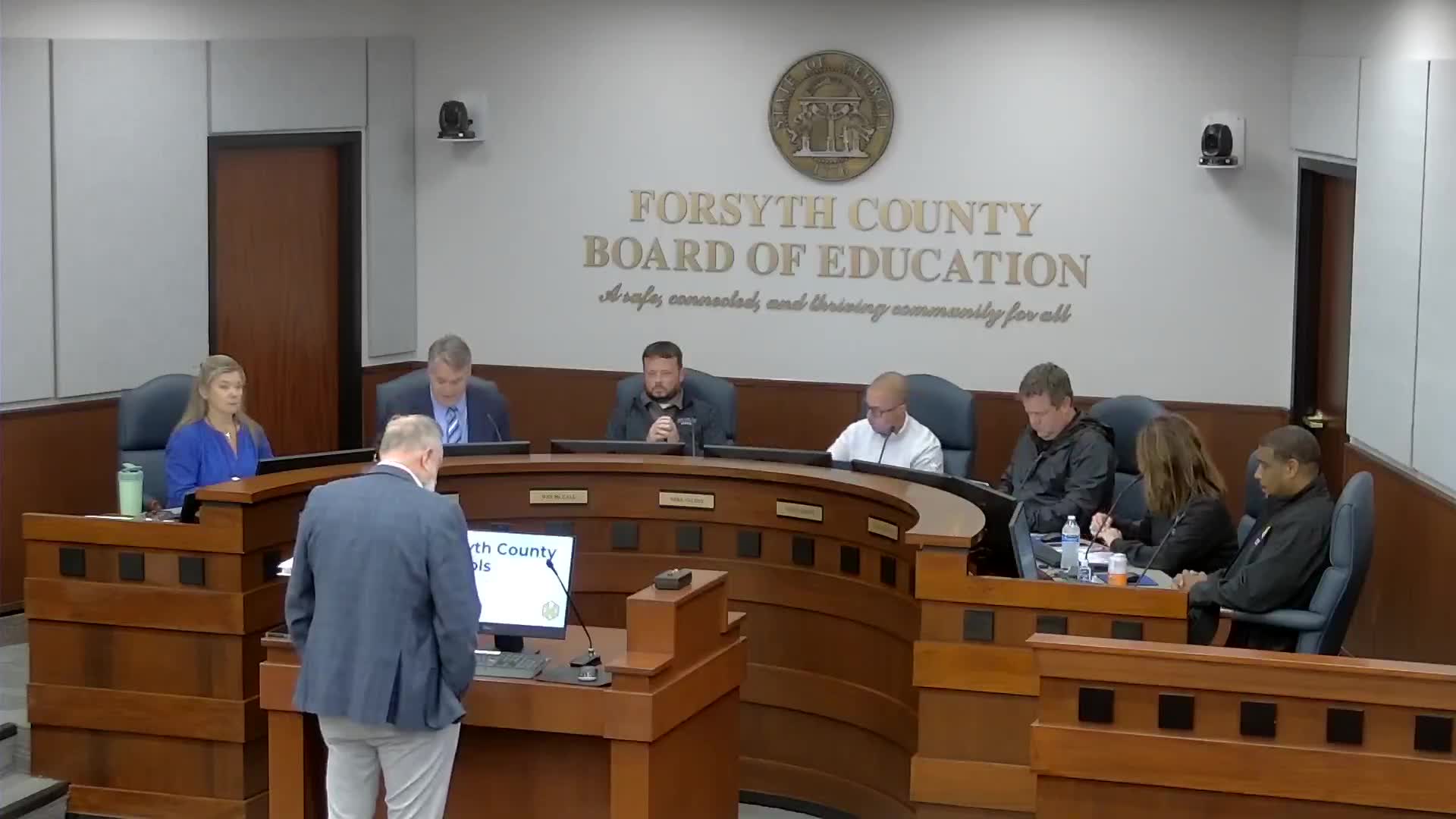
Summary
Superintendent Dr. Young and finance staff presented a proposed $750.5 million fiscal year 2026 budget with a 5% overall increase, no proposed millage-rate increase, and targeted reserves for safety and the Mashburn project; the board scheduled upcoming budget hearings but took no vote on adoption.
Superintendent Dr. Young and district finance presenter Larry Hammel outlined a proposed $750,500,000 budget for Forsyth County Schools for fiscal year 2026 at a special called meeting May 27, saying the plan would increase the systemwide budget by about 5% while keeping the local millage rate unchanged.
The proposal would hold the millage rate at 15.208 and include a 1.54% increase in locally controlled spending, Dr. Young said, while a larger 3.46% of the total increase reflects state-mandated costs such as health insurance and the Teacher Retirement System. “The short summary of this budget is that we’re proposing a $750,500,000 total budget this year,” Dr. Young said.
The budget document presented to the board breaks major impacts into local versus state and federal revenue. Hammel said roughly 53.3% of revenue is expected to be local, with the remainder from state and federal sources; the package assumes a net property tax digest increase and a projected local tax collection rate of 99.84%. Hammel summarized revenue and expense detail and said the proposed budget shows about a $35.7 million increase over FY25, driven primarily by local increases and by state health and retirement costs.
Why it matters: board members and district leaders said the plan aims to preserve services that are locally expected in Forsyth County while absorbing state-driven cost increases. The superintendent framed the proposal as preserving “a really good situation” for students while requiring continued investment to maintain performance and core services.
Most of the spending remains in classrooms: the presentation showed 73% of the operating budget directed to instruction. The proposal includes locally funded increases for social-emotional supports and safety, plus targeted district positions. Dr. Young said the budget would add school psychologists, social workers and student advocacy specialists to improve student-to-professional ratios and would fund two full-time threat‑assessment investigators assigned from the sheriff’s office to help schools and SROs handle threats.
The budget also sets aside funds for safety measures required by state law and model policy work, including a placeholder reserve for a mobile panic-alert system referenced in House Bill 268. Dr. Young said the district was reserving $4.5 million as an initial placeholder because final legal guidance and model policy for the system remained pending.
On personnel and pay, the proposal would add a step to the end of salary schedules for eligible staff to retain long‑service employees; Dr. Young said the district added one step last year and that the step is a year‑by‑year decision based on finances. The superintendent described a requirement that every new district office position be offset by eliminating or collapsing another position; he said every district‑level addition in this budget was paired with an offset.
Debt, reserves and projects: the presentation showed the district would maintain an approximately 15% fund balance and continue to pay down debt. Dr. Young said the budget would allow the district to finish the Mashburn project debt free as previously promised and maintain a $31 million debt‑service reserve established in FY23. Hammel described proposed transfers into capital funds and a planned $16 million general-fund transfer to complete Mashburn.
Food services and special funds: officials said school nutrition faces pressure from rising food and benefit costs and lower meal sales; the district projected a roughly $5.5 million deficit in the school nutrition fund for FY26 and said final FY25 numbers would be available in late July. Hammel said food‑service pricing to families has not increased in four years.
Next steps and board action: the board did not adopt the FY26 budget at the meeting. Hammel said the board had scheduled a first called meeting for a budget hearing Thursday at 5 p.m., a second called meeting June 12 for a second budget meeting and planned to approve the budget on the 19th; he cautioned that millage‑hearing scheduling depends on documents from the tax office and the millage hearing planned for June 12 may need to be postponed if the tax office documents were not delivered in time.
Board procedure: the board adopted the meeting agenda at the start of the session (motion by Mrs. Hoyes; second by Mr. Grimes; outcome unanimous) and later voted unanimously to enter executive session for personnel (motion by Mr. Usherwood; second by Mr. Grimes). No formal vote on the FY26 budget was taken at the meeting.
Board members praised the district’s financial management and the presentation. Dr. Young thanked staff for a process that began in November and noted local community expectations—including school resource officers and nurses in every school—drive part of the locally funded budget.
Ending: board members and staff said they will continue to refine the proposal at the upcoming called meetings, finalize millage hearing logistics once tax‑office documents arrive, and return for formal budget and millage actions at a later public meeting.