
Council hears staff presentation and neighborhood concerns on George Mason Elementary modernization
Get AI-powered insights, summaries, and transcripts
Subscribe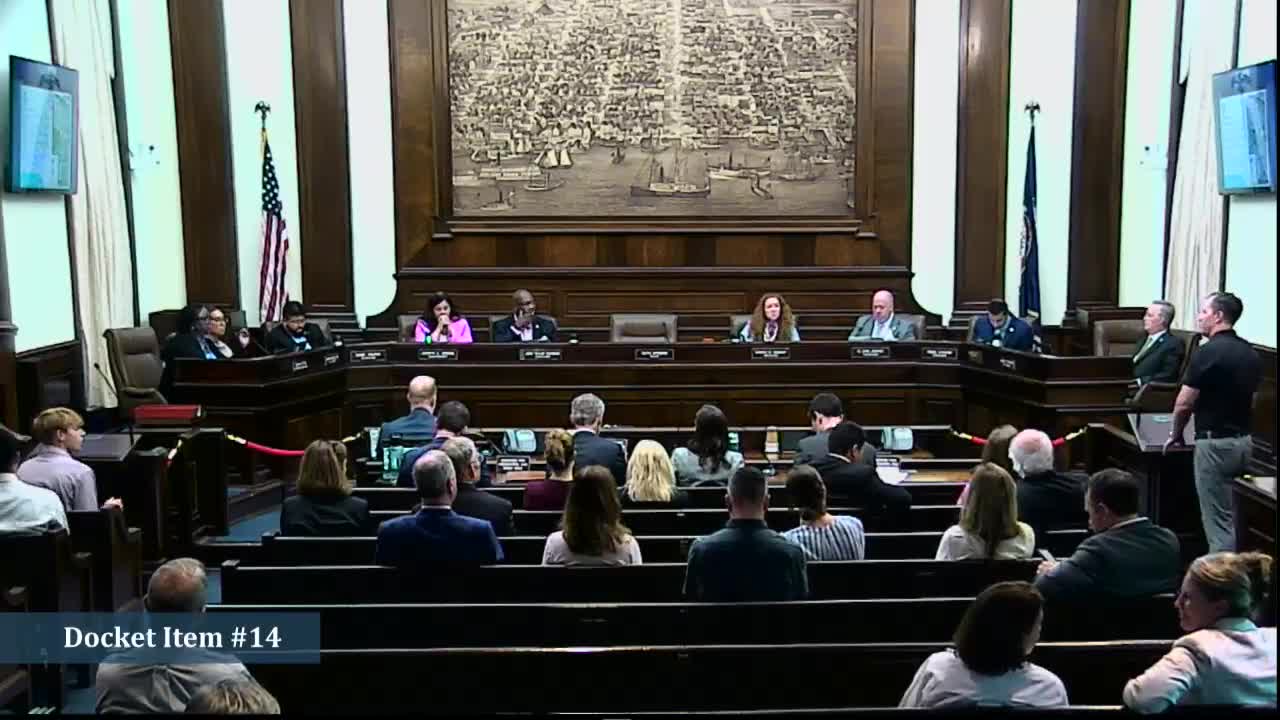
Summary
Council heard a staff presentation and detailed questions about a proposed reconstruction of George Mason Elementary, a plan to demolish most of the 1939 facility and build a two‑story modern school with classrooms, a library, reconfigured outdoor play fields and updated stormwater systems.
Alexandria City Council and staff heard a detailed presentation on a proposed reconstruction of George Mason Elementary School in the North Ridge neighborhood, a project that would replace much of the existing 1939 building with a two‑story school designed for roughly 680 students and modern educational specifications.
Staff presentation and project scope Planning staff described the project as a modernization and partial rebuild that retains the original 1939 façade while replacing the majority of the building with a new two‑story structure. The new design includes two wings connected by a two‑story library/multi‑media core, updated classrooms configured to current ACPS educational standards, a redesigned outdoor play and recreation area and new on‑site stormwater BMPs that staff said would exceed the city’s required phosphorus reduction target.
The site plan provides roughly 60 on‑site parking spaces in three areas and ACPS staff said the school is negotiating to use up to 20 additional spaces at the adjacent Westminster Presbyterian Church for weekday operations. The school will also add bicycle parking, new pedestrian paths and accessible restrooms for public access.
Neighborhood concerns and council questions Council members and several callers raised questions about three recurring concerns: - Open space and building height. Council members and neighbors pressed why the school design uses a two‑story plan rather than a three‑story footprint that would have reduced the building footprint and saved more open space. ACPS and the architect said the two‑story choice reflects educational programming, egress and navigability for younger students, and neighborhood context considerations. - Parking and traffic. Council members asked whether the parking plan (60 on‑site spaces plus 20 shared spaces) would be adequate, and whether walkable transportation options were being emphasized. Staff and ACPS said the design separates bus and car pickup to reduce congestion and that ACPS will provide alternative‑transportation information for families. - Public engagement. Multiple council members — and several speakers — said the project’s outreach relied primarily on virtual meetings and that residents had limited chances for back‑and‑forth in person. Several council members asked ACPS to revisit how the district presents multiple options to the school board and community earlier in the design process.
ACPS response and technical rationale ACPS staff and the school’s architect told council the two‑story scheme was selected for multiple reasons: it aligns with program flexibility for younger students, keeps classroom circulation and emergency egress simpler, and allows a roof profile with more area for solar panels while keeping the building scale compatible with the neighborhood. ACPS said it had modified original proposals to reduce the extent of turf and to reorient the baseball diamond (north‑south), and to shrink and reconfigure the multi‑use field in response to community input.
No council vote recorded At the end of the discussion council members asked for additional information and staff follow‑up on community outreach, parking guarantees and the proposed use of Westminster’s parking lot by the school. There was no final council action recorded at the time of the transcript; council members said they would continue to review the design while tracking neighborhood concerns.
Why this matters The modernization will replace aging facilities and add capacity for students, and it includes on‑site stormwater improvements. At the same time, building‑site tradeoffs — open space versus building footprint and height — are central to neighborhood quality of life. Council members asked ACPS to strengthen outreach and clarify how program tradeoffs were evaluated and presented to the public.
Ending Staff will follow up with additional materials and ACPS will continue community outreach as design and permitting advance. Council members said they expect further briefings and clearer comparisons of alternative massing and circulation options before formal council action.