
Elizabethtown board advances revised student-search policy to first reading, adds parental notice and law-enforcement coordination for high-risk searches
Get AI-powered insights, summaries, and transcripts
Subscribe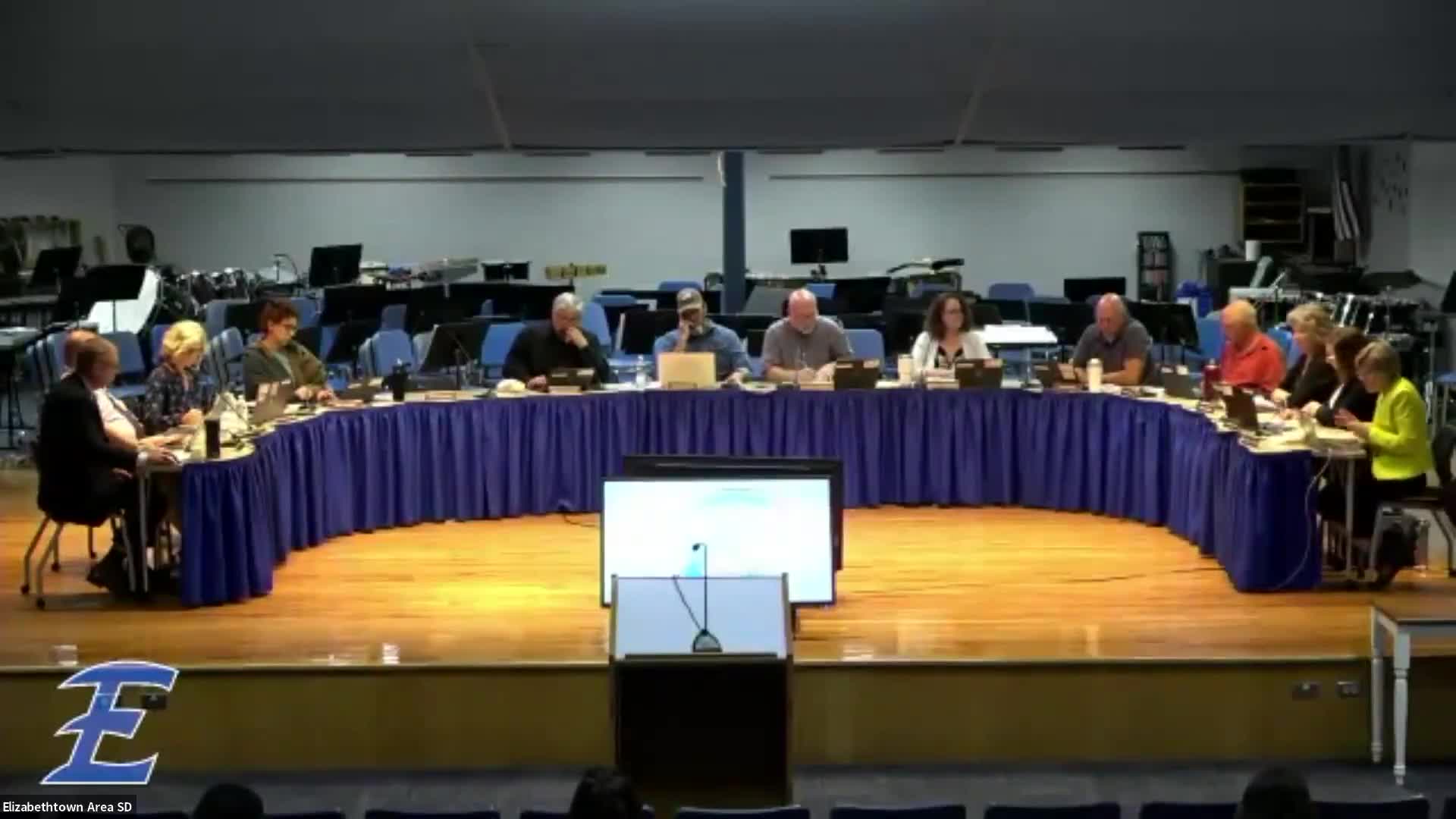
Summary
The board approved first reading of revisions to Policy 226 (searches), adding language to require parental notification unless safety is compromised and to coordinate with law enforcement for searches involving removal of clothing or heightened danger.
The Elizabethtown Area School District Board on May 27 approved first reading of revisions to Policy 226, the district policy on searches, adding specific language about parental notification and coordination with law enforcement in high-risk situations.
Board member Jonathan Gillis presented the amended wording during the meeting, saying the administration and board had worked to craft language that balances student privacy with safety. The new text states that the district will make every effort to notify a student's parent or guardian before conducting a search that involves removal of clothing or an examination beneath clothing, "unless doing so would compromise the safety of the school building or the population." It also instructs the district to coordinate with law enforcement when reasonable suspicion involves items concealed in undergarments or when items sought "present a heightened level of danger to the school population compared to other types of contraband." Gillis moved the policy to second reading and the board approved the first reading by unanimous vote.
Supporters of the change said the added wording addresses community concerns about notification and oversight; the board's policy committee described the wording as a compromise that preserves student safety while providing additional parental notification when feasible. The administration said it had received no objections to the revised language during the comment period and recommended advancing the policy.
The first-reading approval means the policy will return to the board for a second reading and formal adoption at a future meeting if no further changes are made.