
Nevada bill standardizes student fee waivers; most become ‘last-dollar’ and Native American waiver clarified
Get AI-powered insights, summaries, and transcripts
Subscribe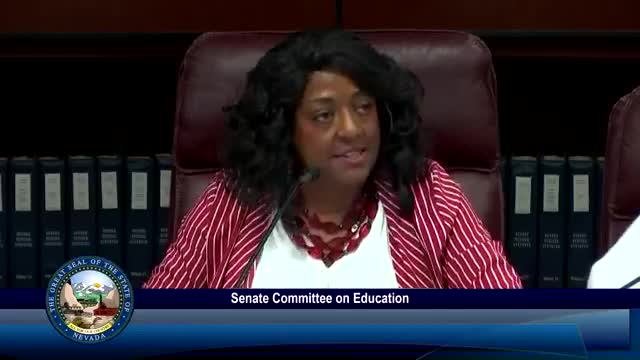
Summary
Assembly Bill 3 97 standardizes several tuition- and fee-waiver programs, moves many waivers to a last-dollar model after federal and state aid, and clarifies Native American eligibility; sponsors say the changes remove the bill’s fiscal impact and improve student access.
CARSON CITY — Assembly Bill 3 97, presented by Assemblymember Howard Watts, was heard and advanced by the Nevada Senate Committee on Education. The bill standardizes provisions across multiple student tuition- and fee-waiver programs, makes many waivers operate on a last-dollar basis after federal and state aid, requires FAFSA or an approved alternative, changes academic eligibility to the federal satisfactory academic progress standard, and clarifies eligibility for the Native American fee waiver.
Watts told the committee AB 3 97 grew from efforts to implement a tuition-fee waiver for homeless youth begun by the late Assemblyman Tyrone Thompson and to standardize multiple waiver programs. He explained the bill “standardizes some of the qualifications, some of the coverage, for waivers across different programs,” and that the amendment clarifies fee coverage, FAFSA requirements and academic standards.
Major technical changes explained to the committee include:
- Last‑dollar design: several waivers will be applied after federal grants (including Pell), state scholarships and other aid, so the waiver covers remaining mandatory registration and other fees. The bill’s language expressly excludes federal loans from the definition of aid that reduces the waiver amount.
- FAFSA and documentation: waivers will generally require applicants to complete the Free Application for Federal Student Aid (FAFSA) or an NSHE-approved alternative to identify other aid sources first.
- Academic eligibility: the bill replaces discrete GPA cutoffs with the federal ‘‘satisfactory academic progress’’ framework (which includes a 2.0 GPA element plus pace/maximum time-to-completion criteria aimed at finishing within six years).
- Native American waiver: the amendment narrows and clarifies eligibility so that qualifying persons include members or descendants of Nevada-based federally recognized tribes (regardless of current residency), Nevada high-school graduates or equivalency holders, enrolled high‑school students for dual credit and former attendees of Stewart Indian School; existing recipients who would otherwise lose eligibility are held harmless for six years to complete programs.
Patricia Charlton, chancellor of the Nevada System of Higher Education, said the changes should reduce the bill’s fiscal impact and “minimize, if not eliminate, any opportunity that a student would be required to take a loan to complete their education.” She and institutional witnesses said the statutory changes aim to streamline administration and improve student access to aid.
Other supporters who testified included tribal representatives and campus officials. Speakers emphasized sensitivity to residency and tribal membership questions (Pyramid Lake Paiute Tribe’s Will Adler noted cross‑border tribal lands) and encouraged continued institutional outreach. Doug Unger of the Nevada Faculty Alliance described the homeless‑youth provisions as life‑changing for students experiencing extended homelessness.
The bill includes staggered effective dates: sponsors said hold‑harmless provisions and the Native American waiver clarifications would take effect on “July 1 of this year,” while many other changes would take effect July 1, 2026, so institutions have time to update forms and processes and avoid disrupting already‑accepted students.
In a subsequent work session the committee moved an amendment (including adding Senator Taylor as a co-sponsor) and the motion to amend and do pass carried. The committee did not record floor opposition during the work session and the bill will proceed with the committee’s recommendation.
Why it matters: AB 3 97 seeks to unify disparate waiver rules, reduce administrative confusion, protect eligible students from out‑of‑pocket course costs and clarify tribal eligibility rules while phasing in changes to allow institutions to implement them.
Next steps: The measure was advanced by the Senate Committee on Education and will proceed to the next stage of legislative consideration.