
Midwives raise concerns about cost, reimbursement and diversity in home-birth workforce
Get AI-powered insights, summaries, and transcripts
Subscribe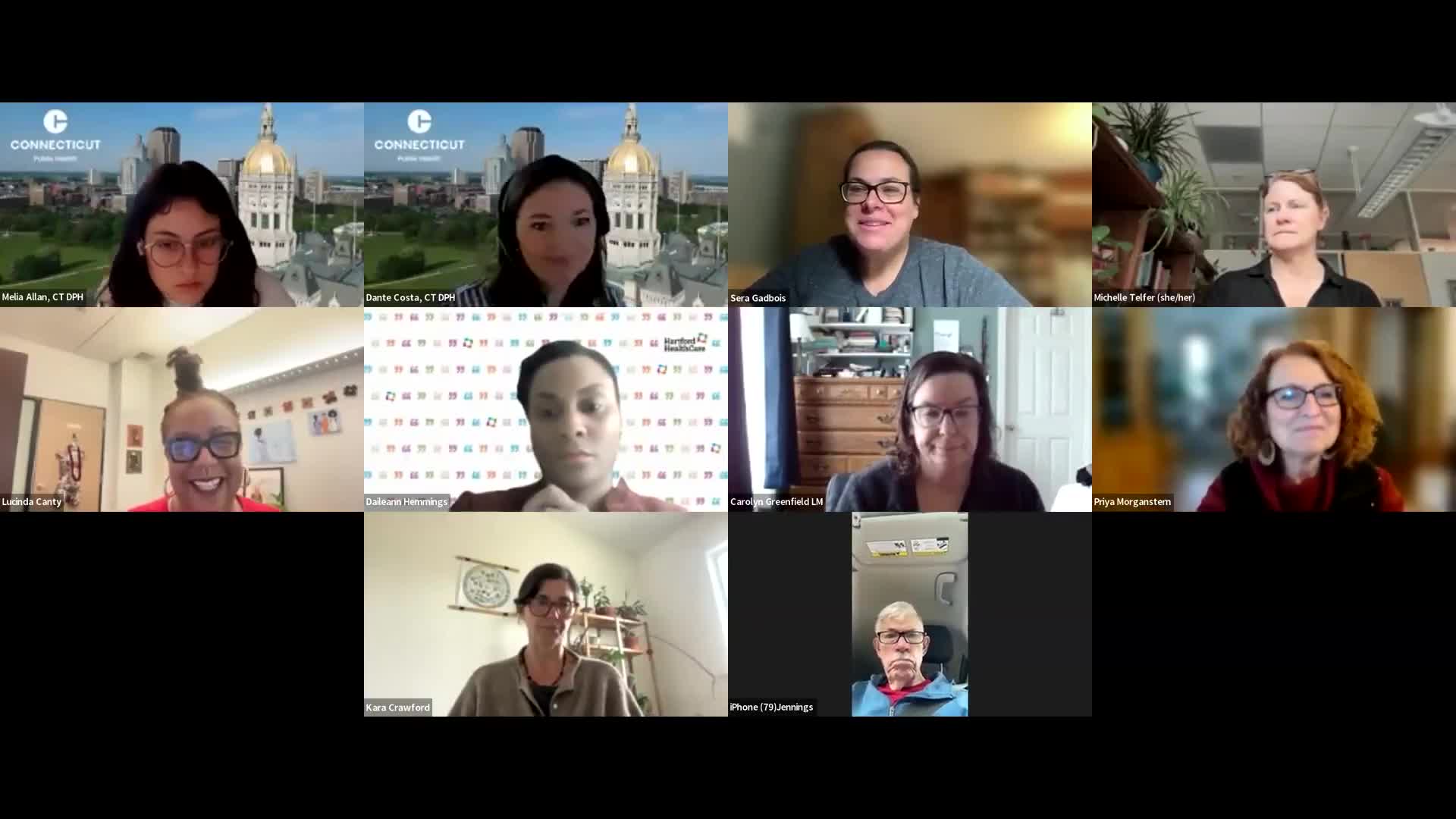
Summary
Several working-group members described financial and training barriers that limit home-birth access and the diversity of practicing midwives; speakers urged more reimbursement parity and additional preceptor opportunities for students.
Several members of the Midwifery Working Group used the May 23 meeting's general-discussion time to describe practical barriers that limit access to home birth and to call for more preceptor opportunities and improved reimbursement for midwives.
Lucinda, a practicing midwife who said she attended a recent home birth, described the birth as "amazing" and said the experience underscored structural barriers that keep many families from choosing home birth. She said one family she knows paid cash for a home birth because their private insurance would not cover their chosen midwife and described administrative barriers that can prevent certain midwives from obtaining reimbursement.
Lucinda said she is concerned that a lack of diversity in the home-birth midwifery workforce constrains care for families of color and limits training opportunities. "We need diversity. We need students of color because we... have to be strategic in how we move forward," she said, and she urged working-group members to consider serving as preceptors for students so clinical placements do not force trainees to travel long distances.
Speakers noted that Medicaid reimbursement policy appears to favor certified nurse-midwives and that non-nurse midwives face additional administrative hurdles to apply for reimbursement; participants did not present a formal policy change or a vote.
Ending: Members agreed to continue the conversation at a future meeting; no formal motion or policy action was taken during the session.