
Legislature approves Guam Medicaid Access Enhancement Act to address provider access
Get AI-powered insights, summaries, and transcripts
Subscribe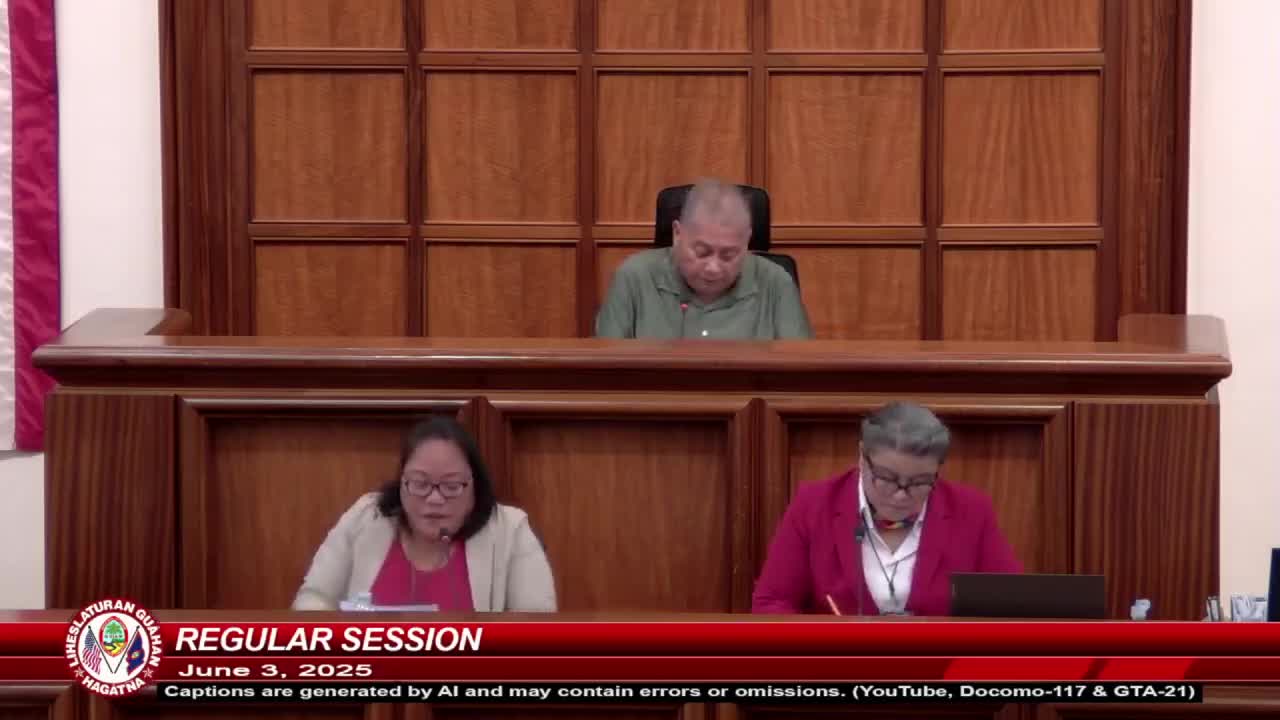
Summary
Bill 118, creating an unpledged business privilege tax rebate on Medicaid receipts and other measures to improve Medicaid access, passed the Legislature. Sponsor said the law aims to restore access for nearly 40,000 Medicaid enrollees who face limited provider availability.
The Guam Legislature passed Bill 118 on third reading, creating a program styled in the final measure as the Guam Medicaid Access Enhancement Act. The roll call recorded 12 yays, 2 nays and one senator excused from voting; the bill is duly passed by the body.
Bill 118, as substituted by the Committee on Finance and Government Operations and further amended on the floor, would add a new section 58128.8 to chapter 58, title 12, Guam Code Annotated. The text on the floor described the measure as establishing an unpledged business privilege tax rebate on Medicaid receipts to improve provider participation and access to Medicaid services.
Senator Sabrina Salas Matanani, the bill’s sponsor as recorded in the bill title, framed the legislation as a practical step to improve access. “This bill isn't about political points. It is about real people,” she said on the floor, adding that the legislation targets nearly 40,000 residents who need reliable access to care. She described problems the bill aims to address: providers capping Medicaid caseloads or opting out because reimbursement rates do not cover the cost of care, leaving patients with coverage on paper but limited real‑world access.
Supporters said the rebate mechanism and statutory changes will provide incentives for providers to accept more Medicaid patients and thereby restore access, while opponents raised questions about the scope of the rebate, potential fiscal impacts and oversight. The Legislature recorded the roll call vote as the bill passed, and the clerk announced the outcome on the floor.
The transcript indicates sponsors and floor leaders plan to monitor implementation and the bill’s impacts on provider participation and patient access. Specific effective dates, administrative rules and fiscal estimates were not finalized on the floor record and will be determined in follow‑up implementation work.