County hears CDBG overview as officials plan 2025 project review
Loading...
Summary
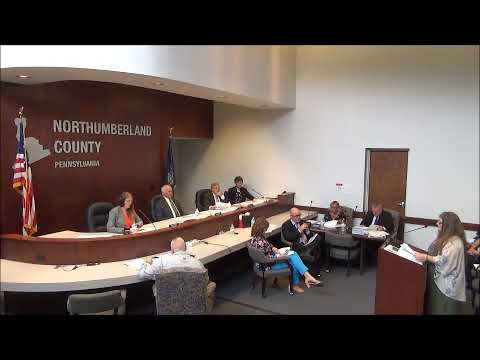
Tanya Troop, project coordinator for CDECOG, told the Northumberland County Board of Commissioners on June 3 that the county receives roughly $600,000 to $700,000 a year in Community Development Block Grant funding and that the program supports a wide range of housing, infrastructure and public-service projects.
Tanya Troop, project coordinator for CDECOG, told the Northumberland County Board of Commissioners on June 3 that the county receives roughly $600,000 to $700,000 a year in Community Development Block Grant funding and that the program supports a wide range of housing, infrastructure and public-service projects.
The presentation explained CDBG’s origin in federal law and how funds in Northumberland County are split between entitlement jurisdictions and “on behalf” allocations to non-entitlement places. Troop said the program’s three principal national objectives are benefit to low- and moderate-income persons, elimination of slum and blight, and urgent need. She told commissioners, “Northumberland County gets roughly 6 to 700000 dollars a year in CDBG funding,” and that the county now records projects using 2020 census tract data.
The program’s local footprint, she said, includes 24 projects currently in various phases — environmental review, engineering, bidding or nearing substantial completion — totaling about $4,300,000 in CDBG funds. Troop listed common eligible activities, including road, water and sewer work, stormwater mitigation and demolition of blighted properties. She reported that, since 2010, CDBG-funded demolitions in the county numbered 31, with 22 in the city of Shamokin and 14 in Sunbury; she added that at least 11 demolitions are planned in Shamokin in 2025 and that a demolition in McEwensville is scheduled in the next months.
Troop warned that projects using CDBG are “highly, highly regulated” under both federal and state rules and that strict recordkeeping is required. She said CDECOG must retain records for five years after a contract closes; Troop noted the last closed contract was from 2013 and closed in 2021, meaning those records cannot be destroyed until 2026.
Commissioners thanked Troop and said they would meet in July to review 2025 project recommendations and prioritize funding for the most urgent needs. During that exchange a commissioner summarized the process: municipalities that manage their own CDBG funds do so directly, while the county hires CDECOG to administer funds and to provide annual recommendations for projects that the commissioners then approve.
The presentation included before-and-after photos of completed projects Troop said were funded through CDBG, such as a two-phase stormwater mitigation project in Ely, a pavilion and picnic tables installed at Brown Avenue Park in Milton, and streetscape and accessibility work tied to demolitions at Freedom and Diamond Courts in Mount Carmel. Troop said CDECOG also works with the Housing Authority of Northumberland County and local blight task forces when pursuing demolition or neighborhood-improvement projects.
Troop said the county’s CDBG allocations continue to rely in part on older statutory designations; she cited Act 179 and the 1988 Urban Development Action Grant process as historical drivers of some designations and said the program now uses 2020 census data to determine low-to-moderate-income areas for targeting.
Commissioners did not adopt a new CDBG project at the meeting; they approved related routine county business that included a $73,644 distribution to the Housing Authority of Northumberland County from the county demolition fund under ordinance O-04-17 and Act 152 (02/2016). Troop said a formal July meeting will review 2025 project recommendations and priorities.
Troop closed by reminding commissioners and the public that eligible CDBG activities are broad — she said the supplemental sheet lists roughly 70 activities — but that the program’s timeliness is limited by federal and state compliance requirements, local permitting, easements and right-of-way issues. She said, “CDBG funding is never quick,” and urged municipalities to plan for lengthy project development and monitoring.
Less-urgent items shown in the presentation included photos and status notes for completed park and sidewalk work; Troop said several projects were in final stages and that CDECOG would continue to provide intake, monitoring and technical assistance to the county.