
Metro Nashville directs $50 million ARPA package to housing, gap financing and services for people experiencing homelessness
Get AI-powered insights, summaries, and transcripts
Subscribe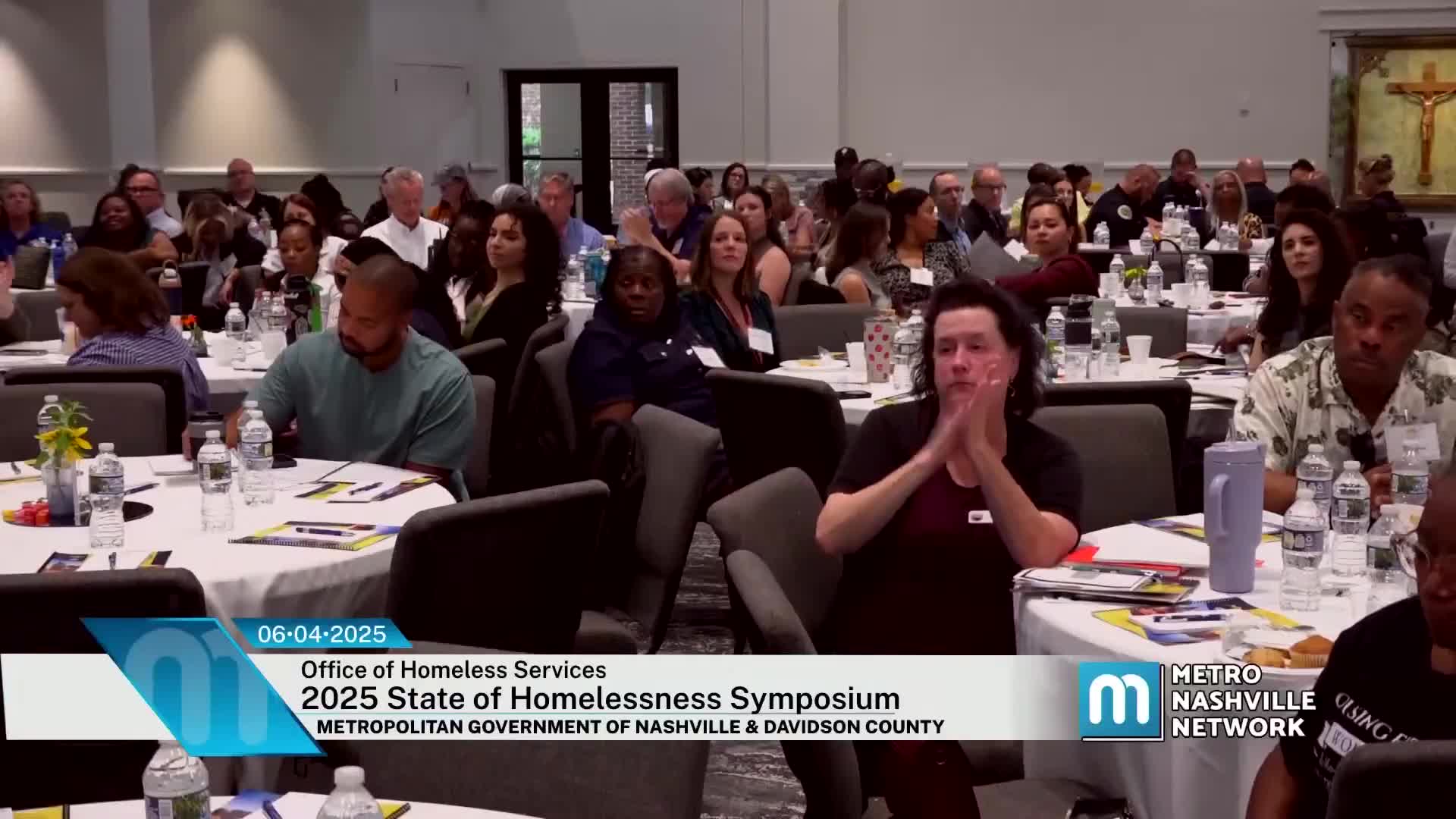
Summary
Metro’s Office of Homeless Services outlined a $50 million American Rescue Plan Act (ARPA) investment to accelerate housing development, interim shelter and supportive services; officials said funds are committed and must be spent by July 2026.
Metro Nashville’s Office of Homeless Services announced a $50,000,000 one‑time funding package to address homelessness that city officials said is already fully allocated to housing and support services.
The announcement came from Joseph Marsh, assistant director of Metro’s Office of Homeless Services, who said the funds “represent a chance to reset systems, create pathways to permanent housing, and address the gaps that have long left too many of our neighbors un‑housed.” Marsh told the symposium the package is largely ARPA money and described how it has been earmarked.
Marsh provided the allocation breakdown: $25,000,000 for gap financing to unlock stalled affordable and supportive housing developments; $9,000,000 for interim gap housing (enhanced shelter, surge housing and other short‑term options); $9,000,000 for housing support services (case management, behavioral health, workforce services); and $7,000,000 for low‑barrier grants and capacity building for frontline providers. He said the funds are intended both to accelerate construction and to support the wrap‑around services that keep people housed.
Marsh said the money has been committed but not fully spent and stressed the deadline. “As of today, all the funds have been allocated, but the spending is not yet complete,” he said, adding that Metro has “one year remaining to invest our ARPA funds” and that the deadline for use is July 2026.
April Calvin, director of the Office of Homeless Services, framed the funding in the context of recent local operations. She told attendees that a 60‑day operation known as Anthy’s Drive moved 107 people into temporary, shared or permanent housing and that Metro’s cold‑weather shelter operated for an unprecedented 46 nights this year. Calvin also highlighted a 45% decrease in the number of people dying while experiencing homelessness compared with a prior period and said those improvements reflect coordinated work among providers and city departments.
Calvin and Marsh also discussed capacity constraints in the local housing market. Calvin said the Low Barrier Housing Collective has expanded the number of properties taking placements and estimated an average of roughly 700 vacant units exist across the collective — a figure she used to explain why ongoing rent assistance and subsidy would be necessary to match people to existing units. Marsh and Calvin both emphasized that housing supply and subsidy must go together: capital to build or acquire units, and operational funding and services to keep people housed.
Marsh said the package has already reached 1,899 unique individuals through programs tied to these investments and that Metro is developing a strategic spend‑down plan to get the money out the door effectively and transparently.
Ending: City officials said the funds are a one‑time opportunity that must be paired with ongoing operational support and broader community investment. Metro officials urged providers, developers, landlords and philanthropic partners to move quickly to convert committed dollars into occupied units and services before the July 2026 deadline.