
Assembly reviews ordinance to make unauthorized fires a misdemeanor during wildfire season
Get AI-powered insights, summaries, and transcripts
Subscribe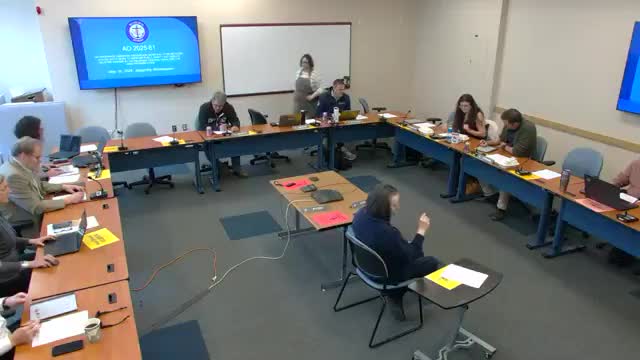
Summary
The Anchorage Assembly on May 16, 2025, considered AO 2025-61, which would expand criminal penalties for unauthorized fires during the municipality's April'August fire season.
The Anchorage Assembly on May 16, 2025, considered AO 2025-61, an ordinance that would amend Anchorage Municipal Code sections 8.20.030 and 8.20.035 to expand criminal liability for unauthorized fires during the municipality's state-defined fire season, April through August.
Municipal Attorney Eva Gardner said the ordinance "in a nutshell, expands criminal liability for unsafe fires," aiming to "reduce fire danger, improve public safety, really deter people" and focus enforcement on high-risk seasons and locations. The draft would make it a misdemeanor to build a fire on someone else's property without permission during fire season, criminalize violating a burn ban issued by the fire chief, and bar fires on public streets and sidewalks year-round.
Supporters and agency staff described how the proposal would change enforcement. Municipal Prosecutor Dennis Wheeler said penalties could include jail and fines and that restitution for property damage may be sought: "You're looking at up to a year in jail and the fines may include a separate designation for restitution." Anchorage Fire Chief Doug Schrage said the department tracks many outdoor-fire responses and estimated the municipal cost of a typical response at about $4,500. Chief Schrage and other staff described ongoing steps to co-dispatch police and fire to certain calls to improve evidence collection and make enforcement practicable.
Assembly members asked detailed questions about scope and implementation. Anna Burley asked whether "property" covers land as well as buildings and how the ordinance would affect grills and burn barrels; Gardner answered that the draft is intended to cover real property and that lawful, contained grilling in designated areas would be distinguishable from unauthorized fires. Aaron Baldwin Day and others raised whether the measure would treat lighting, building, using or maintaining a fire as equivalent acts; staff said the draft seeks to hold people accountable for participating in or perpetuating dangerous fires, not only starting them.
Several members pressed on enforcement in public locations and encampments. Staff and law-enforcement representatives described the practical sequence: the fire department typically responds and extinguishes the fire; if the scene appears suspicious, dispatch notifies police; officers collect evidence and identify suspects for prosecution. Wheeler summarized the charging process: if police develop sufficient evidence, they refer the case to prosecutors, who decide whether to charge and what offers to make. "If they fail to appear, then a warrant is issued," Wheeler said, describing the court process that can follow a citation and failure to appear.
Thea Agnew of the mayor's office framed the proposal as part of a broader effort to "regain a better kind of sense of control over our public spaces," and the administration said it would pursue public education and signage in parks if the ordinance passes. Several assembly members and staff also warned of risks of selective enforcement and asked for clarity about how the city will measure whether the ordinance reduces hazardous fires.
No formal vote was taken at the May 16 work session. Staff described next steps that would include refining definitions, coordinating with Anchorage Police Department and Anchorage Fire Department dispatch procedures, and planning public outreach on prohibited areas and seasonality.
The assembly will consider the ordinance in future legislative sessions; the presentation and questions signaled the major legal, operational and equity issues members want addressed before a final vote.