
House adopts conference report limiting unemployment benefits for striking workers to 10 weeks
Get AI-powered insights, summaries, and transcripts
Subscribe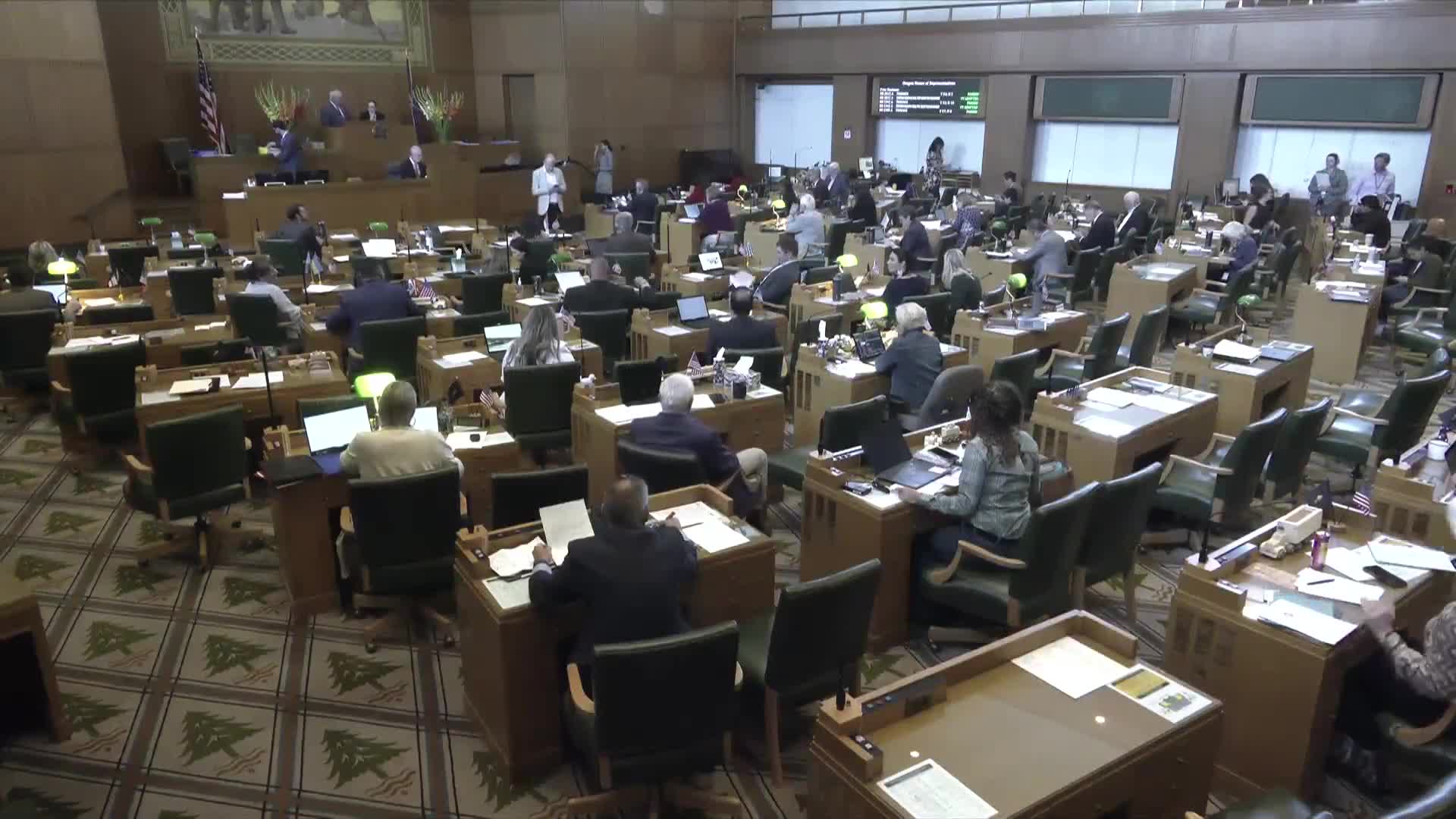
Summary
After extended floor debate and procedural points of order, the Oregon House adopted the conference committee report on Senate Bill 916 B and then repassed the bill; the conference report narrows eligibility and limits unemployment benefits for striking workers to a reduced period.
The Oregon House on the floor adopted the conference committee report on Senate Bill 916 B and immediately repassed the measure after extended debate over procedure and policy.
Representative Graeber, presenting the conference committee report, said the changes limit striking workers to receiving unemployment benefits for only 10 weeks under certain fund‑adequacy conditions; she described the reduction in eligibility as a difficult compromise. "The changes adopted by the committee limit striking workers to receiving benefits for only 10 weeks," Graeber said, and urged colleagues to support the report.
Representative Diehl raised a point of order under House Rule 11.1 arguing the conference committee had exceeded its authority by adding language outside the dispute between the two chambers. The chair ruled the point of order not well taken, saying the conference report addressed differences between the chambers. Representative Diehl reiterated his objection on the floor and asked colleagues to vote against the report.
Other members debated the policy's effects on public employers and schools. Representative Mannix called for a recorded division vote; Representative Deal, Representative Elmer, and others argued the measure could shift bargaining dynamics and increase fiscal pressures on school districts, with children and instructional time as a central concern. Representative Graeber and supporters pressed that the changes were intended to protect working families and provide limited relief to striking workers.
The House first adopted the conference committee report by voice with objections noted, then, after a division call and recorded voting, the presiding officer announced the report had received the required majority. Pursuant to House Rule 11.15(2)(b), the chamber immediately proceeded to repassage of the bill. The clerk later announced, "Senate bill 9 16 b, having received the constitutional majority, is declared repassed." The measure will return to the Senate for any final steps required under bicameral procedure.
Floor debate included testimony cited by supporters from striking workers who described financial hardship during long strikes. Representative Graeber cited the case of a worker who lost employer‑provided health coverage during a 43‑day strike and said unemployment benefits during a strike could materially change workers' circumstances.
Opponents emphasized impacts on public school children and local taxpayers and urged alternatives such as mandatory arbitration for schools. The debate included procedural exchanges about conference committee authority, committee process, and registered‑vote requests; multiple members registered opposition on policy and process grounds.