
Lebanon planning staff outlines zoning-code rewrite, flags data centers as industrial use
Get AI-powered insights, summaries, and transcripts
Subscribe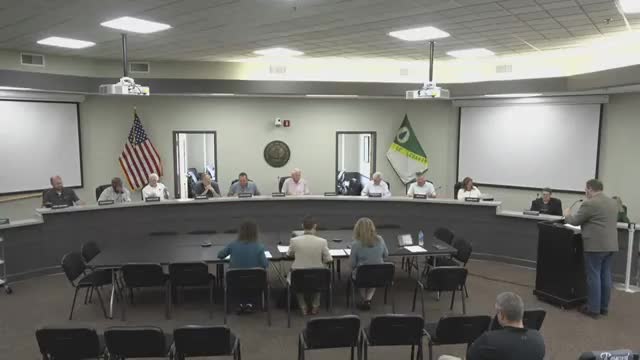
Summary
Planning staff told the Lebanon Planning Commission that the city is preparing a rewrite of its zoning code and plans to treat large-scale data centers as an industrial use, with public outreach scheduled for June 30.
Planning staff told the Lebanon Planning Commission that the city is preparing a rewrite of its zoning code and plans to treat large-scale data centers as an industrial use, with public outreach scheduled for June 30.
The planning staff update said the draft code will require usable open space and tree-preservation rules in residential and mixed‑use districts but not in most industrial or commercial districts, will remove a proposed design-review committee from the code, and will preserve current billboard locations via a mapped sign-code overlay instead of creating new billboard zones.
During a lengthy presentation, planning staff summarized research on data centers and said the draft code will explicitly allow data centers in industrial districts. The presentation listed typical site needs — large, flat parcels; significant power and fiber capacity; access to water for cooling; redundancy for power; and low natural-disaster risk — and noted that the industry’s energy needs are expected to grow substantially over the next decade. Planning staff said the city has had informal approaches from site seekers and that any data-center proposals would raise questions about infrastructure capacity and tax treatment.
Planning staff said the city would not require usable-open-space or tree-preservation rules in most industrial and commercial districts, but will require them in specific warehouse and large-car-lot districts. On design review, staff said, “we’re just removing that whole section out of the new code,” and that the committee might be retained only as an advisory body to the planning commission.
On signage, staff said the code will include a billboard overlay map showing where billboards are currently allowed rather than expand billboard locations across the city.
The presentation cited recent regional examples, including large data‑center campuses in the Nashville region, and said the city is evaluating infrastructure and fiscal implications — including property and personal‑property tax implications — but has not identified a preferred site. Staff recommended a public meeting on the draft code for June 30; “we do wanna take it to the public, get comments, on June 30,” staff told the commission.
Commissioners and staff discussed energy and site-size issues, including TVA and local electric providers’ roles in any future negotiations, and possible annexation if a large facility sought to locate within or next to the city. Planning staff said some data centers have significant construction‑period jobs and may add taxable personal property, but that revenue estimates depend on ownership and whether sites are held by tax‑exempt development entities.
The commission agreed to the public meeting schedule and directed staff to proceed with outreach on the draft code.
The city’s next step is the June 30 public meeting to solicit comments on the draft zoning code and data-center policy; subsequent revisions would return to the planning commission before any ordinance is forwarded to city council.