
Pike County discusses SB 63 street-legal special-purpose vehicles; court may wait for regulations before adopting ordinance
Get AI-powered insights, summaries, and transcripts
Subscribe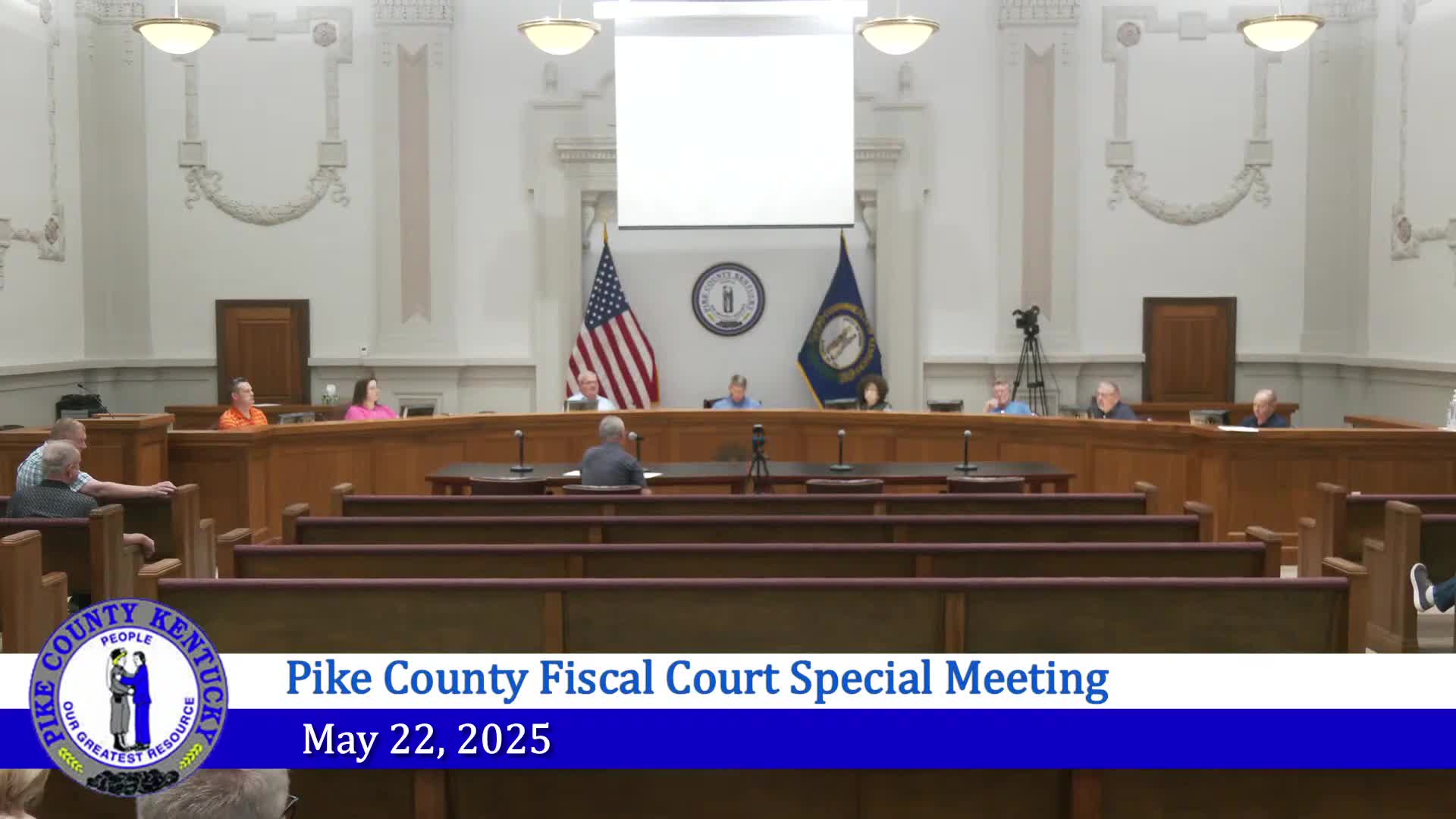
Summary
The court discussed a new state law (SB 63) that allows street-legal special-purpose vehicles (including side-by-sides) and noted a local ordinance must be adopted in two readings before June 27 for the law to apply in Pike County; officials said they might wait for administrative regulations before acting.
Pike County Fiscal Court on May 21 discussed how to implement Kentucky Senate Bill 63, which creates a street-legal classification for special-purpose vehicles (SPVs) such as side-by-sides. Court members said the statute takes effect June 27, but the law will not apply in Pike County unless the fiscal court adopts a local ordinance (first and second readings) within the county’s rulemaking schedule.
Staff said the state law requires SPVs to pass an inspection by a certified inspector (the sheriff’s office was mentioned as a likely inspector), produce proof of insurance (comparable to motorcycle tort liability), be registered at the county clerk’s office with a $10 registration fee, and meet specified equipment and safety requirements. Officials listed items that the law requires for inspection, including lighting, turn signals, windshield or eye protection, roll cage and other features (meeting comments referenced “16 safety features”). An inspection fee of $25 was mentioned in the discussion.
Court members and staff said administrative regulations tied to the law had not yet been promulgated and that Keigo/Keeco (county clerk’s association reference) had issued a draft ordinance with a disclaimer because regulations were pending. Several court members recommended waiting for the state administrative regulations to be finalized before adopting a county ordinance, to avoid later amendments and to clarify enforcement procedures, inspection protocols and insurance requirements.
Staff said they would prepare a draft ordinance for the next meeting and reach out to state legislators and the sheriff’s office for clarification on timelines and inspection roles. The court did not adopt an ordinance at the May 21 meeting and left the matter for further review at upcoming meetings.