
Economic development leans on Storefront Improvement Program and successor‑agency trust as city budget trims new capital asks
Get AI-powered insights, summaries, and transcripts
Subscribe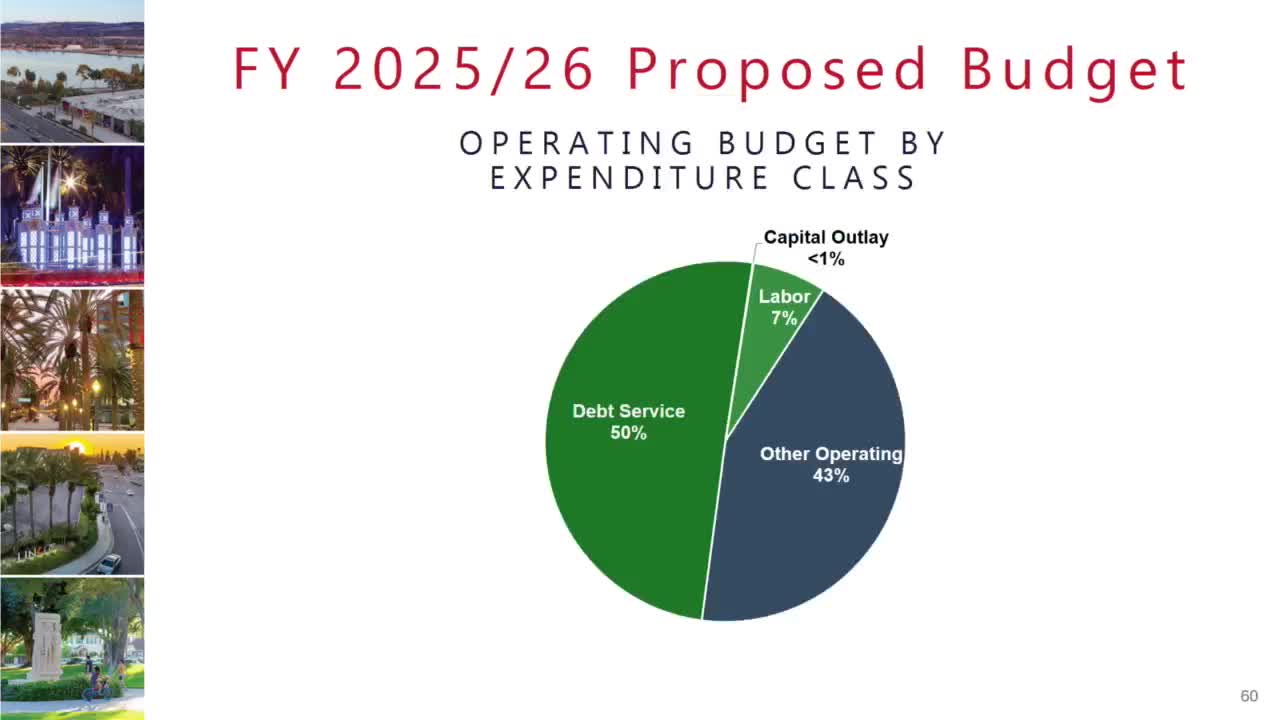
Summary
Economic Development Director Sergio Ramirez presented a $37.5 million departmental budget largely funded by successor‑agency trust balances. The small department highlighted the Storefront Improvement Program that uses modest city grants to leverage private investment, cited success stories and said no new capital asks are proposed for FY25‑26.
The Economic Development Department presented its proposed FY25–26 budget and several ongoing programs aimed at business retention, corridor revitalization and private investment.
Budget and funding
Director Sergio Ramirez described a proposed departmental budget of about $37.5 million, largely representing successor‑agency trust obligations tied to the former redevelopment agency. Ramirez said the department’s operating expenses are projected to decline about 17.8% from the prior year and that the FY25–26 request includes no new capital projects; several previously funded projects will continue using carryover funds.
Storefront Improvement Program and recent wins
Ramirez highlighted the Storefront Improvement Program, a small‑grant facade program launched two years earlier to spur commercial corridor investment. Staff showed examples in multiple districts where modest grants — Ramirez cited a $100,000 city grant leveraged into more than $1.9 million in private investment for a retail center — produced private rehabilitation and new construction activity.
Other program highlights and successor‑agency activity
- The department described ongoing work on the OC Vibe project area and follow‑on reviews for Disneyland Forward entitlements; staff noted Disney has paid its first developer obligations relating to affordable housing and park improvements. - Ramirez said successor‑agency staff continue to manage recognized obligation payment schedule (ROPS) responsibilities and that a negotiated disposition and development agreement will bring a Porsche dealership to the city.
Council Q&A
Council members asked about business retention, vacancy rates and how the department tracks leads; Ramirez said the city’s vacancy rate is under 6% and that staff is improving intake and tracking to better connect struggling businesses to resources. Council members praised the Storefront program’s leverage effect and asked staff to return with a modest future funding proposal once carryover funds are spent.
Why it matters
The department plays a connecting role between investors, property owners and city departments. Its relatively small operating staff manages important successor‑agency obligations while using targeted grant investments to catalyze private capital in commercial corridors.