
Lake County approves $490,666 HUD CoC funding to continue supported housing for people with mental‑health needs
Get AI-powered insights, summaries, and transcripts
Subscribe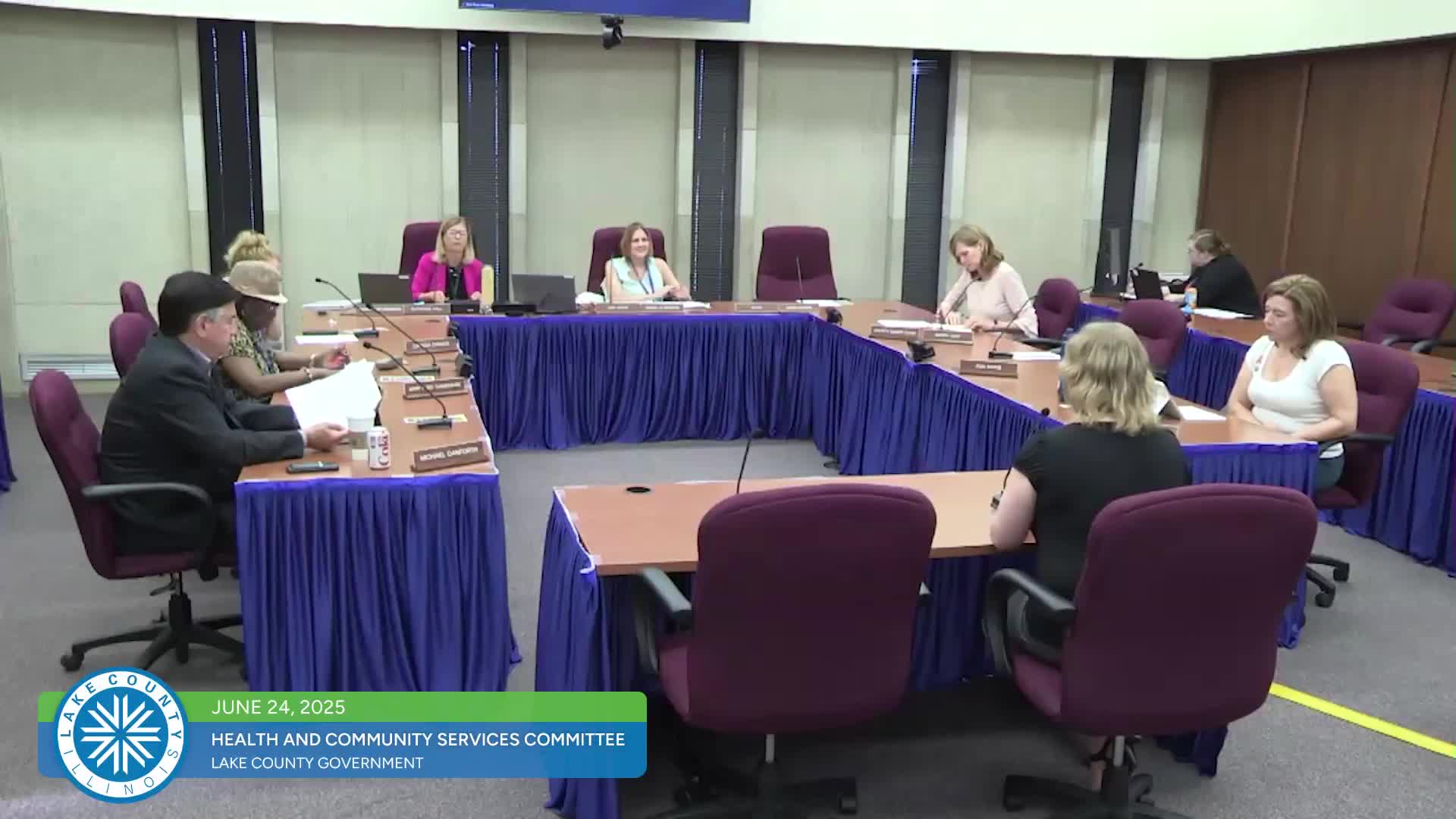
Summary
The county accepted an additional HUD Continuum of Care grant and a $490,666 emergency appropriation to continue permanent supportive housing rental and utility assistance for 59 people (including 13 families).
Lake County’s Health Department will continue receiving HUD Continuum of Care (CoC) funds after the Health and Community Services Committee approved an emergency appropriation of $490,666 to support permanent supportive housing for people experiencing homelessness with behavioral‑health needs.
Michelle Esarra, interim director of behavioral health at the Lake County Health Department, told the committee the HUD CoC money provides rental and utility assistance to unhoused individuals and families who are also experiencing symptoms of mental illness. “We are the only supported housing program in Lake County that houses families in addition to individuals,” Esarra said. She said the program is currently serving 59 people, including 13 families, who would be displaced if the appropriation were not approved.
Esarra described the clinical needs seen in the program: “A lot of anxiety, depression, especially in the parents with the families ... and then with some of the individuals we’re seeing more serious mental‑health concerns like schizophrenia, bipolar disorder, some psychosis as well.” Committee members praised the program and asked about referral pathways; Esarra said participants are referred through PADS and a central intake assessment process.
The committee approved the appropriation by voice vote. Members emphasized the program’s role in providing housing stability and supportive services to help participants maintain housing long term.