
Golf Manor Village council reviews FY2026 tax budget; questions road levy coding, relief funds and operating “catch‑all”
Get AI-powered insights, summaries, and transcripts
Subscribe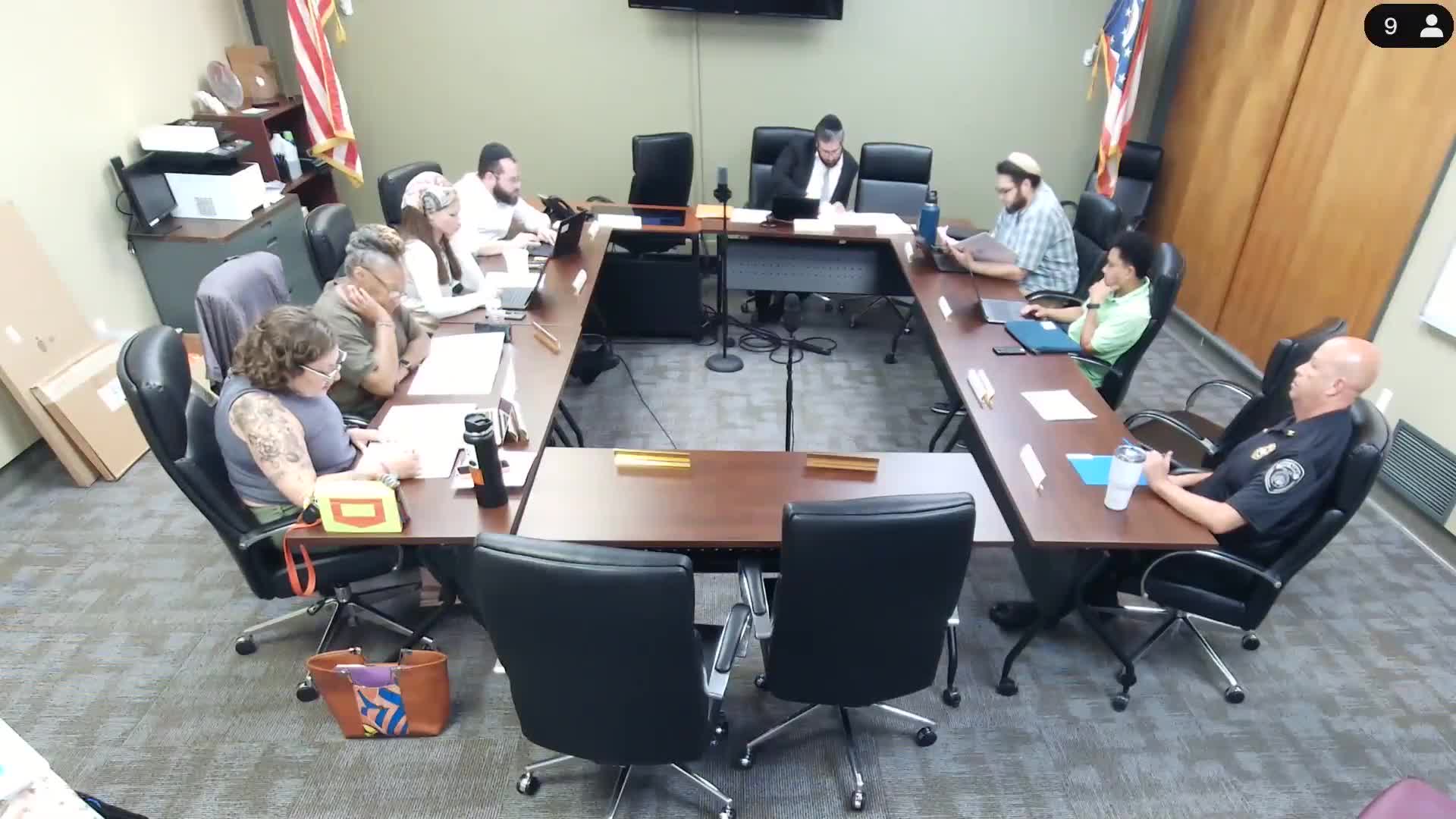
Summary
At a public hearing, Golf Manor Village council members questioned staff about how the road levy and coronavirus relief funds are coded and planned to be spent, and pressed for clarification on a large “operating supplies” line item. No formal budget vote was taken; the hearing was adjourned.
Golf Manor Village council held a public hearing on the village’s fiscal year 2026 tax budget where members pressed staff for details about the road levy, coronavirus relief funds and a broadly defined operating-supplies line.
The hearing matters because council decisions about levy and relief funds determine whether money is reserved for road projects, parks or must be returned to federal sources if not encumbered.
Vice Mayor (unnamed), who presided while the mayor was absent, opened the public hearing and invited questions from council and staff. Finance staff member Miss Kramm described how specific line items are coded and answered repeated questions about Fund 2904, identified in the budget as the road levy. Kramm said capital outlay in the budget typically covers equipment purchases (for example, a backhoe), while specific road projects should be coded as “street construction and reconstruction.” She said she would investigate why a 2024 amount that approached $900,000 had been coded as capital outlay rather than street construction.
On the village’s coronavirus relief funds (identified in the budget as Funds 2151 and 2152 and referred to in the hearing as “ARC money”), Kramm said the figures listed in the document reflect the total amount available and that the village must encumber eligible projects or risk returning funds to the federal government. “If we don’t encumber the funds, then we would be liable to return them to the feds,” Miss Kramm said.
Council members asked whether all of the listed coronavirus relief money was intended to be spent in the coming year; staff said most of it is expected to be used for community-resilience items such as parks and street or road projects, and that anything not spent by the funding deadline would likely default to the road fund.
Council members also pressed staff about a recurring “operating supplies and materials” line that appears across multiple funds. Kramm cautioned that while she did not want to call it a catch‑all, the line covers many necessary but hard-to-specify items for departments that are not listed elsewhere in the budget. “I don’t want to say it’s a catch all, but it is — it is certainly the biggest single line item in most of the funds,” Kramm said, and offered to review specific vendors and items with councilmembers one-on-one.
Other technical clarifications included: the budget separates electricity for buildings from street-lighting charges; street lights are billed in two separate sections of the village through Duke Energy because the areas receive separate bills. Kramm also explained contractual charges in the budget, including a collections fee paid to GCWW for billing and collections: “we pay them 5% of all collected monies… because they do our collections for us,” she said.
A line item under streets, highways, sidewalks and curbs (coded 1.1) was identified as the Mayflower project or as funds encumbered from the prior year for that work. No new funding decisions were made at the hearing.
After the Q&A, Vice Mayor (unnamed) moved to adjourn the public hearing; the motion carried by recorded assent. The council did not vote on or adopt the tax budget document at that meeting and directed staff to follow up with the clarifications requested on coding, encumbrances and the operating supplies details.