Bozeman commissioners adopt FY26 operating budget, set aside funds for shelters and planning; tenant-rights program left for later
Summary
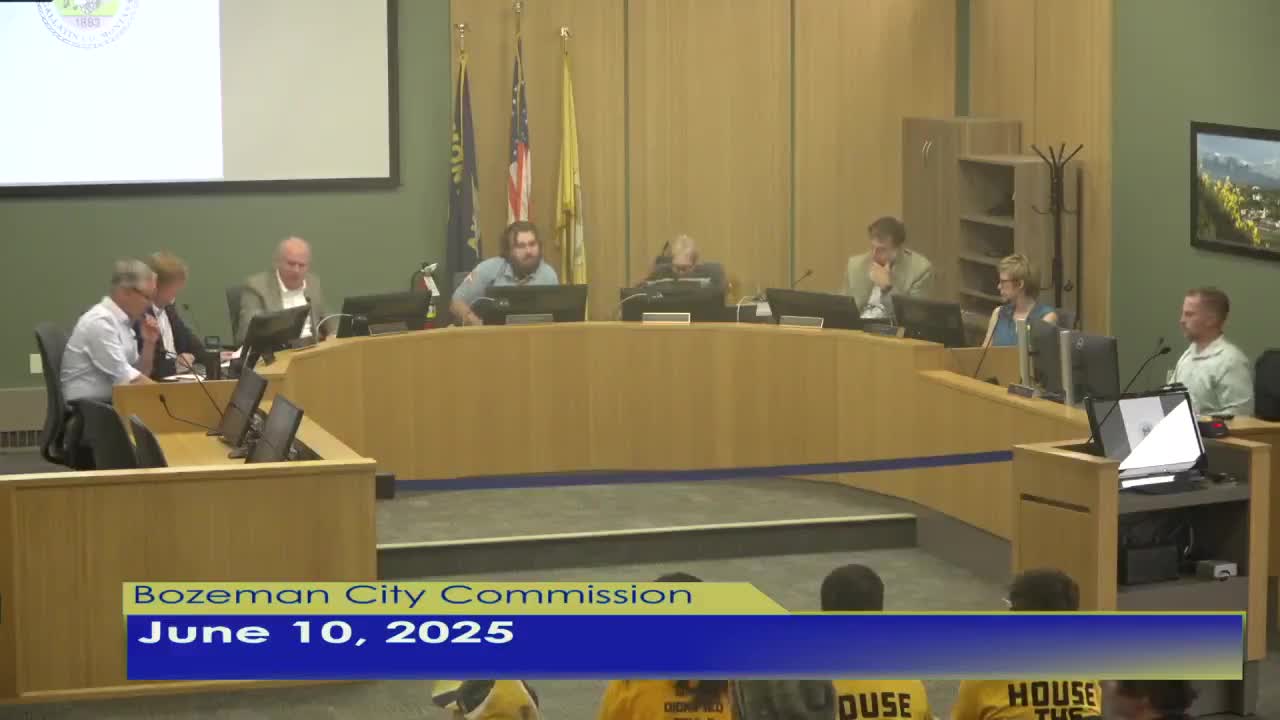
Bozeman City Commission members on Wednesday unanimously adopted a resolution approving the fiscal year 2026 annual operating budget after a multi-hour presentation and public hearing.
Bozeman City Commission members on Wednesday unanimously adopted a resolution approving the fiscal year 2026 annual operating budget after a multi-hour presentation from city staff and public comment.
The budget vote followed a presentation by City Finance Director Melissa Bodnant and a discussion led by the City Manager on revenue uncertainty tied to state-certified property values. The commission approved staff recommendations to cash-fund the planned City Hall remodel, to reserve money toward replacing the city’s enterprise resource planning system (ERP), and to set aside $500,000 for emergency shelter operations and $50,000 for the Bozeman Creek planning effort. Commissioners and staff also left a separate tenants’ right-to-counsel program for later design and decision-making.
The adopted FY26 resolution formalizes an annual operating budget that updates the two-year biennial budget the commission previously adopted. City staff emphasized that several figures remain estimates until the Department of Revenue issues certified property valuations in August; staff used a 3% estimate on property-taxable values in its materials and recommended postponing some final allocations until the new certified values arrive.
Staff framed the FY24 audit results and year-end carryforward items as the immediate source of one-time funding. Bodnant told the commission that 22% of planned expenditures from FY24 were unspent on paper, but about 16 percentage points of that reflected legally required multi-year carryforwards — projects already encumbered or contracted and therefore reserved. Staff said approximately $43,000,000 in carryforwards remain in the FY25 budget, largely for public-works capital projects.
Key decisions and amounts
- City Hall remodel: The commission approved staff’s recommendation to cash-fund $1,200,000 toward the City Hall renovation rather than incur new general-fund debt. Finance staff estimated financing the same amount would add roughly $700,000 in interest over 20 years plus issuance fees (~$100,000). Council members cited preserving future debt capacity and avoiding long-term interest costs as reasons to use one-time savings for this municipal building project.
- ERP replacement: Staff recommended reserving funds toward replacing Naveline, the city’s 30+-year-old ERP back-end. The total project estimate in the draft CIP ranges between $2.5 million and $3.5 million; staff proposed allocating $1,845,000 in the FY26 budget as a first-year set-aside and carrying the remainder into FY27. After discussion, the commission amended the staff recommendation and reduced the FY26 set-aside to $1,500,000 so the commission could hold more one-time funds available for urgent community needs and reassess remaining allocation after August certified values are available.
- Shelter/commission priorities: The commission approved setting aside $500,000 from one-time general-fund savings for emergency shelter operations and directed that the city’s three major shelter/partner organizations (HRDC, Family Promise, and Haven) collaborate on a proposed allocation for the commission to approve. The motion leaves final distribution to a future staff recommendation after partners coordinate their requests.
- Bozeman Creek plan and ballot education: The budget includes a recommended $50,000 for public education about a potential ballot initiative (state law requires the municipality to identify such funds in the recommended budget if used for ballot education). The commission also approved $50,000 to complete the Bozeman Creek plan (to be combined with two other city funds for a $150,000 planning effort focused on creek resiliency, flood hazard, access and design).
- Nonprofit grant requests: Commissioners directed staff to delay final allocations for the larger slate of nonprofit grant applicants until after they see certified property valuations and clarified priorities. Staff and several commissioners signaled a preference for focusing discretionary funds primarily on housing, emergency shelter and behavioral-health related programming.
Public comment and tenants’ right to counsel
More than two dozen members of the public spoke during the budget hearing. Many urged immediate funding for tenants’ right-to-counsel and emergency shelter operations; others opposed using tax dollars for civil legal representation in landlord-tenant cases. City staff repeated that the tenants’ right-to-counsel program design (eligibility, scope, timing and possible use of CDBG funds) is not yet finalized and will return to the commission later this year for ordinance, budget and program decisions. Staff said it is exploring whether Community Development Block Grant (CDBG) funds can be used for a tenant-rights program and intends to present details, including income limits and program costs, before asking the commission to appropriate operating dollars.
Other budget details and constraints
- Staffing and vacancy savings: Bodnant explained that a portion of FY24 savings came from vacancy savings (approximately 6% in the general fund), a recurring but one-time-like source now declining as hiring improves. Staff cautioned against relying on vacancy savings for recurring operating costs.
- Utilities and fees: The recommended FY26 budget includes utility and assessment adjustments used in the biennial plan: water was estimated at a 10% increase (down from 12% previously modeled), sewer at 6%, and solid-waste charges include a 10% increase in FY26. Staff said water/sewer rate changes are set through the two-year schedule previously adopted and will not return for additional rate action this fall.
- Grants and federal aid: The staff presentation noted the city received a federal SAFER grant (approximately $4,400,000) to hire 12 firefighters; those positions are in training and will help the department staff a planned quick-response unit.
Vote and next steps
Commissioner Fisher moved the resolution adopting the FY26 annual operating budget; it passed unanimously. The commission directed staff to return with certified revenue estimates after the Department of Revenue issues certified values (expected in August) and to present a tenants’ right-to-counsel program proposal later this year with eligibility and cost estimates. Staff noted the ERP RFP preparation will proceed with outside assistance (the Government Finance Officers Association was contracted to help with procurement and project management) and that implementation work would likely occur in FY27–FY28 if the commission confirms funding.
Ending
Commissioners and staff said they will use the August certified valuations and an October or November work session to finalize discretionary allocations and program parameters. The commission’s budget action establishes FY26 appropriations and preserves staff flexibility to implement projects in a manner that reflects both one-time savings and ongoing revenue realities.