
Edmonds council advances $14.5 million levy-lid lift to voters after contentious public hearing
Get AI-powered insights, summaries, and transcripts
Subscribe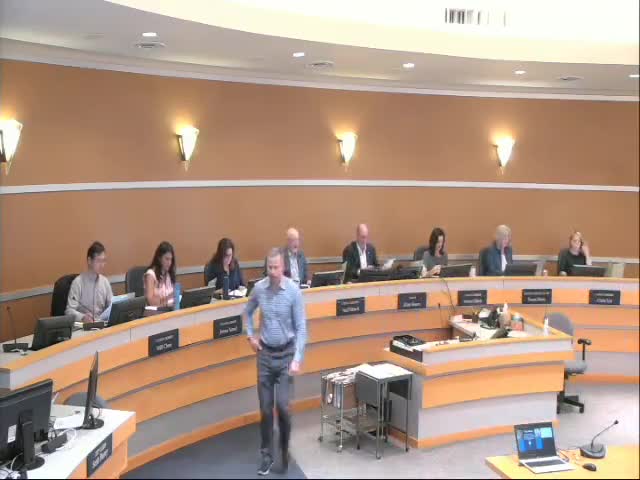
Summary
After a lengthy public hearing and debate, Edmonds City Council voted 5–2 to advance a resolution placing a $14.5 million levy-lid lift on the November ballot, amending the measure to specify funding for police, parks, roads and sidewalks, and planning.
Edmonds City Council voted 5–2 on July 1 to advance a resolution placing a proposed $14.5 million levy-lid lift before voters this fall, after a public hearing that drew more than a dozen speakers for and against the measure.
The levy proposal would permanently increase the city’s regular property-tax levy by an amount the resolution caps at $1.65 per $1,000 of assessed value and would allow the levy to grow with the consumer price index for five years after 2026. Mayor Mary Rosen introduced the proposal during a May–June budget update and told the council, “The levy lift number is 14,500,000,” saying the increase is intended to replenish reserves, repay an internal loan and restore services cut during the city’s fiscal emergency.
Why it matters: Council members and dozens of residents framed the question as a trade-off: raise recurring local revenue to restore public safety, park maintenance and street repairs, or accept continued service reductions. Supporters argued the levy gives the city a multi-year runway to address deferred maintenance and restore basic services; opponents said the amount is too large, warned of disproportionate impacts on homeowners and elderly residents, and asked for clearer line-item budgeting.
Details and council changes: Council President Tibbitt and Mayor Rosen presented a staff slide deck showing that the city’s expense growth has outpaced revenue and that an internal loan of about $6 million must be repaid; the mayor said roughly $3.3 million is due in 2027 and recommended replenishing reserves over 10 years. Council President Tibbitt said he arrived at the $14.5 million figure after subtracting an estimated $5 million in non-property-tax revenue that the city hopes to secure.
During debate the council narrowed the levy’s ballot purpose to fund police, parks, roads and sidewalks, and planning. Councilmember Nand objected to removing the broader phrase “government services,” saying the narrower list could legally constrain future spending; City Attorney staff confirmed the purpose statement creates a binding limitation and will require accounting to ensure funds are spent only for the listed uses.
Public comment: More than a dozen residents addressed the council during the public hearing. Opponents included Robert Chaffee, who said he was “opposed to the levy lid lift” and warned of hardship from what he described as a combined tax increase from the levy and a near-doubling of the RFA tax. Becky Brower, a retired CFO, told the council she reviewed recent budgets and said labor-and-benefit costs have risen sharply; “My husband’s and my annual property tax bill will increase $860 for the RFA. The proposed levy lift would add an additional $800 annually,” she said. Supporters included Roger Pence, who urged a “share the pain strategy” that mixes new revenue and cuts and said voters needed clear, side‑by‑side numbers showing what would be funded if the levy passes.
Votes and next steps: The council approved a package of edits to the resolution during the meeting, added “planning” to the list of purposes, and substituted the phrase “roads and sidewalks” for “safe streets” after a roll-call vote (the substitution carried 4–2 with one abstention). The final motion to authorize the city attorney to advance the resolution as amended for placement on the consent agenda next week passed 5–2. If the council puts the measure on the ballot and voters approve it, the levy would take effect in 2026 and then increase with the CPI for five years; qualifying low‑income, senior and disabled homeowners would qualify for a deferral or exemption for five years following 2026, per the draft.
Council context: Several council members said the levy is presented as a question to the electorate, not a decision the seven elected officials will unilaterally impose. Councilmember Olson described the choice plainly: either pay to restore the city’s prior level of service or accept further reductions and deferred maintenance. Councilmember Chen, who opposed the $14.5 million figure earlier in the process, reiterated support for a smaller $6 million option that has appeared in prior budget forecasts. Councilmember Payne said she supported the $14.5 million number after working through revenue assumptions and identifying the one‑third non‑property-tax target.
What the resolution would allow: The current draft limits the new levy revenue to four named categories (police, parks, roads and sidewalks, and planning) and states a not-to-exceed rate of $1.65 per $1,000 of assessed value. The resolution calls for qualifying low‑income, senior and disabled homeowners to receive a deferral or exemption for five years following 2026. Council and staff said they will refine the ballot title and final text before it returns on consent agenda next week.
Why the number matters: Council members and city staff repeatedly noted sticker shock with a double‑digit million figure but also argued that a larger levy provides room to address longer‑term capital and operating needs rather than only “keep the lights on.” Supporters said smaller asks could be more likely to fail and that failing a too‑small or too‑large ask could leave the city with no plan to restore core services.
Looking ahead: The resolution will return to the council consent agenda for final approval of the ballot language. If placed on the ballot and approved by voters, the levy’s limits and tracking requirements will become legal constraints on how the city spends the additional property-tax revenue.