
Historic Preservation Commission approves facade rehabilitation and front balcony for 517 West Oklahoma
Get AI-powered insights, summaries, and transcripts
Subscribe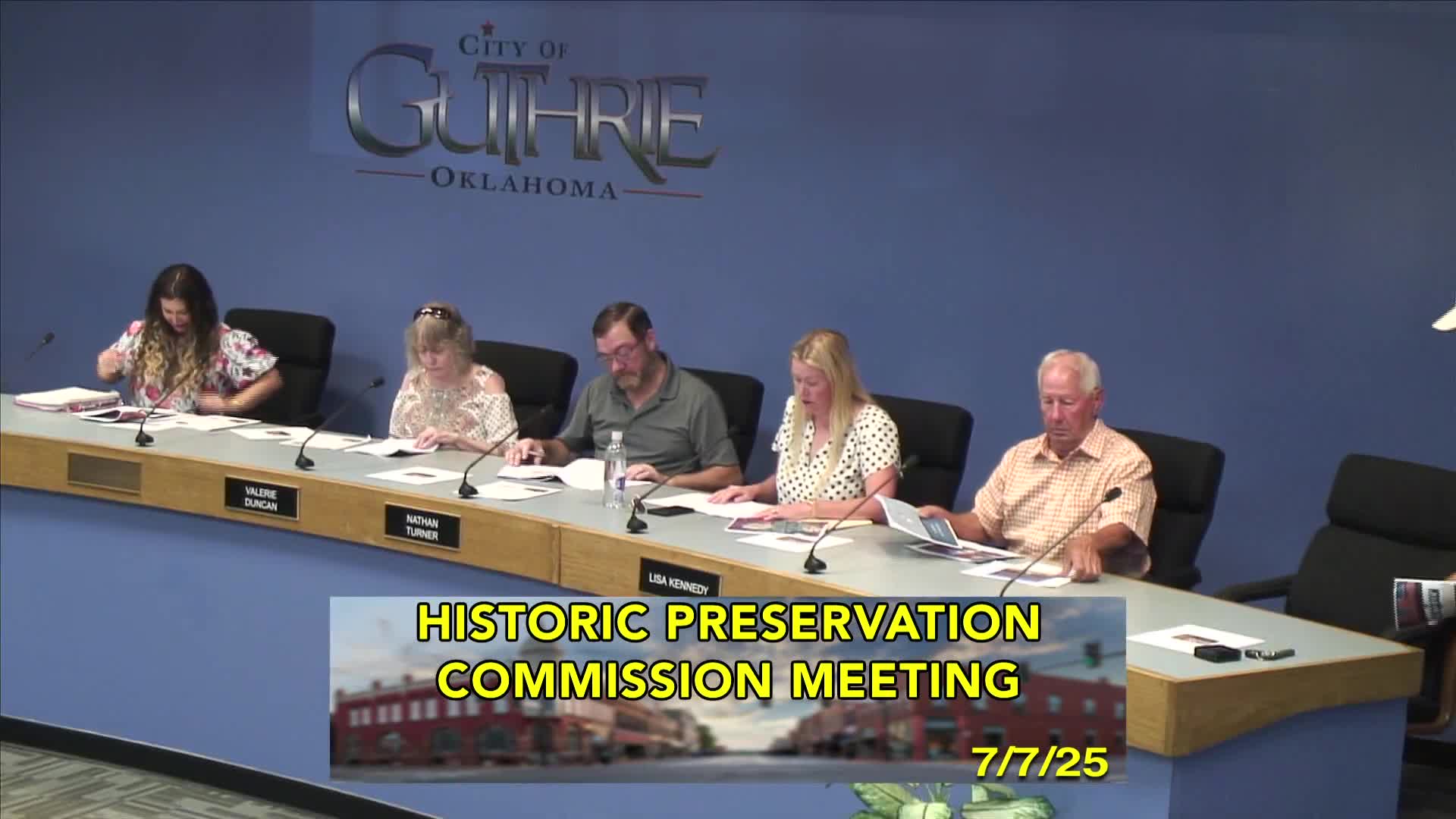
Summary
The Historic Preservation Commission approved a certificate of appropriateness July 7 for work to reconstruct the front facade, add a new front balcony, and install new upper‑floor doors and windows at 517 West Oklahoma Avenue.
The Historic Preservation Commission approved a certificate of appropriateness July 7 for work to reconstruct the front facade, add a new front balcony, and install new upper‑floor doors and windows at 517 West Oklahoma Avenue.
The applicant, Terry Kleinfeld, told the commission the project aims to restore a storefront and provide second‑floor access: "the goal is to take it down to be a beer garden," Kleinfeld said, describing proposed storefront transoms, metal storefront doors sized for ADA access and sidelights if allowable.
Commission staff told the panel the building is a noncontributing resource in the historic district, so the review focuses on compatibility rather than restoring previously surviving historic fabric. Staff also advised commissioners about safety and code restraints, saying that "those spacings on those vertical rails are greater than 4 inches, which is not allowable by code now," and that rail spacing would need to be reduced to meet code.
Commissioners debated the balcony design. One commissioner said the balcony shown in the applicant's packet looked "a little industrial" and suggested considering more decorative, Victorian‑inspired elements for the front elevation; staff recommended that the front balcony be more ornamental while allowing more industrial detailing for rear or secondary elevations. The applicants said they had instructed their architect to reference existing downtown balcony styles so the new railings "fit in more with the neighborhood."
The motion to approve included a direction that the front balcony's railing be revised to an ornamental, period‑compatible design consistent with other downtown front balconies; other submitted elements (storefront transoms, doors and upper‑floor windows) were approved as presented. The motion was moved and seconded on the record; the roll call vote was unanimous, 5‑0, and the chair instructed staff to include the project details in the certificate of appropriateness and to track related follow‑up inspections and approvals.
Commissioners and staff emphasized that sensitive rehabilitation work can change a property's historic status on future surveys and can help qualify buildings for preservation funding. The commission noted the applicant had consulted Sanborn map evidence and other historic descriptions where photographs were not available.
The commission did not set any funding or permit conditions beyond the requirement that the front balcony railing be modified to a more ornamental design and that guardrail spacing meet building code. Applicants will proceed with final construction drawings for building‑department review and any required permits before work begins.