
Bill to allow premixed keg cocktails on tap advances after sponsor pitches industry benefits
Get AI-powered insights, summaries, and transcripts
Subscribe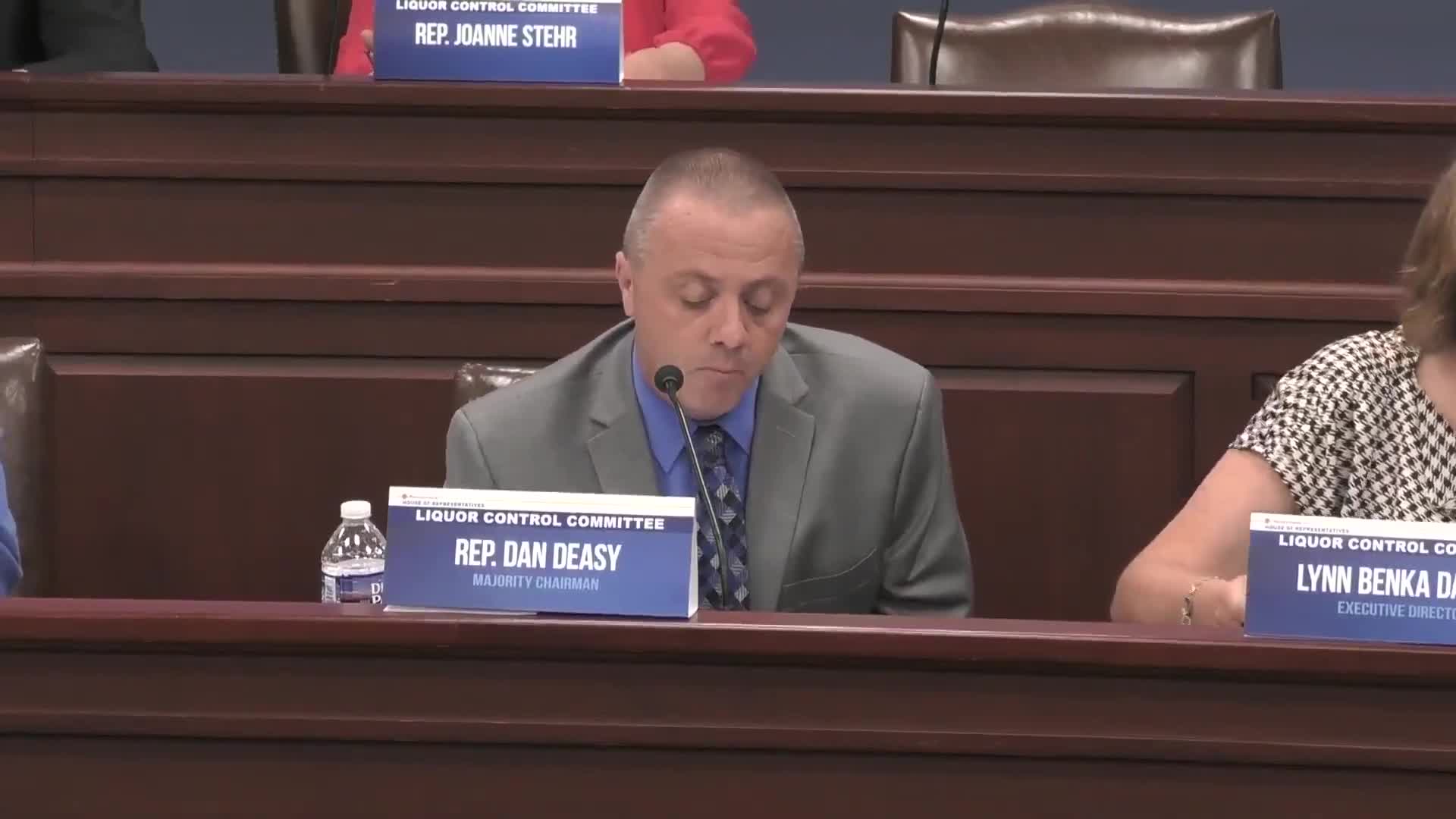
Summary
Representative Gogener’s House Bill 1702 would allow licensed establishments to store and serve ready-to-draft premixed keg cocktails on premise; committee passed the bill with no recorded negative votes.
At the Liquor Control committee meeting on July 9, 2025, committee staff and Representative Gogener described House Bill 1702, which would amend the liquor code to permit storage and on-premise dispensing of "ready to draft premixed keg cocktails" by liquor licensees.
Supporters said the change would allow Pennsylvania businesses to adopt industry innovations that standardize pours and improve sanitation.
Lynn, committee staff, read the bill’s definition: the term "ready to draft premixed keg cocktail" means "a beverage prepared on the license premise of a retail liquor licensee in which a nonalcoholic cocktail base consisting of juices, syrups, bitters, carbonated, or non carbonated water, or other flavorings combined with liquor in a sealed keg or container for the purpose of dispensing cocktails and built for on premise consumption using a gas driven system." Lynn added that the bill "further explains that these keg cocktails are not decanters and therefore shall not be, permitted to be stored for and shall be permitted to be stored for further use."
Representative Gogener spoke in favor of the bill, saying she introduced it "because I want to help our business owners keep up with industry trends. We need to support them as trends and innovations change." She noted that current law limits premixed cocktails: "Current law prohibits storing premixed cocktails such as a margarita or mojito for more than 24 hours for health and safety reasons," and she said "Currently, 36 other states allow these kegs, and Pennsylvania licensees should be able to join the list."
There were no recorded negative votes on the bill in the transcript; the chair closed questions and "the bill passes having no further business." The committee record indicates the bill was passed out of committee for further consideration by the legislature.
The transcript does not include details on sanitary standards, inspection protocols, or labeling requirements that would accompany the change, nor does it include stakeholder testimony for or against the change. The bill text and subsequent amendments, if any, would determine specific health and safety controls and enforcement mechanisms.