
Planning board recommends conditional zoning for 80 MW Stokes Town solar project after lengthy public comments
Get AI-powered insights, summaries, and transcripts
Subscribe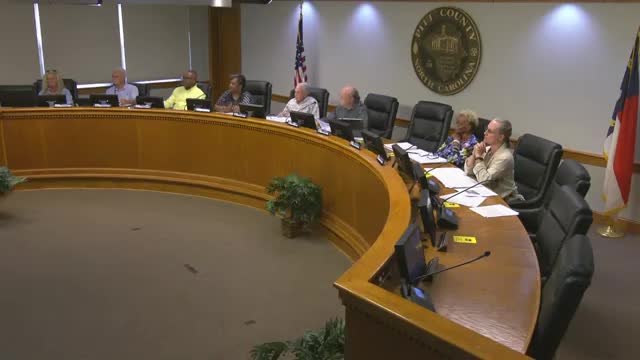
Summary
The Pitt County Planning Board recommended approval of a conditional rezoning for Stokes Town Solar, a proposed 80 MW solar farm paired with 30 MW of battery storage on about 1,049 acres east of Grifton, after presentations by the developer and extensive public comment.
The Pitt County Planning Board recommended approval of a conditional rural-agricultural rezoning for the proposed Stokes Town Solar project — an 80-megawatt solar-generation system paired with a 30-megawatt battery energy storage system — after an extended presentation by the developer and substantial public comment both for and against the project.
Hexagon Energy representatives said the project would be an approximately 1,049-acre rezoning area east of Grifton encompassing 15 parcels (eight property owners). Chad Issick, zoning and land-use counsel for Hexagon, told the board the fenced equipment area would be under 400 acres and about 116 acres would contain actual solar panels. He summarized technical studies the applicant obtained and said the company had worked nearly a year with staff and the community to reduce the proposal from roughly 30 parcels to 15.
“This project, if approved, would develop an 80, megawatt solar energy generating system paired with a 30 megawatt battery battery energy storage system,” Chad Issick said.
Ross Evets, a Hexagon project developer, cited the applicants economic analysis: “Over the 30 year life of the project, Stokes Town Solar is expected to generate more than $3,200,000 in county tax revenue compared to just $180,000 if the land remained in agricultural use. That's a 36 fold increase,” he said, while describing projected construction job-years and local economic output.
Hexagon engineers said they moved the substation and battery equipment to increase setbacks and removed arrays that bordered higher-density residential roads after a January community meeting. “First, we moved the project substation and battery storage...allowing for greater setbacks from nearby homes,” Erica O'Donnell, Hexagon senior development engineer, said. The applicant said it increased minimum setbacks from nonparticipating homes from 50 feet to 300 feet in many places and proposed vegetated corridors and pollinator habitat.
Opponents raised flooding, historic/archeological resources and land-preservation concerns. One commenter testified, “My biggest concern is it increased in flooding,” and described nearby drainage and the Fork Swamp watershed plan. Supporters included multiple landowners who said leasing to solar would preserve family land and provide needed income; Deborah Cannon Wade said she changed her view after reviewing research and said the lease would help keep land in her family.
Planning staff recommended approval with conditions requiring a Pitt County site plan, erosion and sedimentation control and stormwater compliance, a 50-foot riparian buffer on streams (unless exempt), submittal of decommissioning plans and a fencing/landscaping plan. Staff noted the applicant proposed setbacks and additional screening and that an existing solar farm is in the vicinity. The staff report and the applicants proposed conditions require: underground electrical wiring where required, abandoned equipment removal after one year of inactivity, compliance with county stormwater and nutrient-control rules, and adherence to the countys solar standards (equipment setbacks, inverter separations, and maximum heights).
After public comment and applicant responses, a board member moved that the board recommend approval of Hexagon Development's request with the conditions presented; the motion passed. Planning staff reminded the audience that the recommendation goes to the Board of Commissioners, which will hold a public hearing August 18.
The transcript records multiple technical claims by Hexagon about economic benefit, mitigation of flood risk through design changes and decommissioning and reuse practices; those claims will be evaluated further during site-plan review and by permitting agencies if the commissioners approve the rezoning.