Committee questions data gaps after DOD moves to end routine DMSP data sharing
July 18, 2025 | Science, Space, and Technology: House Committee, Standing Committees - House & Senate, Congressional Hearings Compilation
This article was created by AI summarizing key points discussed. AI makes mistakes, so for full details and context, please refer to the video of the full meeting. Please report any errors so we can fix them. Report an error »
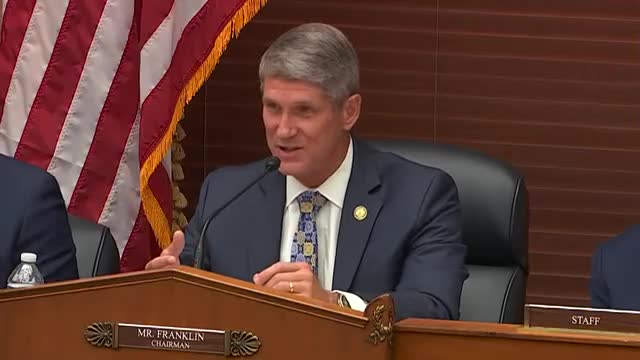
Chairman Franklin asked witnesses how the discontinuation of Defense Meteorological Satellite Program (DMSP) data sharing would affect forecasts and what could replace that data as the program is phased out.
Thomas Cavett told the committee that microwave imagers and sounders on DMSP are "critically important for hurricane forecasting" and warned of an observational shortfall. "If you couple that with the shutdown of the POES systems from NOAA in June, we've lost about 60% of our capacity as a nation, for microwave imagers and sounders," Cavett said. He noted that Tomorrow.io currently has seven microwave sounders on orbit providing operational data.
Why it matters: Microwave imagers and sounders provide night-time and interior-storm structure information that geostationary optical sensors cannot. Witnesses and members said loss of overlapping satellite coverage risks gaps in calibration and reduced confidence in long-term records unless overlap and cross-calibration are maintained.
Witness recommendations: Witnesses urged continued access to DOD data where possible, overlap time between retiring and new systems for at least a year to enable calibration, and a mix of government and commercial sensors to maintain revisit frequency. Dr. Waleed Abdalati and Dr. Jayesh Gupta both emphasized the importance of overlapping systems for calibration and long-term archives.
Ending: Committee members asked NOAA and DOD to ensure data continuity and cross-calibration during satellite transitions and to consider commercial sensor contributions as part of a diversified observing architecture. No formal actions were recorded at the hearing.
Thomas Cavett told the committee that microwave imagers and sounders on DMSP are "critically important for hurricane forecasting" and warned of an observational shortfall. "If you couple that with the shutdown of the POES systems from NOAA in June, we've lost about 60% of our capacity as a nation, for microwave imagers and sounders," Cavett said. He noted that Tomorrow.io currently has seven microwave sounders on orbit providing operational data.
Why it matters: Microwave imagers and sounders provide night-time and interior-storm structure information that geostationary optical sensors cannot. Witnesses and members said loss of overlapping satellite coverage risks gaps in calibration and reduced confidence in long-term records unless overlap and cross-calibration are maintained.
Witness recommendations: Witnesses urged continued access to DOD data where possible, overlap time between retiring and new systems for at least a year to enable calibration, and a mix of government and commercial sensors to maintain revisit frequency. Dr. Waleed Abdalati and Dr. Jayesh Gupta both emphasized the importance of overlapping systems for calibration and long-term archives.
Ending: Committee members asked NOAA and DOD to ensure data continuity and cross-calibration during satellite transitions and to consider commercial sensor contributions as part of a diversified observing architecture. No formal actions were recorded at the hearing.
Don't Miss a Word: See the Full Meeting!
Go beyond summaries. Unlock every video, transcript, and key insight with a Founder Membership.
✓
Get instant access to full meeting videos
✓
Search and clip any phrase from complete transcripts
✓
Receive AI-powered summaries & custom alerts
✓
Enjoy lifetime, unrestricted access to government data
30-day money-back guarantee
