
Bear safety: presenter urges vigilance, proper bear-spray use and storage
Get AI-powered insights, summaries, and transcripts
Subscribe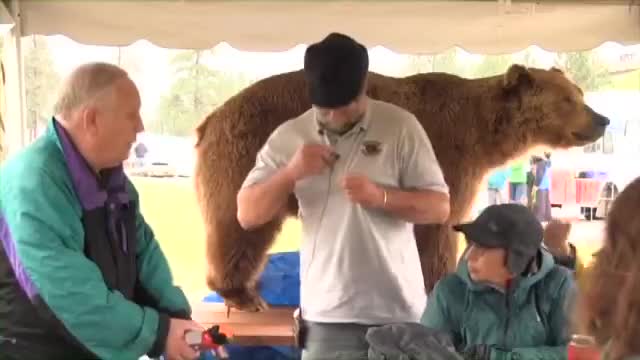
Summary
Chuck Bartlebaugh, representing the Be Bear Wear campaign, gave practical advice on how to avoid bear encounters and how to deploy bear spray correctly, emphasizing that complacency is the most common cause of problematic interactions and that two-handed, sustained spray is the recommended response to a charging bear.
At the Confluence event, Chuck Bartlebaugh of the Be Bear Wear campaign delivered a focused safety briefing on preventing human-bear conflicts and on correct bear-spray use.
The takeaway: "The biggest thing is complacency," Bartlebaugh said, and advised visitors to call out while approaching brush or running water, to secure attractants and to carry a bear spray that meets tested performance standards.
Bartlebaugh recommended specific practices for safe and effective spray use: carry a can that delivers at least about seven seconds of discharge and reaches roughly 30 feet (he identified these thresholds as important for reliable performance in a charging-bear scenario), hold the can with two hands so the nozzle remains aimed, begin spraying as soon as the trigger is depressed and continue until the bear diverts. He warned that some low-duration products and improvised pepper sprays are not equivalent to commercially tested bear spray, and said inert training cans are useful for practice and familiarization.
On storage and transport, Bartlebaugh recommended shading or insulating cans in hot cars, using foam-lined protective containers for long-term storage or summer heat avoidance, and avoiding placement where a puncture might release propellant into enclosed spaces. He said expired cans that have been stored properly may still function but cautioned that extreme heat, freezing or physical damage can reduce performance.
Ending: Bartlebaugh urged attendees to make a habit of carrying a tested can of bear spray on wilderness trips, to practice with inert canisters and to prioritize attractant management and loud, assertive trail behavior to reduce surprise encounters.