
Appropriations panel rejects amendment to restore ARPA‑E funding to FY2025 level
Get AI-powered insights, summaries, and transcripts
Subscribe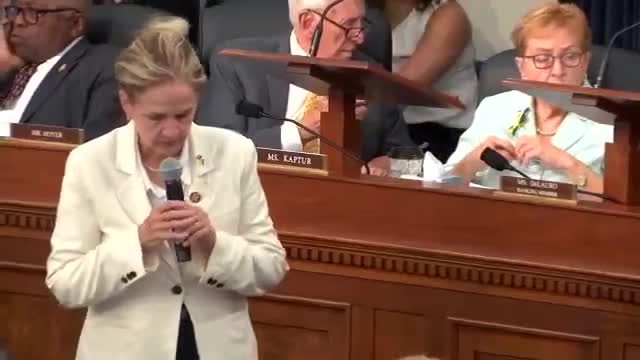
Summary
The House Appropriations subcommittee voted down an amendment to raise ARPA‑E funding by $110 million to return it to FY2025 enacted levels; supporters cited past ARPA‑E successes and national security supply‑chain benefits while opponents said increases lacked an offset.
Representative Dean offered an amendment to restore Advanced Research Projects Agency–Energy (ARPA‑E) funding to its fiscal 2025 level, proposing a $110,000,000 increase to return the program to $460,000,000. After debate, the committee rejected the amendment on a roll call vote, with 26 ayes and 35 noes.
Why it matters: ARPA‑E supports early‑stage, high‑risk energy research that backers say helps translate laboratory work into private investment and new companies. The amendment drew bipartisan floor discussion about the program’s track record and tradeoffs in limited discretionary funding.
Representative Dean said the amendment would “quite simply restore funding for ARPA E, the Advanced Research Projects Agency Energy to the FY ’25 levels.” She told members the bill before the committee provided $350,000,000 for ARPA‑E, $110,000,000 below FY2025 enacted levels, and urged colleagues to support the increase.
Supporters cited past ARPA‑E outcomes. A member identified as the gentlelady from Minnesota described a 2012 University of Minnesota ARPA‑E grant that helped develop iron‑based permanent magnets without rare earth materials; that effort later spun off a company, which the speaker said received a 2023 follow‑on award and began scaling production. The Minnesota speaker said the magnets could reduce supply‑chain reliance on foreign rare‑earth suppliers and provide domestic defense and commercial benefits.
Representative Fleischman, speaking in opposition, said he supported ARPA‑E in general but opposed increasing funding “without an offset.” He noted the base bill provides $350,000,000 for the program and said the committee must account for offsets in the appropriations process.
Other members voiced support for the amendment on grounds of industrial competitiveness and manufacturing jobs. The gentleman from Indiana described ARPA‑E support at a Purdue Northwest center working with the domestic steel industry and called restoring funding “critical” to keep U.S. advanced manufacturing competitive.
The chair acknowledged differing views and the constraints of available allocations, and the clerk then conducted the roll call. The amendment failed on the recorded vote (ayes 26, noes 35). No further amendments on ARPA‑E were adopted in this markup.
The committee proceeded to other business after the vote.