
Energy and Water Bill Cuts DOE Clean‑Energy Programs; Democrats Warn of Higher Costs and Lost Jobs
Get AI-powered insights, summaries, and transcripts
Subscribe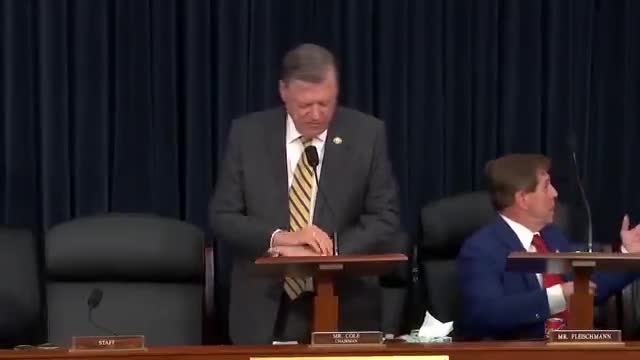
Summary
The Energy & Water FY2026 appropriations bill trims Department of Energy clean‑energy programs, redirects some IIJA funds and increases nuclear and defense spending; Democrats argued cuts would raise household energy costs, cost jobs and cede advantage to foreign competitors, while Republicans defended reallocations and fiscal restraint.
House members debated the Energy and Water Development appropriations bill during a July markup, where the Republican majority’s text reduced some Department of Energy clean‑energy program funding, prioritized nuclear security and redirected certain IIJA advance appropriations. Chair Mike Fleischmann (R‑Tenn.) characterized the package as “strengthening our nation’s energy security,” citing a total recommendation of roughly $57.3 billion for Energy and Water accounts.
Republicans emphasized funding shifts toward nuclear modernization and Army Corps projects while saying they were trimming lower priority innovation programs. “The recommendation totals $57,300,000,000, a decrease of $7,707,766,000 below fiscal year 25 level,” Chair Fleischmann said during his opening remarks. The manager’s text included increases for the National Nuclear Security Administration and army corps construction priorities.
Democrats objected to major reductions at DOE. Representative Marcy Kaptur (D‑Ohio) called the bill “overly partisan” and said it “cuts energy efficiency and renewable energy programs by 50%” and “revokes $5,100,000,000 of bipartisan infrastructure law resources.” Representative Mike Levin (D‑Calif.) warned in debate that curtailing the Office of Clean Energy Demonstrations and other incentives would hand advantage to competitors: “China invested $940,000,000,000 alone just in 2024 in clean energy,” he told the committee, and noted the private sector had canceled multiple U.S. projects amid policy uncertainty.
Republicans defended priorities intended to shore up defense and core infrastructure. Representative Fleischmann said the bill “prioritizes our nation’s most critical missions,” underlining additional resources for the National Nuclear Security Administration and Army Corps operations. Members also argued that some IIJA accounts had low rates of obligation and that redirecting unused balances could deliver a higher near‑term return on investment in safety and modernization.
Members pressed over specific matters: several Democrats sought restorations for the Office of Clean Energy Demonstrations, EERE and programs focused on weatherization and energy efficiency for low‑income households; several Republicans sought protections for grid reliability, support for nuclear fuel and ports, and redirection of IIJA balances to immediate safety needs.
What’s next: The subcommittee adopted the manager’s amendment and reported the bill. Democrats signaled they will offer floor amendments to restore clean energy demonstration and efficiency funding and to oppose transfers from IIJA advance appropriations.
Ending: The markup highlighted a policy divide: whether to prioritize near‑term infrastructure and nuclear investments or to protect DOE’s clean‑energy demonstration funding intended to accelerate the transition and lower long‑term costs.