
Students tell Silver Falls board Sequoia program helped them finish school; principal outlines funding and services
Get AI-powered insights, summaries, and transcripts
Subscribe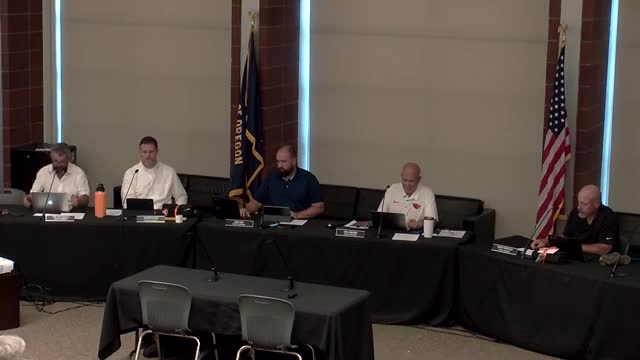
Summary
Three Sequoia students told the Silver Falls board the alternative high school’s smaller classes, flexibility and staff support helped them reengage; Principal Jennifer Hannon described program costs and funding sources including SIA, reengagement grants, a Willamette Health Council grant for a building and tuition from other districts.
Students who attend Sequoia, the Silver Falls School District’s alternative education program, told the school board Monday that smaller classes, flexible pacing and close staff relationships helped them return to school and graduate.
Autumn Thompson, a recent graduate, told the board: “I can't praise Sequoia enough … if I hadn't gone to Sequoia, I don't know if I would have graduated.” Wyatt Petty, another student, said Sequoia helped him “show up, get the work done, and ensure that I could pass eighth grade” after struggles during COVID and medical issues.
Principal Jennifer Hannon framed the students’ remarks with a financial and program summary. “Sequoia is funded through SIA. It does not draw any general fund dollars,” Hannon said. She outlined revenue sources the program uses: retained or recovered enrollment (she said “up to … $990,000” this year on straight enrollment funding), an additional per‑student payment for high‑school success of about $100,000, a roughly $175,000 reengagement opportunity grant, a $100,000 Willamette Health Council grant toward the building, and about $24,000 in tuition from other districts.
Hannon also described districtwide services Sequoia provides: coordinated mental and behavioral health supports that can reduce waits for treatment from “about 6 to 9 months” to weeks, a bilingual Spanish helpline, crisis response deployment and alternative credit‑earning processes. The principal acknowledged Sequoia’s cost: “So I will say we own that we are expensive. We're expensive. Right?” but added the program offsets some of its cost with the outside funding she listed.
Board members asked questions about enrollment counting and staff ratios; Hannon described an average daily class size range roughly between 10 and 15 students, with 3 teachers and additional district staff affiliated with Sequoia. Students, staff and board members noted the program’s role in graduation rates and student reengagement.
Ending: The presentation included several students who described returning to school, registering at local colleges and getting jobs; the board and superintendent thanked them for speaking.