
Georgia Supreme Court narrows agency rulemaking, overturns decades-old precedent in elections ruling
Get AI-powered insights, summaries, and transcripts
Subscribe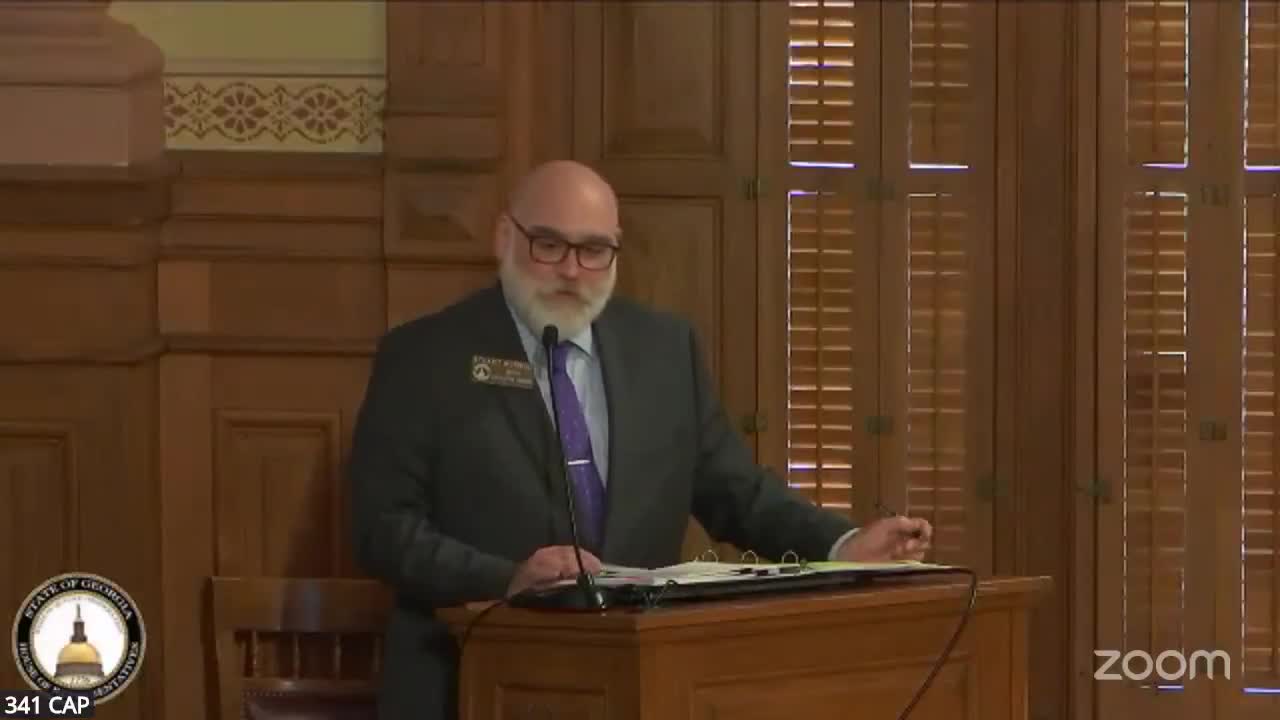
Summary
The Georgia Supreme Court this year invalidated most rules the State Election Board adopted ahead of the 2024 election, overturning DOT v. Atlanta and setting a three-step test limiting agenciesability to make binding rules. The decision will affect how state and some local bodies write implementing regulations going forward.
The Georgia Supreme Court this year struck down four of seven rules the State Election Board adopted for the 2024 cycle and left only a narrow surveillance requirement intact, saying agencies may not enact rules that amount to lawmaking without clearly delegated, limited authority from the General Assembly. Stuart Morelli, deputy legislative counsel to the General Assembly, told the committee the opinion replaces the 1990 DOT v. Atlanta standard and establishes a three-step test for delegation questions.
Why it matters: The decision revives a stricter nondelegation approach in Georgia, restricting how broadly the legislature can authorize executive agencies to make binding rules. Scott Turner, executive director of Eternal Vigilance Action and a plaintiff in the case, called the ruling a "fundamental reset" that returns lawmaking to elected legislators.
What the court held: Under the new framework, a court must (1) determine whether the legislature actually delegated authority to an agency, (2) decide whether the legislature had the constitutional power to delegate it, and (3) confirm that any delegation includes "objective, judicially enforceable" limits. Applying that test, the court found the State Election Board exceeded its statutory authority in most of the challenged rules because they went beyond implementation or contradicted statutory commands.
Which rules were affected: The court invalidated the reasonable-inquiry rule (requiring local superintendents to conduct open-ended investigations before certification), the examination rule (broad, unsupervised access to election records), the hand-count rule (directing post-close manual counts in ways the court said conflicted with the election code), and the Dropbox ID rule (imposing ID and paperwork requirements that the legislature had not adopted). The court upheld only the dropbox-surveillance rule as a permissible method of implementing an explicit statutory surveillance requirement.
Standing and other limits: The court also narrowed who can sue to challenge election rules. It found that individual voters have standing to challenge rules that directly affect casting or counting ballots, but organizational plaintiffs lack standing under Georgia law unless an individual plaintiff shows concrete injury. The court remanded two issues (the daily reporting rule and the poll-watcher rule) to the trial court for further standing analysis in one plaintiffs case.
Context and next steps: Stuart Morelli warned the committee the ruling will require review of other statutes that grant rulemaking authority across state government and may prompt clarifying legislation. Turner urged lawmakers to "finish the job" by tightening statutory language to avoid future invalidation. Defenders of broader agency authority urged the legislature to codify desired practices so agencies have explicit statutory permission to implement them.
What the committee should watch: statutory provisions that provide broad, catchall rulemaking authority (for example, OCGA 21231 and other election statutes) and the interplay between local appointment structures and constitutional requirements for public accountability.
Ending note: Committee members were told the decision is broader than election rules and will influence many executive agenciesability to adopt implementing regulations; the court emphasized that policy-making remains the legislatures role.