
Supporters urge coverage of rapid whole-genome sequencing for critically ill MassHealth children
Get AI-powered insights, summaries, and transcripts
Subscribe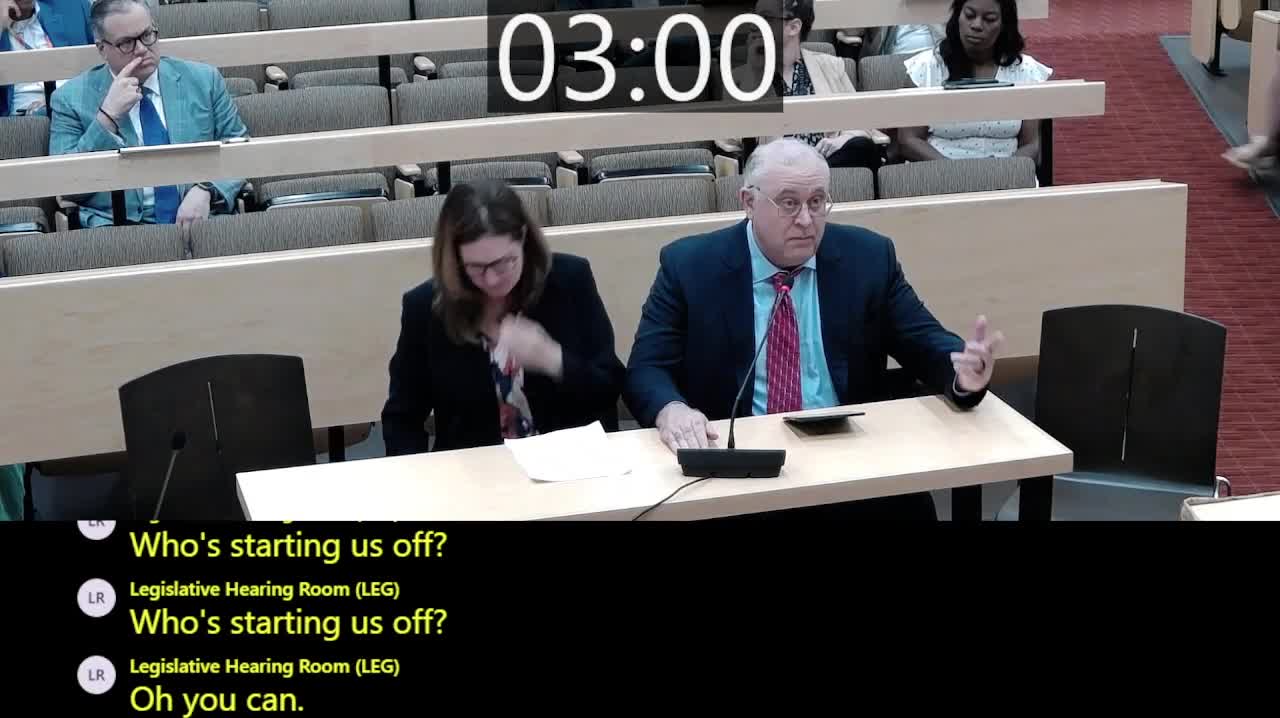
Summary
Clinical researchers, industry representatives and parents told the Joint Committee on Health Care Financing that reimbursing rapid whole genome sequencing for undiagnosed, critically ill MassHealth children could speed diagnosis, change treatment, and produce net cost savings for the health system.
Advocates, clinical researchers and industry representatives urged the Joint Committee on Health Care Financing to support H1368/S847, a proposal to make rapid whole genome sequencing (rWGS) a MassHealth-covered service for undiagnosed, critically ill children.
Tom Defai of Alexion AstraZeneca Rare Disease told the committee rapid sequencing can shorten diagnostic time "within days," allowing clinicians to tailor care for infants in neonatal and pediatric intensive care units. "Rare diseases are progressive and often fatal, and rapid diagnosis can mean the difference between life and death," Defai said.
Researchers described economic as well as clinical benefits. Tara Lavelle, a health economist at Tufts Medical Center, said trials and the NIH-funded Gemini study show near-term net savings and shorter hospital stays when rWGS is used early in hospitalization. "Using rapid whole genome sequencing as a first line test resulted in substantial net cost savings during the hospitalization and throughout the following year," Lavelle said, citing higher diagnostic yields (around 40–50% in some pilots) and avoided diagnostic procedures.
Hospital clinicians and geneticists gave clinical examples. Jessica Douglas of Boston Children's Hospital described cases in which rWGS gave families and care teams diagnostic clarity quickly, enabling less invasive care or better end-of-life decisions. Neonatologist Monica Wojcik said cost is the primary barrier to broader use and that treating access to rWGS as a luxury would maintain inequitable access: "Any study of barriers for the widespread use of rapid genome aligns on a single barrier that really trumps all others, and that's the cost," she said.
Parents and patient advocates also testified. Ben King and other family members described children whose care was altered or families who obtained answers only after lengthy diagnostic odysseys; one witness said earlier rWGS could have reduced a child's inpatient bills by more than half a million dollars in a specific case.
Witnesses pointed to other states' experience: several states have enacted rWGS policies for Medicaid, and pilots in California and Michigan showed cost reductions and fewer invasive procedures. Defai cited Michigan's estimate of approximately $4,100 net savings per patient in one analysis and a California pilot that reported net savings in excess of $2.5 million due to reduced hospital days and fewer procedures.
Cost estimates for the test itself were discussed; one witness said the rapid analysis cost is approximately $8,000 per patient but emphasized that net hospital savings often exceed that cost for the subset of critically ill children who benefit.
Why it matters: Witnesses framed the bill as a narrowly targeted coverage expansion for high-acuity, undiagnosed MassHealth pediatric patients. They argued coverage would standardize access and reduce inequities where cost currently determines who receives testing.
Next steps: Supporters asked the committee to report the bill favorably and recommended designing eligibility criteria tightly to the intended population (undifferentiated critically ill infants and children where sequencing may change management).
Ending: Researchers and clinicians urged lawmakers to act to make a diagnostic tool widely available to the most vulnerable children in the Commonwealth. "This is a technology that should be accessible to all undiagnosed children, including those covered by MassHealth," Tara Lavelle said.